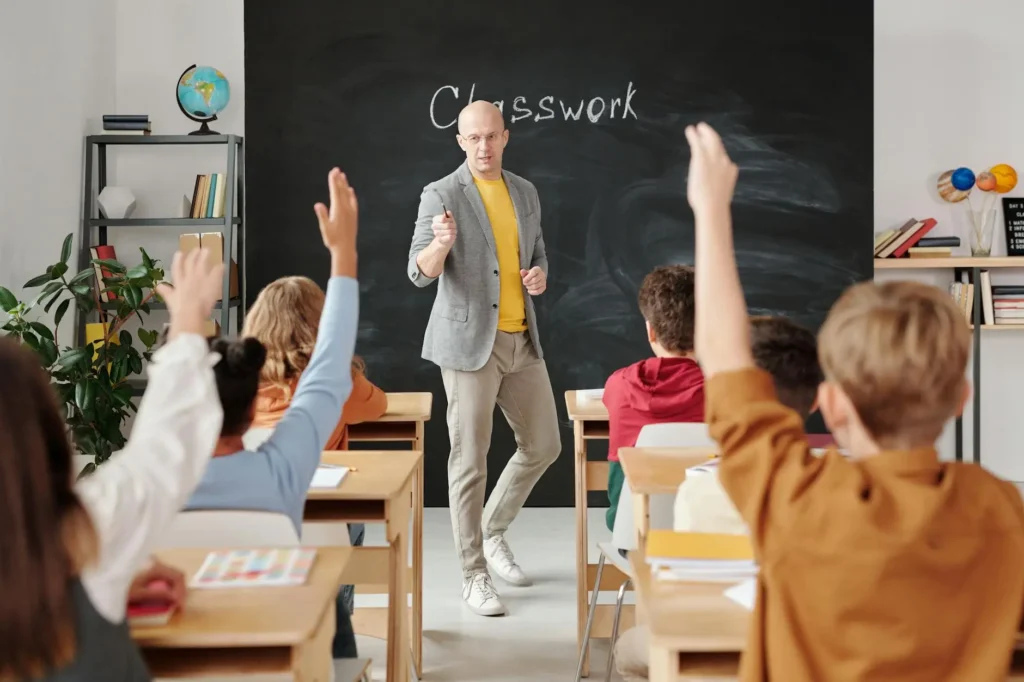
When students are yelling across the room, disrespecting you and each other, and not reacting to gentler consequences, it can be tempting to raise your voice to get their attention.
And sometimes, in the moment, screaming feels like the only thing left to try.
The problem is that yelling at a loud class usually just adds more noise and energy to an already chaotic situation; it doesn’t necessarily give you the quiet, focused classroom you’re actually trying to create.
So what can you do instead?
If you’re dealing with this kind of classroom chaos regularly, you don’t need to reinvent your response every time things get loud. That’s why I created Stop the Chaos, a free 15-day email series that gives you one practical classroom management strategy to try each school day.
But if you need something to try right now, to get a loud class back under control without screaming at students, start with these three.
Use a Quiet Signal
If you don’t already have a quiet signal in your classroom, it’s important to put one in place. Like, yesterday.
A quiet signal is a visual or auditory cue that you need students to stop talking and give you their attention.
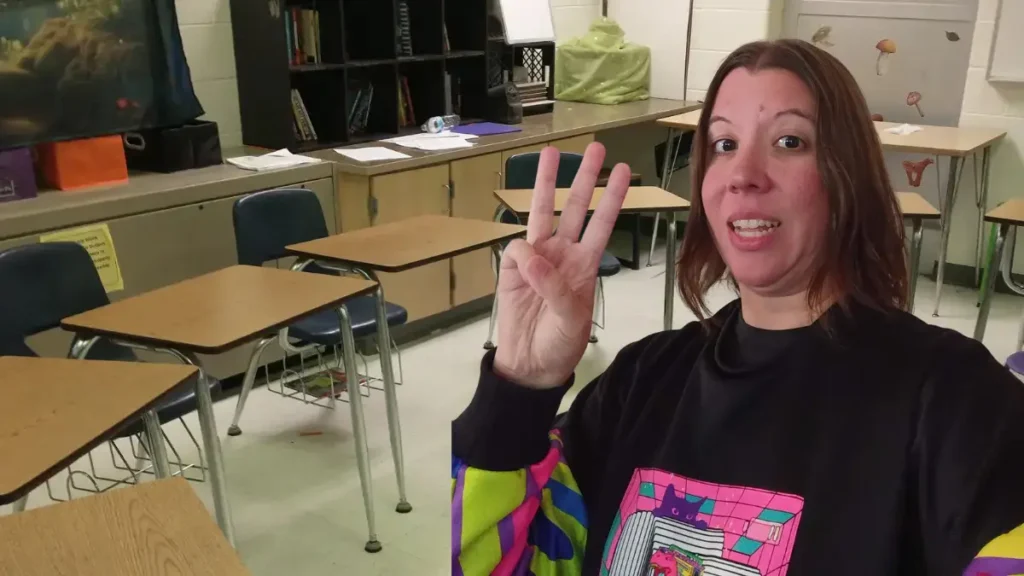
There are plenty to choose from, but my favorite is to count backwards from five.
Count slowly, and do not raise your voice.
Hold up your hand, and put one finger down as you say each number.
By the time you get to zero, students should be quiet.
(If they’re not, that’s a different problem, and you probably need to practice your quiet signal a few more times before students will “lock in,” as they say.)
The goal is to give yourself a reliable way to get attention before you ever reach the point where you’re tempted to yell.
Pro Tip: Quiet signals are important regardless of age or grade. Some teachers think that older students “should know better,” and while it would be nice if they magically knew how to behave appropriately by the time they reached 8th grade, the truth is that quiet signals benefit all students – even older ones.
(Related Reading: 9 Essential Classroom Procedures and Routines for the Beginning of the Year)
Hold a Class Meeting
When whole-class behavior is really out of control, it requires a whole-class solution.
Start a class meeting by pulling all students to a place in the room where they can all sit, ideally on the floor. Sit in a chair nearby so you can see everyone clearly and students can see you.
Tell them why you called the meeting. Name the specific behaviors you saw, the words you heard, or the chaos that has been happening.
Pro Tip: You’ll get the best results if you focus on only one behavior per class meeting. Sure, students might be yelling and throwing things, but pick one (two at most) to name during the meeting.
Explain why this behavior is a problem in your classroom. Don’t assume students know that it is a problem, let alone why it is one.
Explain what will happen if the behavior continues. Depending on the age of your students and the behaviors you’re targeting, this might be anything from missing out on a Fun Friday privilege to putting student desks in rows to a lunch or after-school detention.
Remind students of the behaviors you expect to see. Name them specifically, then send them back to their regular seats to continue working.
(Related Reading: Sample Class Meeting Scripts for Elementary and Middle School Teachers)
Change Your Volume and Energy – Deliberately
Most students want to fit in and be an accepted part of a group, and they look to you as their leader. That means that you have tremendous potential to steer the vibe of the class.
If they’re loud and not paying attention, walk around the room speaking quietly.
What you say doesn’t matter, though it shouldn’t be anything critical. This is not the time to give homework assignment directions or announce an upcoming test.
With younger students, you might give silly directions (quietly) like:
- If you can hear me, put your hands on your head.
- If you can hear me, clap once.
- If you can hear me, flap your elbows like a chicken.
Once a few students (the ones who were doing the right thing by being quiet and paying attention to you) start doing these motions, the rest of the class will perk up and quiet down, wondering what they’re missing out on.
With older students, you can use a patter-style of talking. For example, you might (quietly) say:
- It’s really frustrating when I can’t give directions because everyone is talking so loudly.
- I’m going to wait to move on until everyone can hear me.
- If you can hear what I’m saying, thank you for paying attention and doing the right thing.
Pro Tip: Walk around as you say these (quiet) things. You’ll reach more students via proximity and give everyone a chance to hear you and quiet down.
Regardless of what you say, your volume should be deliberately quiet. If you’re a quieter teacher by nature, you can create this same effect through pacing, tone, movement, or even an exaggerated pause for effect.
(Related Reading: 5 Signs Your Class Needs a Brain Break)
It works the best when you change your volume, pacing, or tone on purpose to get a specific reaction from your students.
Is it Ever Ok to Scream at Students?
I’m not a fan of absolutes: always do this, never do that.
I also want to acknowledge that you’re human, and as a human, you will occasionally lose your temper.
Since you’ve read this far, I’m guessing you’re a conscientious teacher who genuinely cares about her students.
If you do happen to scream at your students (it happens – I’ve been there myself), acknowledge your mistake once you’ve calmed down.
Some advice says never apologize to your students, but I think apologizing when you make a mistake (like screaming) models the behavior you want to see from them when they make a mistake.
You don’t need to grovel or let students pick at you about it. Acknowledge your mistake, promise to try better in the future, then move on.
And then give yourself some better moves for next time.
A quiet signal. A class reset. A deliberate change in your volume and energy.
Pro Tip: You don’t have to be the loudest person in the room to be the person who’s in charge of it.
If you want more no-prep classroom management strategies you can use tomorrow, check out Stop the Chaos, a free 15-day email series. You’ll get one practical strategy in your inbox each school day, so you can build up your classroom management toolbox one move at a time.
Before you comment: Please take a moment to read our community guidelines. We’re building a space that’s welcoming, respectful, and helpful to all!
F.A.Q.
Screaming at students isn’t an effective classroom-management strategy for most situations because it adds more volume and emotional intensity to an already difficult situation. Teachers also occasionally lose their temper, and one mistake doesn’t mean you’ve ruined your relationship with your students. If you do yell, calm down, acknowledge what happened, and focus on what you can do differently next time.
Start by identifying what usually happens immediately before you yell. Then choose a specific response you can use instead, such as a quiet signal, proximity, positive narration, a pause, or a class reset. The goal isn’t simply to “stay calm”; it’s to have a concrete strategy ready before you reach your breaking point.
Use a predictable attention signal, lower your voice rather than raising it, move around the room to increase proximity, or pause the activity and reset expectations with the class. The best strategy depends on why students are being loud and whether the behavior involves the whole class or only a few students.
Teach and practice a quiet signal before you need it. Then use the signal consistently rather than repeatedly asking students to be quiet. You can also use deliberate changes in volume, pacing, movement, and proximity to draw students’ attention without competing with their voices.
Yes, if you yelled in a way you regret, a brief apology can model accountability. You don’t need to make a long speech or undermine your authority. A simple acknowledgment such as “I raised my voice, and I shouldn’t have. I’m going to work on handling that differently” shows students that adults can recognize and correct their mistakes.