Teaching Strategies

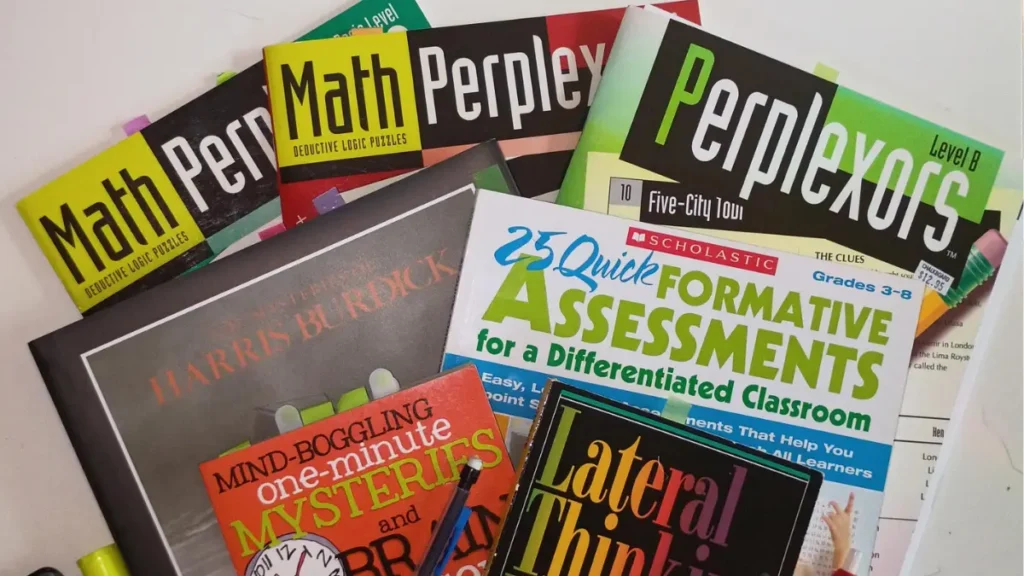
A spread of early finisher critical thinking activity ideas including lateral thinking puzzles, one-minute mysteries, and perplexors

5 Teacher-Tested Early Finisher Activities That Build Critical Thinking Skills

Every teacher knows the feeling: Half the class is still working quietly when one student raises a hand and asks, “I’m done. What should I do now?”  While it’s tempting to tell early finishers to “add more detail” or “read quietly,” I found those moments were the perfect opportunity to build critical thinking, logic, and […]

5 Teacher-Tested Early Finisher Activities That Build Critical Thinking Skills Read More »
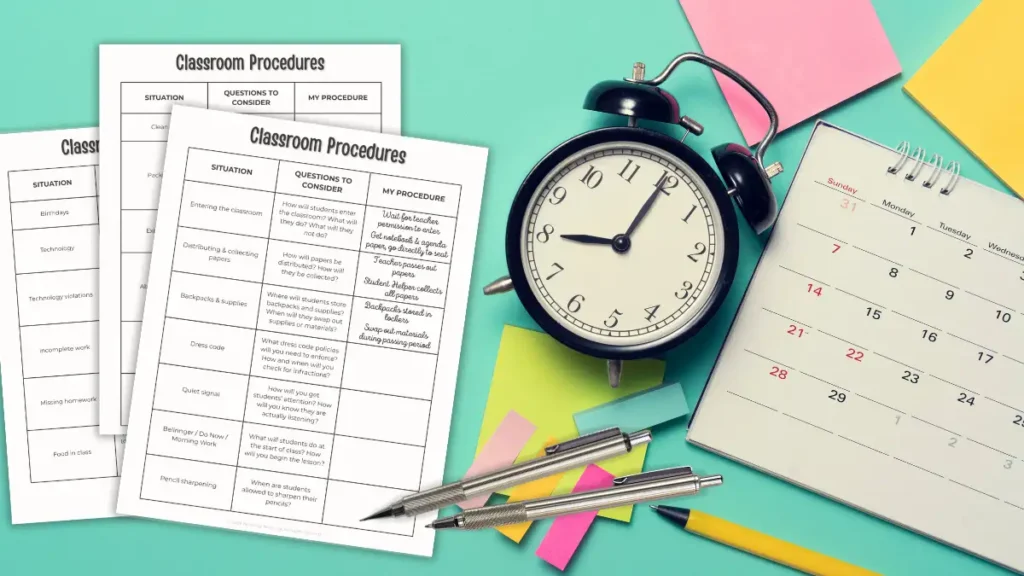
A trio of pages partially filled out labeled Classroom Procedures rest on a teal desk beside sticky flags, pens, a calendar, and an old-fashioned alarm clock

9 Essential Classroom Procedures and Routines for the Beginning of the Year

At the beginning of the school year, there are dozens of classroom procedures and routines you could teach. But which ones actually matter most? You can have the perfect classroom setup, an organized room, and engaging lessons planned, but your year will quickly become chaotic if students don’t know exactly what you expect from them.

9 Essential Classroom Procedures and Routines for the Beginning of the Year Read More »

A teacher confidently crosses her arms and smiles while her older students calmly work on their assignments after a brain break.

How to Use Brain Breaks Without Losing Classroom Control

Brain breaks sound great in theory. But in reality? They can quickly turn into noisy transitions, wandering students, and a classroom that suddenly feels impossible to settle back down. You probably know that brain breaks are short classroom activities designed to help students refocus, regulate their energy, and return to learning more successfully. But knowing

How to Use Brain Breaks Without Losing Classroom Control Read More »

A figure in a suit jacket holds a tablet with a computer-generated holographic image of a brain hovering above it, showing the importance of brain breaks in the classroom

Why Brain Breaks Are Important for Students (and Teachers Too)

Brain breaks are short, intentional pauses in learning that help students reset their focus, energy, and attention. You’ve probably heard of brain breaks. But you might have thought, “Yeah, but I don’t have time for that.” Or “Yeah, but brain breaks aren’t that important for students, are they?” And this makes sense! After all, brain

Why Brain Breaks Are Important for Students (and Teachers Too) Read More »

An older student grimaces and holds her hand to her forehead while a hand off-camera holds a paper brain above her head, indicating that her brain needs a break.

The 7 Best No-Prep, Teacher-Tested Brain Breaks for Students (Grades 4-8)

If you’re looking for quick, effective brain breaks for students in grades 4–8, you’re not alone. Teachers everywhere are searching for simple ways to refocus their classes without losing instructional time. The good news? You don’t need elaborate systems or prep work. You just need a few reliable strategies that actually work in real classrooms.

The 7 Best No-Prep, Teacher-Tested Brain Breaks for Students (Grades 4-8) Read More »

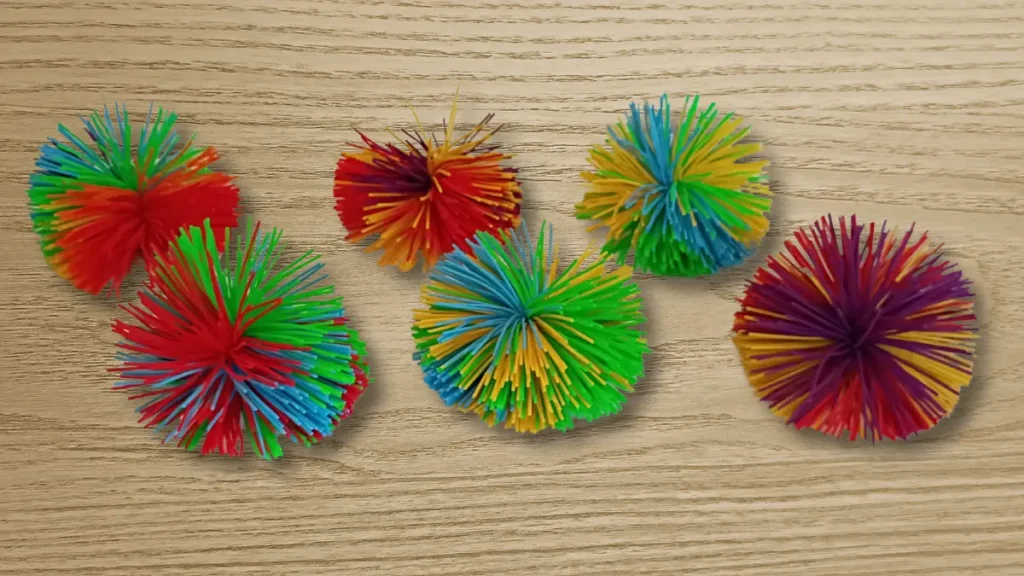
Six stringy balls (sometimes called Koosh balls) sit on a wooden desk top.

A Simple Strategy to Lead Class Discussions Without Chaos (Grades 4-8)

Many teachers are not explicitly taught how to lead a class discussion. It’s one of those skills that comes naturally to some, while others struggle to get students engaged without things spiraling into chaos. Common problems with leading class discussions include: If that sounds familiar, you’re not alone. One of the simplest strategies I’ve ever

A Simple Strategy to Lead Class Discussions Without Chaos (Grades 4-8) Read More »

A group of older students sit around a table working on an assignment. One student leans over and points to something on a paper, helping her classmates understand a difficult concept.

How to Train Students to Help Each Other (Without Chaos): A Step-By-Step Guide

Having student helpers in the classroom can save you time, energy, and effort. But setting up a system like this takes some preparation and planning.  This type of peer tutoring classroom structure is a simple but powerful peer teaching strategy that builds independence while reducing constant teacher interruptions. Use the steps in this guide to

How to Train Students to Help Each Other (Without Chaos): A Step-By-Step Guide Read More »

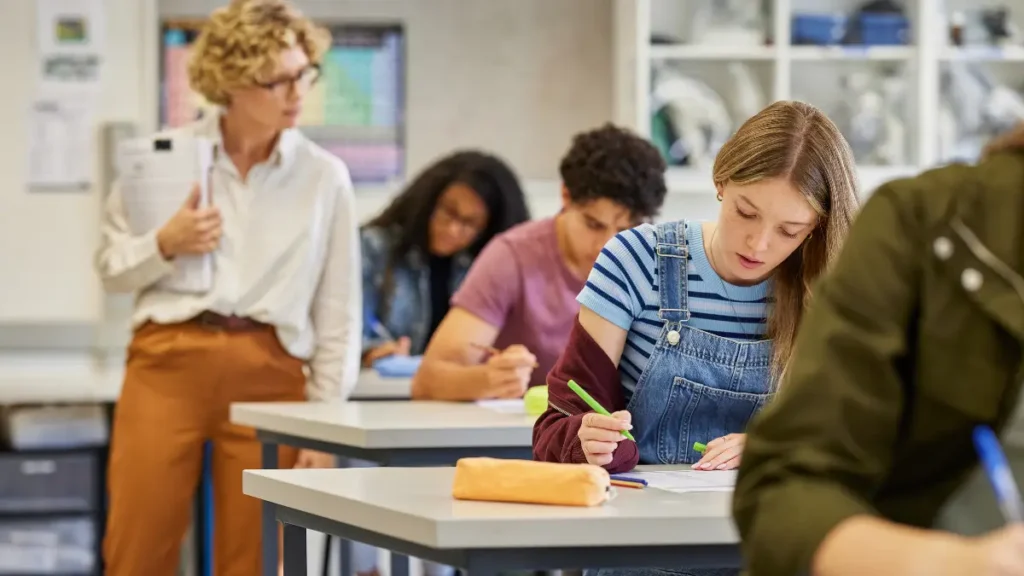
A teacher walks around and checks on a class of older students. There are four students visible, while there is only one teacher, showing that the teacher cannot help every student at once.

How to Help Students Work Independently (Because You Can’t Help Every Student at Once)

Being a teacher means not just teaching content. It also means figuring out how to help students work independently and take responsibility for their own learning, even when they’d much rather rely on you for every answer. This is not just to help students grow into productive members of society; it’s also a defense mechanism

How to Help Students Work Independently (Because You Can’t Help Every Student at Once) Read More »