
You don’t need to turn your classroom into a video game to use gamification.
If the word gamification makes you picture elaborate classroom economies, complicated point systems, and hours spent designing levels and rewards, good news: you can start much smaller.
In fact, you can add a few game elements to your classroom by Monday…without buying anything new or adding another giant project to your already-full plate.
Gamification simply means adding elements of games to something that isn’t a game. And while your classroom probably isn’t going to become a game overnight, there are a few things games do really well that you can borrow…
In this post, you’ll learn how to:
- Shift your classroom language to make learning feel like a game
- Use experience points to motivate your students
- And give students the illusion of choice to increase engagement.
I’ve used these strategies in both elementary and middle school classrooms, and I can tell you – they work.
Easy Gamification Strategy #1: Shift Your Language
When I taught middle school ELA, most students did not look forward to the grammar portion of class.
And I get it: Grammar is not the most exciting or engaging topic. In fact, it’s not even immediately useful except as a party trick.
(When was the last time you needed to describe the difference between an adverb and a preposition?)
But while my school required grammar instruction, they didn’t care how I taught it.
So instead of giving tests…students had boss fights.
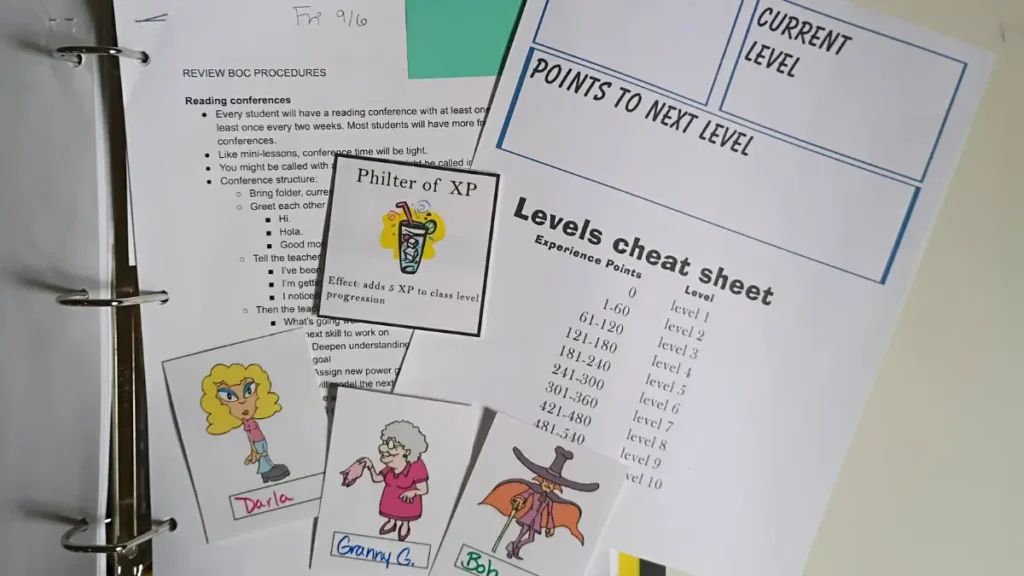
Instead of grades…students earned experience points.
I stopped calling reward passes “prizes” or “bonuses” and started calling them “magic items.”
I even referred to my unit plan as a quest map.
From day one, this got students’ attention.
They liked games; they did not like school. And when I referred to school things by gamer language, suddenly their brains perked up.
Brains like novelty, especially when it’s something they personally connect to.
Easy Win
Change your language around one thing tomorrow. Think about what your students are interested in. Maybe there’s a show, a movie, a toy, a fad that they’re all-in on. Look for ways you can use that language in your classroom.
Easy Gamification Strategy #2: Award “Experience Points” for What They’re Already Doing
One of the easiest ways to use gamification in the classroom is to turn something you’re already tracking into experience points.
For example, let’s say your school uses IXL. You could award students 1 experience point if they earn a score of 80 on an IXL practice. A score of 90 might earn them 2 experience points.
Maybe you want them to read more, so every time they finish a book and give a summary, they earn 5 experience points.
Or, even easier, you could simply convert grades to experience points. A score of 80% on an essay would give them 80 experience points. A score of 100 on a test would give them 100 experience points.
(Just make sure to keep track of experience points separatly from grades. You can track both, but your school will probably want you entering “grades,” not “experience points.”)
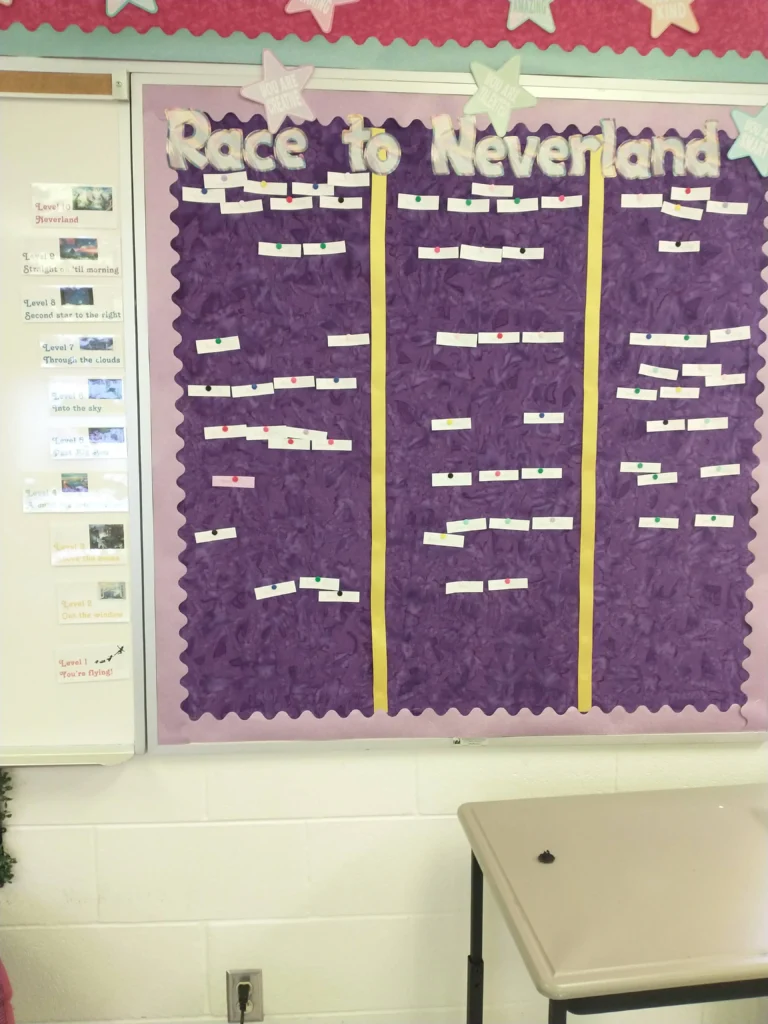
You can certainly go all-in on this and have a class leaderboard with “usernames” and prizes awarded at each level, like I did.

But you certainly don’t have to do all of that!
Just calling scores “experience points” will be enough to motivate some students. And if your class is competitive? Watch them study and focus to earn the High Score.
Easy Win
Pick something you’re already doing regularly. This might be small group sessions, daily practice, homework completion, raising hands to speak, or any other skill you want to target. Every time a student completes that skill at or above the level of your expectation, award them an experience point.
Pro Tip: You can use experience points with academic skills or behavior, but be consistent. Don’t switch what earns experience points every week, and make sure students are only focusing on one activity or task that earns experience points. Otherwise it gets too messy to keep track of.
Easy Gamification Strategy #3: Give Students the Illusion of Choice
Students – especially older ones – like to have choices.
I used this to my advantage when I made a “quest map” for our grammar units.
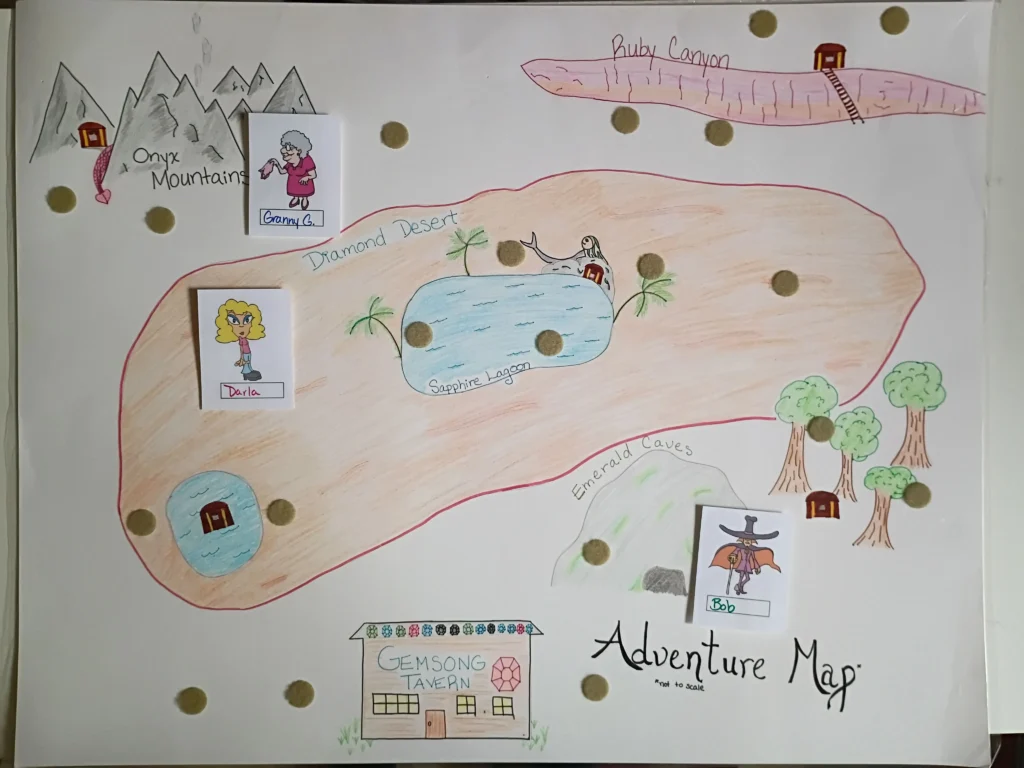
Each location represented a different unit, but I let the class vote on where they went next.
This didn’t actually change my instruction; I still taught the same lessons in the same order.
But because students got to choose where their avatar traveled, they felt like they had some say in the outcome.
From the students’ perspective, their vote mattered because they could see their choice reflected on the quest map (even though I already knew what we’d be learning next).
If quest maps aren’t your jam, you can give students the illusion of choice in other ways, too.
Think about all the ways students could still participate and demonstrate their learning without actually changing what you teach:
- Standing or sitting
- Write a poem or draw and label a picture
- What book to read during independent reading time
- Take a test or write an essay
- Have class inside or outside
- Do the even-numbered problems or the odd-numbered ones
Easy Win
Look at tomorrow’s lesson plan and pick one way you could give students choice. Remember, you’re not actually changing your lesson. You’re simply letting students have control over one small part of their day and their learning experience.
What Games Do That School Doesn’t
I’m certainly not a game designer (there are whole courses – and college degrees that explain game theory), but I do have my own experience from gamifying my classroom.
Games give players tangible goals (like leveling up with experience points). They allow controlled choice (by locking certain areas but allowing free exploration of others). And, perhaps most importantly, they don’t sound like school.
When you bring these elements into your classroom, your students will be more likely to listen to your instruction and put in some extra effort in your class.
However, you don’t have to gamify every lesson. You don’t even have to gamify an entire unit.
Start with one small change: rename something, introduce experience points, or give students a choice about one part of the learning experience.
If it makes your classroom feel a little more engaging without making your workload a lot bigger, that’s a win.
Have you tried gamification in your classroom? What worked? And what absolutely did not? Tell me in the comments!
Want more practical ideas for making teaching work better?
Join The Reset Button for classroom strategies, teaching ideas, and honest stories about what actually works in the classroom.
Before you comment: Please take a moment to read our community guidelines. We’re building a space that’s welcoming, respectful, and helpful to all!
F.A.Q.
Gamification in the classroom means adding elements of games to regular classroom activities. Instead of turning your entire class into a game, you might borrow things like experience points, levels, quests, challenges, rewards, or choices and use them within your existing instruction.
Examples include awarding experience points for completing academic tasks, using levels or challenges instead of traditional labels, creating a quest map for a unit, allowing students to make controlled choices, and using game-inspired language such as “boss fights,” “quests,” or “magic items.”
Start with something you’re already doing. You could rename a routine using game language, turn existing scores or accomplishments into experience points, or give students a small choice within an assignment or lesson. You don’t need special software, prizes, or classroom decorations to begin.
Gamification adds individual elements of games to a non-game activity, such as a regular classroom lesson. Game-based learning uses an actual game as part of the learning experience. In other words, gamification might turn a grammar assignment into a quest, while game-based learning might have students learn through playing a game.
Gamification can make classroom activities feel more engaging by giving students clear goals, opportunities for choice, feedback, and a sense of progress. The most effective approach doesn’t require turning every lesson into an elaborate game. Even a small change—such as using experience points or giving students a meaningful choice—can make an ordinary activity feel different.