If you’ve ever had a disruptive student in your class, you know they can completely change the dynamic of the classroom.
When they’re absent, everything seems easier. You get through your lesson. Your other students stay focused. You actually have time to teach.
Then they come back, and suddenly you’re stopping to correct inappropriate comments, redirect behavior, and deal with the reactions from the rest of the class.
So what do you do with a disruptive student who seems determined to derail your lessons?
Start by figuring out what they’re getting from the behavior.
In my experience, a lot of disruptive classroom behavior is motivated by one thing: attention from peers. And if that’s what a student wants, you can use that motivation to help them make better behavior choices.
Here’s the strategy I’ve used successfully with disruptive students in my own classroom.
Find What Motivates the Disruptive Student
My co-teacher used to say, “All behavior is a form of communication.” I’d add to that: “Undesirable behavior usually shows up when a student wants to get something, or avoid something.”
Sometimes addressing a disruptive student’s misbehavior is as simple as realizing that they’re hungry, and they’re acting out because they want food. Once they have a snack? All is right with their world!
Other times, the motivation is more complicated. They might be looking for attention – any attention – because they don’t get enough at home. (And for these students, even negative attention is desired, because it’s still attention.)
They might be crying out for firm boundaries, because they don’t know what’s expected of them from day to day. (Most kids do better when predictable boundaries are in place.)
In my experience, most disruptive students are motivated by their peers’ attention. (There are other reasons students might misbehave, but this post is going to focus on students who want attention.)
In order to encourage a disruptive student to make better behavior choices, you need to use their motivation to make them want to behave.
And that starts by removing their peers’ attention.
Before You Try This Strategy
Document, Document, Document
Before you start to implement this strategy (which is on the more extreme side of the “behavior intervention” scale), make sure you have documentation supporting why this is the best strategy to use.
Even after you put it in place, it’s important to still keep documenting.
Any time you move the student’s desk out of the group, make a note. If their behavior escalates, make a note. When they start making better behavior choices…make a note.
This could be as simple as tally marks on a sticky note, a running list of times and a phrase or two about what happened, or a behavior tracker entry.
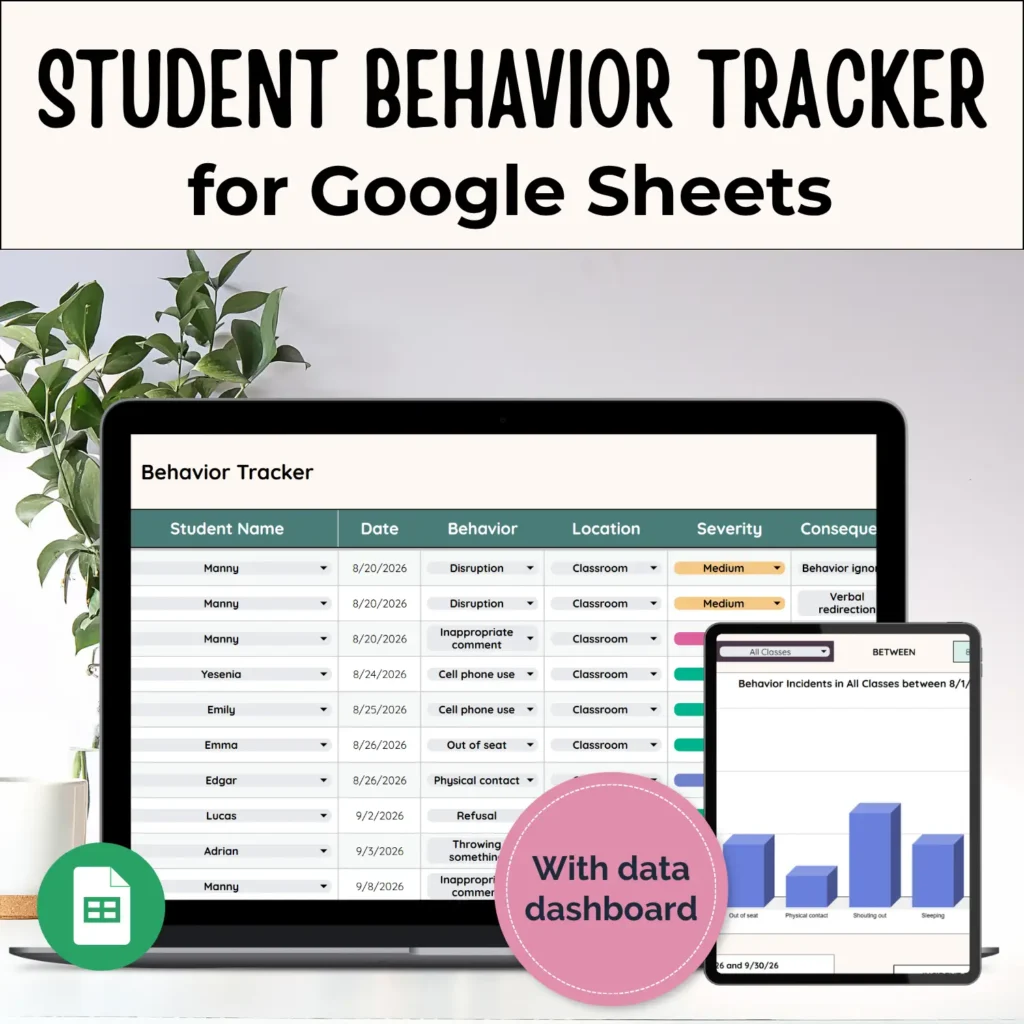
You might think you’ll remember the incident details and write them up later, but as the infractions pile up, the specifics about earlier incidents will start to slip from your mind. (This is normal; it’s just how the brain works.)
Making a quick note in the moment helps you have supporting evidence for parents and admin who ask.
And speaking of parents and administrators…
Get Parents and Admin on Board First
Moving a student’s desk away from the group and ignoring their behaviors is more extreme than assigning a time-out or detention, and some parents feel very strongly about their child’s social inclusion.
Hopefully the student’s parents and your administrators will be on board with your strategy, especially when you explain that it’s necessary to have a functioning classroom environment where everyone can learn.
If they’re not supportive, you might need to use a different strategy to address the student’s misbehavior.
Make Sure the Strategy Fits Your School’s Policies
If your school has requirements about all students staying together at all times, or about certain behavior interventions that need to be used, go with your school’s policies.
Remove the Disruptive Student’s Audience
To put this intervention in place, simply wait for the student to make an inappropriate comment or action.
(When I used this with a fourth grade student, his desk was removed from the group when he:
- Said I had a fingernail fungus, then looked around expecting his peers to laugh
- Shouted inappropriate comments during a math lesson
- Reached out his leg and tripped another student who was walking past his desk (that wouldn’t get his desk moved out of the group normally, but added together with everything else, it was just one more behavior he needed to unlearn)
Tell the student, “Stand up.” Give your voice a matter-of-fact, no-nonsense tone. You’re not being mean, but you’ve also had enough.
Drag the student’s desk 2-3 feet away from where the rest of the students are sitting and direct them to sit down.
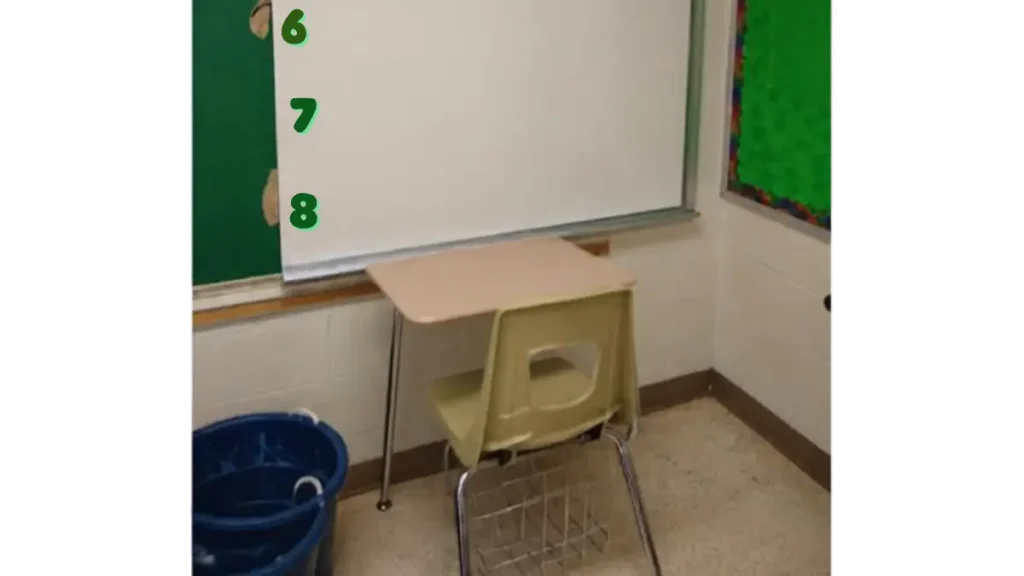
Turn your back to them (still keeping an eye on them with your peripheral vision, but they need to see that you aren’t acknowledging their misbehavior) and tell the class:
- Sometimes certain students have a hard time knowing what’s appropriate to do and say in class.
- When that happens, they need to be removed from the group so the rest of us can learn.
- They’re trying really hard to get back in the group, though, and we need to help them.
- The way to help is to ignore anything a student says or does when they’re out of the group. If there’s an emergency, I’ll deal with it, because I am paying attention, even when I’m not acknowledging misbehavior.
- Once they can show that they’re making good choices, they’re welcome back in the group and you’re welcome to greet them and talk to them again.
- This time, it’s [Student Name] who is out of the group. Next time, it might be one of you, and we’ll help you make good choices and get back into the group just like we’re helping [Student Name].
While the student is out of the group, they’re still expected to complete all assigned work.
However, they cannot contribute to class discussions, and they cannot leave their seat without asking (with a raised hand and a “please”).
Make Returning to the Group the Reward
The first time a student is removed from the group, getting back in should be fairly easy.
Maybe you only keep them out of the group for a minute or two. Once they sit quietly for two minutes, tell them what they did well:
- “Thanks so much for sitting quietly while I gave directions. Stand up, and let’s move your desk back into the group.”
- “I really appreciated the way you raised your hand without shouting out. I’ll be right over to bring your desk back to the group.”
By naming the behavior you want to see, followed by the reward of returning to the group, you’re helping the student make the connection between good behavior and the thing they want (peer attention).
Hold Firm Boundaries and Gradually Raise the Bar
Don’t expect this to be a one-and-done strategy.
You will probably have to move the student’s desk in and out of the group several times (sometimes multiple times per day or class period) before you start to notice a lasting shift in their behavior choices.
As time goes on, start to increase the requirements for returning to the group. Maybe it started with two minutes of sitting quietly, so the next time it’s three minutes, then four, then five.
For older students, you can put a sticky note on their desk and make a tally mark every time you notice good behavior, or every few minutes, so they can keep track of how close they are to returning to the group. (Tell them how many tally marks gets them back into the group.)
Follow your school’s policies for transitions, recess, lunch, and specials. If the student refuses to follow the expected procedure, get another adult involved rather than turning it into a power struggle.
(Most of these students will only test this once or twice, because they want to be with their peers.)
What to Expect When You Move a Disruptive Student’s Desk
Be Prepared for the Behavior to Escalate at First
You’re taking away the attention they were getting from their peers, and from you, due to their misbehavior. They’re going to want that attention back, and they won’t be picky about how they get it.
It’s important to ignore misbehavior (as long as it’s not unsafe).
Even giving a correction or redirection is attention, and that’s what the student wants.
Ignore, ignore, ignore.
Pro Tip: Unsafe behavior, bullying, threats, or behavior that could cause injury to the student or others should never be ignored just to avoid giving a student attention.
Keep the Student at their Desk
While I would never tell you to physically block a student in, there are ways to casually position your body as you’re moving around the room and teaching so that it’s not easy for the student to stand up or walk around the classroom.
If they do make a break for it (and are still safe), continue to ignore their behavior, words, and actions, and direct the rest of the class to do the same.
Don’t Get Into a Power Struggle
If the student moves their desk back into the group without your permission, don’t start a tugging war over the placement of the desk.
Let them move it, then calmly lift it and return it to its place outside of the group. You don’t need to say anything to the student during this time. In fact, it’s better if you don’t.
They’re looking for attention; don’t give it to them. That will help them understand that undesirable behavior doesn’t get rewarded in any way, which will make them look for more appropriate behaviors that do get rewarded.
Moving a disruptive student’s desk away from the group isn’t the right strategy for every student or every behavior.
But it’s one useful option to have in your classroom-management toolbox—especially when you’ve identified peer attention as the thing reinforcing the behavior.
And that’s really the goal: not finding one magic consequence that works for every disruptive student, but building a collection of strategies you can use when one approach isn’t enough.
That’s why I created the Stop the Chaos email guide.
You’ll get 15 classroom-management strategies, delivered one per school day for three weeks. They’ve all been tested in real classrooms across grades K-8, so you can try them instead of spending your planning period searching for another thing to try.
(Did I mention they’re free?)
And if you already know you need more than a few ideas, the full Stop the Chaos e-book includes all 21 strategies, including Move the Desk, plus the details you need to put them into practice.
Get the full Stop the Chaos guide.
Before you comment: Please take a moment to read our community guidelines. We’re building a space that’s welcoming, respectful, and helpful to all!
F.A.Q.
Start by identifying what the student gets from the behavior. If the behavior is primarily motivated by peer attention, one option is to temporarily remove the student from the group and make returning to the group contingent on demonstrating appropriate behavior.
If peer attention is reinforcing the behavior, avoid giving the student additional attention for inappropriate behavior when it is safe to do so. Instead, remove the audience for the behavior and give the student positive attention and access to peers when they demonstrate appropriate behavior.
Moving a student’s desk can be an effective strategy when the student’s disruptive behavior is reinforced by attention from classmates. The goal isn’t to punish the student or isolate them indefinitely; it’s to temporarily remove the audience that is reinforcing the behavior and give the student a clear path back into the group.
Avoid turning the situation into a power struggle. Give the direction calmly, follow your school’s behavior procedures, and get support from another adult if necessary. If the student moves the desk back without permission, don’t engage in a tug-of-war over the furniture; calmly return it to the designated location when it is safe to do so.
There’s no universal amount of time. When first introducing the strategy, a short period of appropriate behavior may be enough for the student to return to the group. As the student becomes more successful, you can gradually increase the amount of appropriate behavior required before they return.
That can happen, particularly when the student has learned that disruptive behavior reliably produces attention. If the behavior is safe to ignore, stay consistent rather than immediately rewarding the escalation with additional attention. However, unsafe behavior or serious misconduct should always be addressed according to your school’s procedures.