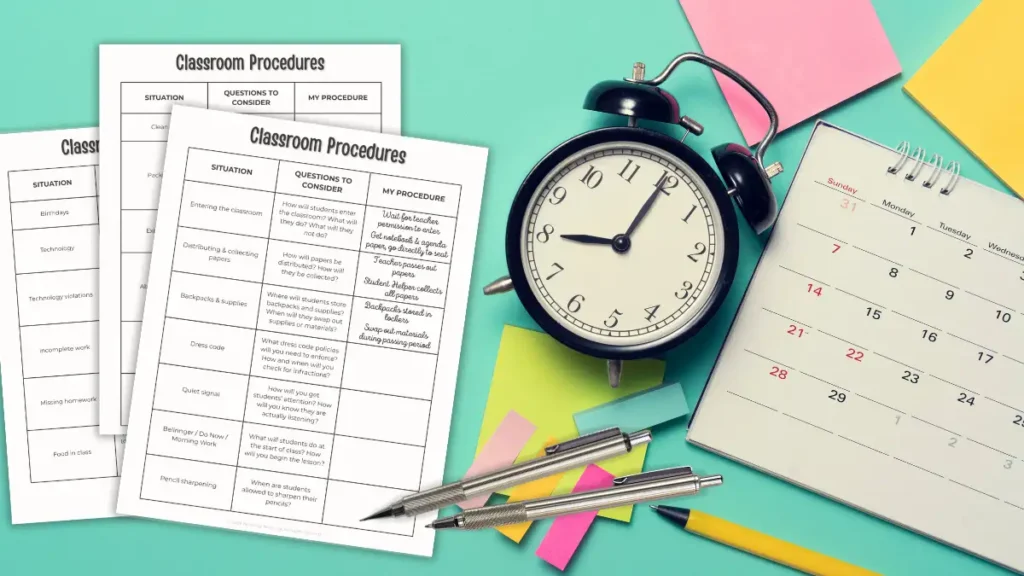
At the beginning of the school year, there are dozens of classroom procedures and routines you could teach. But which ones actually matter most?
You can have the perfect classroom setup, an organized room, and engaging lessons planned, but your year will quickly become chaotic if students don’t know exactly what you expect from them.
The good news? You don’t have to teach every possible classroom procedure on day one.
Start with the routines that impact your classroom flow the most: entering the classroom, transitioning between activities, getting your attention, managing supplies, and handling everyday situations.
In this post, I’ll walk you through 9 essential classroom procedures and routines to teach at the beginning of the year so your classroom runs more smoothly from the very first week.
- 1. Classroom Entry Procedures: How Students Enter the Room
- 2. Quiet Signal Procedures: How to Get Students’ Attention
- 3. Classroom Transition Procedures and Routines
- 4. Classroom Supply Procedures: What Students Need Every Day
- 5. Classroom Food Procedures and Expectations
- 6. End-of-Class Packing Up Procedures
- 7. Water Bottle Procedures for the Classroom
- 8. Classroom Bathroom Procedures
- 9. Classroom Movement Procedures and Expectations
- Classroom Routines and Procedures: Honorable Mentions
- F.A.Q.
1. Classroom Entry Procedures: How Students Enter the Room
One of the most important classroom procedures to teach is how students enter the classroom.
The way students enter will set the tone for the day’s lesson. If students come in with a lot of energy, it will be hard to keep their focus on the learning task at hand.
Questions to Ask:
How will students enter the classroom?
What will they do?
What will they not do?
Think about your room layout. Will students need to retrieve a folder, notebook, or textbook? Do you have enough space for them to do so without causing a traffic jam?
Do students enter the room if you’re not inside? What if there’s another adult in the room instead?
One year, my 8th grade advisory students wanted to make a Hopscotch game leading into our classroom.
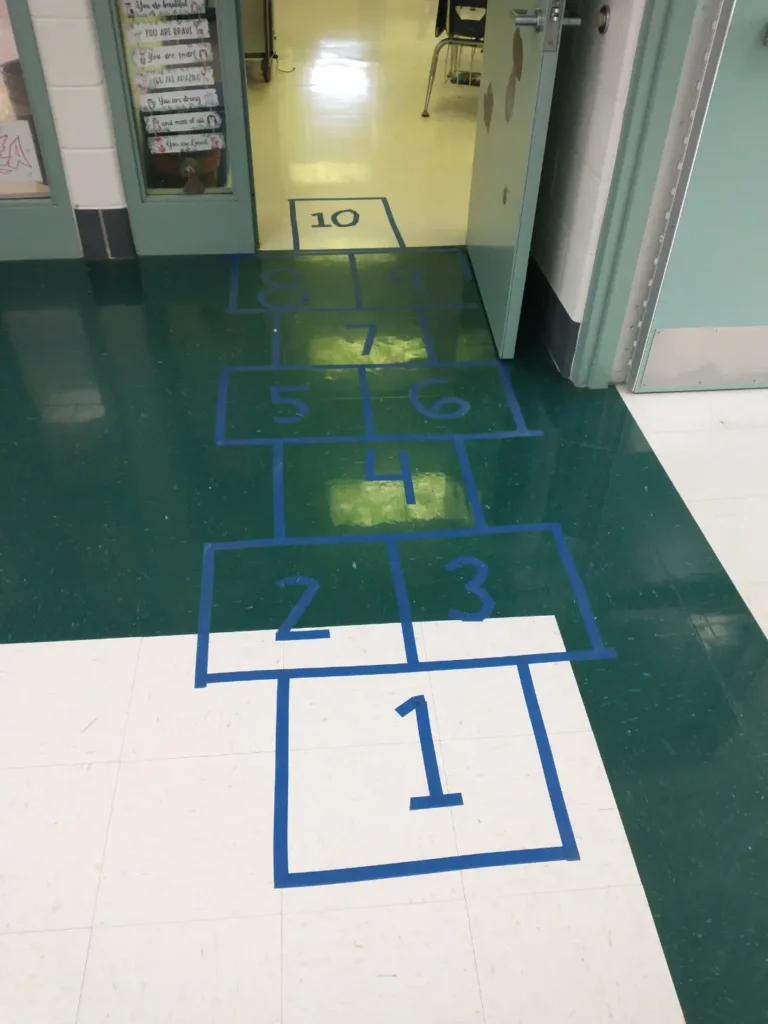
For the rest of the year, my co-teacher and I encouraged students to hopscotch into the room.
This set the tone that our classroom was a fun place to be, where students might be encouraged to step outside their comfort zones just a bit.
(It had the added benefit of waking them up with movement, because 8th graders are notoriously sluggish when it comes to ELA class.)
2. Quiet Signal Procedures: How to Get Students’ Attention
I’ve talked before about the importance of having a quiet signal.
If you don’t have a designated quiet signal, you’re likely to turn to yelling louder just to be heard over the students. (I taught next door to a teacher who did that. We could hear him and his class through the walls.)
Questions to Ask:
How will you get students’ attention?
How will you know they are actually listening?
Depending on your students’ ages, you may need to practice your quiet signal before using it during a real classroom situation.
Start by telling students what your quiet signal is. Model it a few times so they know what to listen or look for.
Then give them a topic to discuss with their groups or with the students sitting near them.
The topic itself doesn’t matter; the goal is to simply create some noise in the classroom.
Give students a few seconds to talk, then implement your quiet signal.
Give students immediate feedback: Did they quiet down quickly enough? Did they focus their attention on you? Did they meet your expectations?
If necessary, practice a few more times. Then for the rest of the week, use your quiet signal as much as possible.
The more students practice now, the quicker they’ll quiet down later in the year when you actually need their attention.
(Related Reading: The Best Quiet Signals for Noisy K-8 Classrooms)
3. Classroom Transition Procedures and Routines
Classroom transitions happen any time students stop one activity and start something else.
This could happen during a single class period or subject: transitioning from direct instruction to independent practice; transitioning from group work to homework collection; putting away notebooks and getting out novels.
Transitions also happen between subjects, as in elementary or self-contained classrooms: between science and math; between reading and writing; between social studies and P.E.
Questions to Ask:
How will students know to transition from one activity to another?
What will they do?
What will they not do?
Just like students entering the classroom, transition time is typically looser and less structured. This is when most behavior incidents occur because the expectations are unclear.
You can eliminate a lot of behavior infractions by pre-correcting misbehaviors before they happen.
A minute or two before a transition, get students’ attention (using the quiet signal you set up).
Tell them, “Class, in just a moment, we’re going to transition to [whatever subject or task they’re about to start]. When we do, you’re going to [behaviors you want to see from them]. You’re not going to [behaviors you don’t want to see]. You will have until I [give them a time limit – count to 10, get to 0] to complete these tasks. Ready? Go.”
Pro Tip: Don’t make your lists of expected behaviors and pre-corrections super long. You might have a list of 15 behaviors you don’t want them to do, but they’ll only remember 1-2. Pick the most impactful or problematic behaviors to focus on, and use the others during a different transition pre-correction.
If you’re a new teacher and aren’t sure what types of behaviors to ask students to do (or not do), here’s a list to get you started:
Desired Behaviors
- Go directly to the turn-in trays and turn in your papers
- Get one mini-whiteboard and one marker
- Designate one group member to get everyone’s novels
- Return to your seats quickly
Undesired Behaviors
- Wander around the room
- Throw things across the room
- Touch other students
- Shout
If you need more help managing transitions, this blog post goes into more detail.
Still planning your classroom setup? Grab my free classroom setup checklist to make sure you don’t forget the little details before students arrive.
4. Classroom Supply Procedures: What Students Need Every Day
Departmentalized elementary classes and in a middle schools where students transition to different rooms for each class, should make a plan for what supplies students need…and how to communicate that information to students.
(In a departmentalized elementary school, usually one teacher takes both classes for ELA and social studies and the other teacher takes both classes for science and math.)
Questions to Ask:
What are students required to bring every day?
What happens when a student does not have the required supplies?
In younger grades such as a third or fourth grade class where students are still getting used to switching classrooms, teachers often allow students to return to their home classroom to retrieve forgotten materials.
In middle school – especially later in the year – most teachers expect students to come to class with the expected materials or face a consequence (extra homework, grade of 0, paper version instead of using technology).
If your room is in a central location of the school, consider putting a sign outside your door that lists the required materials.
When I taught math to grades 3-8, I had three signs outside my room:
- Required materials for grades 3-4
- Required materials for grades 5-6
- Required materials for grades 7-8
The signs listed things like math binder, calculator, pencil, and assignment notebook.
For the older grades, sometimes I would list a protractor. Sometimes I asked younger grades to bring a ruler.
Most of the materials were on the list every day, so students got into the habit of always bringing the same materials every day; they only checked the sign for new materials.
5. Classroom Food Procedures and Expectations
Sometimes a school will have a classroom food policy in place, so make sure to check with your colleagues or administrators to see if there’s already something set.
Often this happens if students need to eat in the classrooms or if breakfast is served during the first hour of the day.
However, students (especially older students) enjoy snacking, and without a designated food policy in place, you run the risk of having to clean up crumbs (and bugs) every day.
(One teacher I know even had to deal with mice in her classroom because her students weren’t cleaning up their food waste.)
Questions to Ask:
Will students be allowed to eat during class?
If students are allowed to eat during class, when must all food be finished and thrown away?
What is the consequence if they do not follow expectations?
Setting these expectations up front – and sticking to them, no matter how many sad, hungry eyes your students turn to you – will help you keep your space clean.
Pro Tip: If older students push back against these expectations, point out that your classroom is your workspace, and your students are merely visitors. They wouldn’t appreciate hearing that a visitor went to their parent’s workspace and left a bunch of Taki crumbs all over the floor, and you expect the same courtesy.
6. End-of-Class Packing Up Procedures
If you don’t set packing up expectations ahead of time, students will try to take advantage and pack up earlier and earlier each day.
Guess what time that takes up? Your instructional time. And that’s short enough as it is.
Questions to Ask:
When will students pack up their belongings?
What are the expectations for students during this time?
How much time will be allotted?
(If students are switching classrooms) Where should students wait until they are dismissed?
Think about your available classroom space. Where are students likely to congregate during the packing up process?
Just like transitions, any time students are in a looser situation where they are mostly unsupervised, there’s a greater chance for misbehaviors.
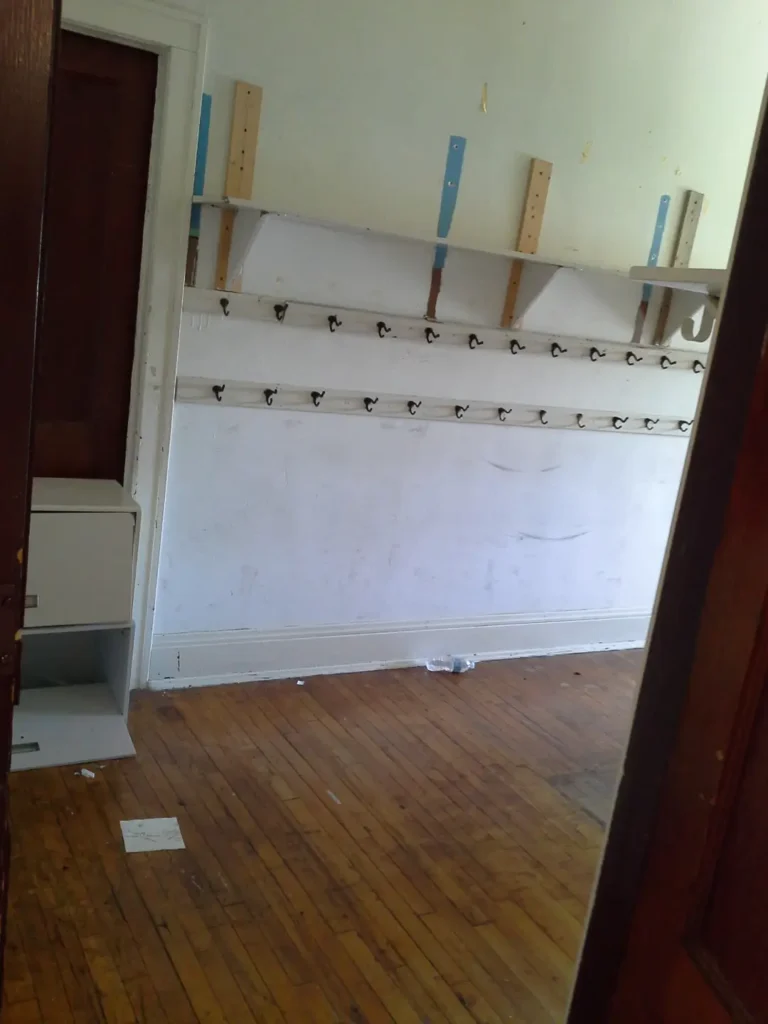
Also like transitions, pre-corrections help a lot during the first week of school.
Example:
“Class, in just a moment, you’re going to pack up your materials and get ready to head to your next class. As you pack up, you’re going to make sure your folders are put away in your mailboxes and that you have everything you need for your next class. When you’re ready, you’re going to wait at your seat. We’re not lining up by the door, and we’re not wandering around the room talking to friends. Ready? Go!”
7. Water Bottle Procedures for the Classroom
Most schools allow classroom teachers to set their own water bottle policies, but just like food in class, check to see if your school has an existing school-wide policy in place.
I prefer to allow students to have water bottles in class.
For one thing, it cuts down on the number of times students ask to leave the classroom.
Additionally, especially in warmer climates, hydration health is a real concern.
However, setting some ground rules will keep water bottle behavior manageable.
Questions to Ask:
Are students allowed to have water bottles in class?
Are there any containers or drinks that are not allowed?
Here are the points in my water bottle policy that made the biggest difference:
- Water bottles are allowed – and encouraged!
- All water bottles must seal firmly; no open cups or straws
- Any generic water bottle left behind will be dumped at the end of the day
- No drinks besides water will be allowed (no Gatorade, no energy drinks)
- If water bottles become a distraction, they will be set aside for the remainder of class
It’s helpful to put this type of policy in writing and send it home in addition to talking to students during the first week of school.
This helps protect you if you have to take a water bottle away from a misbehaving student, and a parent gets upset because the student only told about their water bottle being taken away. (They left out the fact that they were flipping it and punching holes in the cap and squirting water at their friends.)
8. Classroom Bathroom Procedures
Having a bathroom policy that doesn’t disrupt your teaching flow can buy back countless instructional minutes.
Before creating your own bathroom procedure, check whether your school already has a policy.
Questions to Ask:
How will students ask to go to the bathroom?
How will they sign out?
Where will the bathroom passes be kept?
It’s a good idea to have some sort of bathroom signout log, even if your school doesn’t require one.
I once saved a student from getting in major trouble because I was able to prove that she wasn’t in the bathroom during the time some graffiti was discovered thanks to my bathroom signout log.
Some teachers have students raise their hands and ask to go to the bathroom, but I’ve found that this can quickly derail direct instruction or discussion time. You’re never quite sure if a student needs to use the bathroom or has an answer to your question.
If you teach upper elementary students or if your class uses a lecture-style format, you’ll probably like having a designated silent bathroom signal.
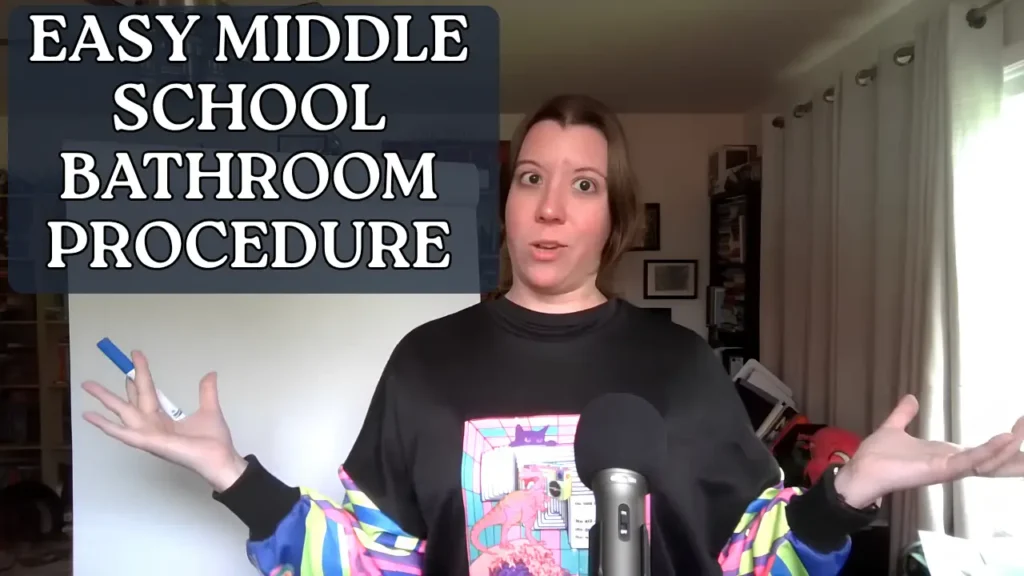
I recorded a YouTube video showing the silent bathroom signal I used, in case you’d rather watch a demonstration.

If your class uses frequent small group instruction, and if your students are mature enough, you might prefer using a bathroom list.
I also recorded a YouTube video for this bathroom procedure, showing how the process works.
9. Classroom Movement Procedures and Expectations
The privilege of standing up and moving around the room as they see fit is just that – a privilege. And it’s one that most teachers don’t even realize they can control.
Questions to Ask:
When are students allowed to get out of their seats?
Are there any requirements before they stand up?
Typically older students can handle more freedom and responsibility, but that doesn’t mean they always make the best choices.
Before school starts, decide when students can stand up and where they can go without asking permission.
To the garbage can? To the pencil sharpener? To the supply bin?
Then consider what happens if students take advantage of this freedom.
I once had a student who had a habit of wandering around the room and disrupting his classmates’ learning.
He’d say he was going to throw away a tissue, then somehow end up on the opposite side of the room from the trash can…and his seat.
After a few warnings, this student’s garbage can privileges were removed. He needed to raise his hand and ask if he wanted to get up and throw away a tissue.
Because he was older, he resented this and tried everything he could to act out in other ways.
I had several one-on-one conversations with him, explaining that the consequence wasn’t really about the garbage can, or even the tissue. It was about following expectations and not disrupting classmates.
With patience – and persistence – he started complying, and he earned back the privilege to throw away his trash without asking.
Classroom Routines and Procedures: Honorable Mentions
If you want help planning beyond these 9 classroom procedures and routines, I created First Week Ready: a back-to-school survival kit designed to help you prepare your classroom, plan your first week, and handle the situations that come up when the school year begins.
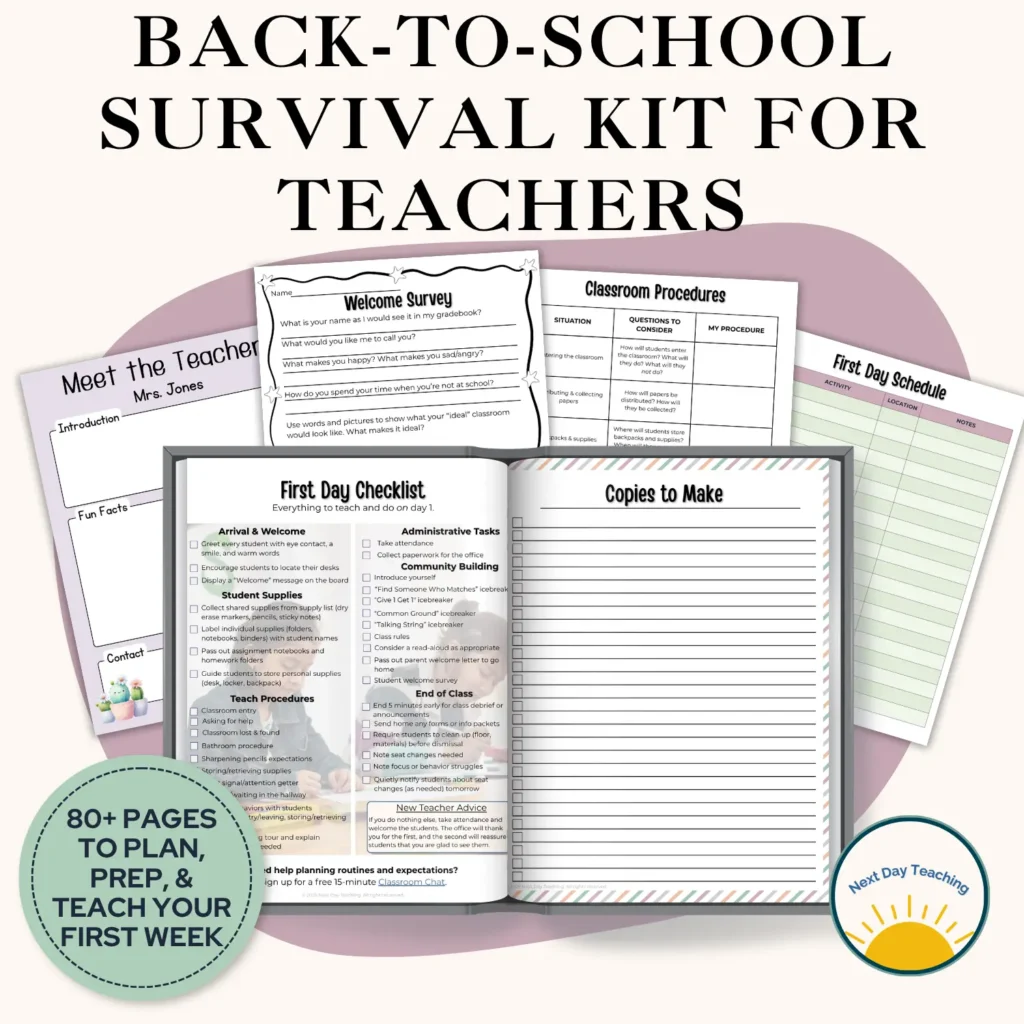
Inside, you’ll find more than 30 common first-week scenarios, along with planning checklists, student activities, and teacher resources to help you start the year with confidence.
Whether you’re a new teacher, changing grade levels, or simply want your first week to feel less chaotic, First Week Ready gives you a plan for those first important days..
Have a specific question about the first week of school? Fill out the contact form and I’ll get back to you before your plan period ends!
F.A.Q.
Classroom routines and procedures are the expected steps students follow for common classroom activities. Routines are repeated habits that help the day run smoothly, while procedures are specific instructions for completing tasks.
Examples include entering the classroom, turning in assignments, transitioning between activities, asking to use the bathroom, getting supplies, packing up at the end of class, and knowing what to do when finished with an assignment.
Classroom procedures and routines reduce confusion, save instructional time, and help students understand expectations. When students know what to do, teachers spend less time correcting preventable behaviors.
The most important classroom procedures to teach first are those that affect daily classroom flow: entering the room, getting attention, transitioning, handling supplies, and ending class.
Teach procedures by explaining the expectation, modeling the correct behavior, practicing with students, and providing feedback. Students need repeated practice before routines become automatic.
A routine is something students do regularly until it becomes a habit, such as starting bell work every morning. A procedure is the specific process students follow, such as how to turn in an assignment or request to leave the room.
Before you comment: Please take a moment to read our community guidelines. We’re building a space that’s welcoming, respectful, and helpful to all!