
Middle school classrooms need different bathroom procedures than those that work in elementary schools. Middle schoolers are more independent, and transitions happen faster than in younger grades. Students are also more likely to complain if their hand was raised “forever” but the teacher never called on them before the class period ended.
In this blog post, I’ll show you what most middle school bathroom procedures look like, why the traditional way can cause problems, and what the best bathroom procedure is for grades 6-8.
- Why Most Middle School Bathroom Procedures Don’t Work
- The Best Classroom Bathroom Procedure: A Bathroom List
- Why This Classroom Bathroom Procedure Works (grades 6-8)
- Some Tips for Using a Bathroom List with Middle Schoolers
- Using a Bathroom List All Year
- Real-World Example: How I Used a Bathroom List Procedure in an 8th Grade Classroom
- F.A.Q.
Why Most Middle School Bathroom Procedures Don’t Work
In most middle school classrooms, bathroom procedures work something like this:
- The teacher teaches a lesson or gives an assignment
- At some point, a student raises their hand
- The teacher calls on the student
- The student asks to go to the bathroom
- The teacher says yes or no
However, this creates several hidden problems:
- Class periods are short enough already without stopping instruction to manage bathroom requests.
- All the responsibility is on the teacher. It becomes the teacher’s job to notice which students are raising their hands. (We all know students who have gotten upset because they’ve been raising their hand “forever” but never got called on.)
- The responsibility stays on the teacher to keep track of who’s next in line. If a student asks to go to the bathroom when someone else is already out of the room, the teacher is usually the one who must remind the student to go when it’s their turn.
If you’re ready for your middle school students to start taking responsibility for their bathroom needs, keep reading.
The Best Classroom Bathroom Procedure: A Bathroom List
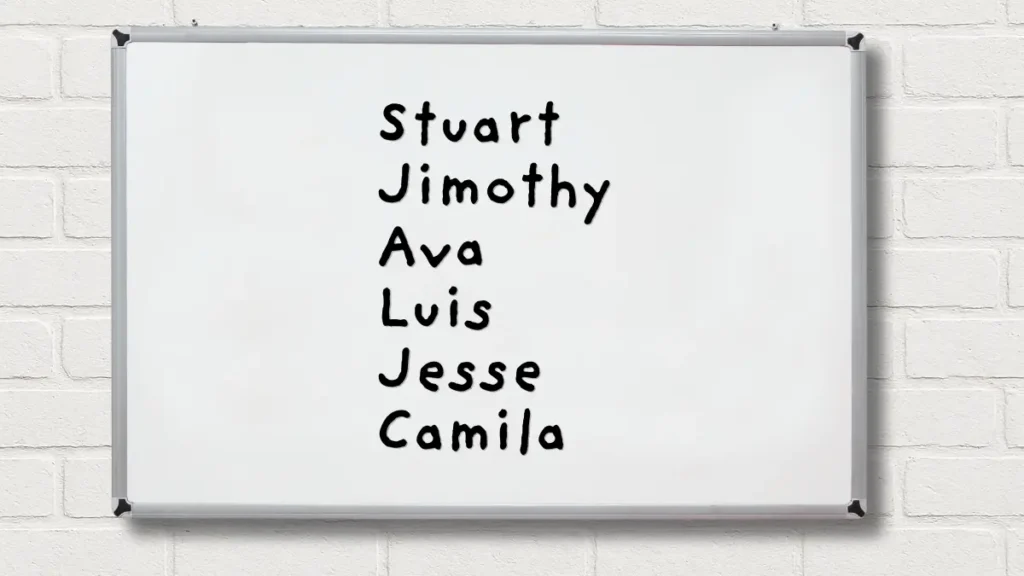
Use a medium-sized dry erase board, or a section of your existing board. You could even use chart paper in a pinch. Whatever you use should be large enough to be seen in the back of the room.
When students first come into class, have them go through their normal beginning-of-class routine: turn in homework, get settled, start working on bellwork.
As they’re doing this, students also raise their hands to indicate that they would like a bathroom break during class.
You (or later, another student) write their names down in a list on the white board.
Class continues as normal, but this time when a student’s name is at the top of the list, they simply leave to use the bathroom on their own.
When a student returns from the bathroom, they erase their name and the next student goes.
During this time, you’re teaching your lessons, students are participating in discussions, and learning is happening – without pausing to address bathroom questions.
Why This Classroom Bathroom Procedure Works (grades 6-8)
By using this system, the responsibility shifts to the students.
The teacher can hold small group conferences or check on student work without needing to constantly scan (or be interrupted) for bathroom requests.
Students can clearly see where they are in line. If a student has a genuine need, they can negotiate with their classmates to move higher in line. On the other hand, if a student is disengaged and not paying attention…they might find their name skipped over!
This works on real-world skills: If you’re at the DMV and don’t pay attention when your number is called, you get skipped!
Middle school students, especially 8th graders, are ready for this level of responsibility.
(Related Reading: 9 Essential Classroom Procedures and Routines for the Beginning of the Year)
Some Tips for Using a Bathroom List with Middle Schoolers
- When you first introduce this procedure, be prepared to be a little more hands-on. Students (even 8th graders) may need some reminders when it’s their turn to go. They will also likely need to be reminded to erase their names when they return.
- When writing student names, put students who tend to take a long time at the bottom of the list. They won’t hold up the rest of the line that way.
- Avoid putting friends back to back…just in case of bathroom shenanigans.
- Students should still use your classroom or school bathroom sign-out procedure, whether that’s signing out on a clipboard, on an iPad, taking a pass, or something else.
- Admittedly, some students will probably use the “bathroom” break as a “get out of class” break. Without hyper-monitoring students and annoying them (and yourself), there’s not much you can do about this. With privilege comes responsibility, so explain to your students that anyone who is found to be abusing the bathroom procedure will not be allowed to use it for several days.
- If a student’s name comes up and they are meeting with a teacher or not paying attention, they get skipped. They can go to the bathroom when they’re available and when someone comes back.
- The bathroom list procedure works best for a class with lots of independent work time, like math, ELA, or science. If your class is more of a lecture-style where the teacher is in front of the students for most of the time, check out this post on the best bathroom hand signal. (It references grades 4-5, but the hand signal works with any grade level.)
Using a Bathroom List All Year
As the year goes on, if the class is responsible enough, students can take over writing names on the bathroom board. This further shifts responsibility to students, giving you more time for attendance and homework collection!
(If they start to let the power go to their head and only write their friends’ names first, this privilege can be taken away and given to another student or taken back by the teacher.)
Real-World Example: How I Used a Bathroom List Procedure in an 8th Grade Classroom
I taught 8th grade ELA, which was a double period. At my school, the first period was expected to be spent holding small-group conferences.
My attention needed to be on the small group I was meeting with, not looking for student hands asking to go to the bathroom.
I started recording a bathroom list, and students loved it.
They enjoyed knowing where they were on the list, and I was able to subtly manipulate the list for a student on a bathroom behavior plan who could only go during even-numbered class periods.
Several times students would enter the class expressing an urgent bathroom need, and I made sure they were at the top of the list.
Some students took advantage of the system, but once they lost bathroom privileges, they soon missed the freedom and independence that their classmates enjoyed.
If you’d like to see this procedure in action, check out this YouTube video I made showing the process step-by-step. And don’t forget to sign up for The Reset Button, a weekly newsletter with easy, impactful classroom management strategies just like this one.

F.A.Q.
A bathroom list is one of the best bathroom procedures for middle school classrooms because it shifts responsibility to students while reducing interruptions during instruction. Instead of raising their hands during lessons, students add their names to a bathroom list and go when it’s their turn. This helps classroom transitions run more smoothly and gives middle school students more independence.
One way to reduce bathroom interruptions is to use a visual bathroom procedure like a bathroom list or hand signal system. Students can communicate their needs without stopping instruction, allowing the teacher to continue teaching while students manage the line independently.
Middle school students still need a classroom bathroom procedure, but many teachers find that older students can handle more independence than elementary students. Systems like bathroom lists allow students to take more responsibility while still following classroom expectations and school policies.
If students misuse bathroom privileges, teachers can temporarily remove their access to their independent bathroom system. Most students quickly learn that responsible behavior allows them to keep the freedom and flexibility that comes with the procedure.
Before you comment: Please take a moment to read our community guidelines. We’re building a space that’s welcoming, respectful, and helpful to all!
Before you comment: Please take a moment to read our community guidelines. We’re building a space that’s welcoming, respectful, and helpful to all!