
Every teacher knows the feeling: Half the class is still working quietly when one student raises a hand and asks, “I’m done. What should I do now?”
While it’s tempting to tell early finishers to “add more detail” or “read quietly,” I found those moments were the perfect opportunity to build critical thinking, logic, and problem-solving skills instead.
I’ve rounded up my five favorite (classroom-tested) resources for early finishers. Some of them work great as independent activities. Others are perfect for substitutes. But they all require very little prep once students understand the format, and best of all students genuinely enjoy them.
This post contains affiliate links, but I only recommend resources I’ve personally used or genuinely believe will help teachers. As an Amazon Associate I earn from qualifying purchases.
Quick note: Some of these books have gone on to have second printings. The cover might look a little different now, but it’s still the same valuable resource inside. This just goes to show how useful they are; I bought them once, long ago, and have used them ever since!
Build Deductive Reasoning Skills with Perplexors
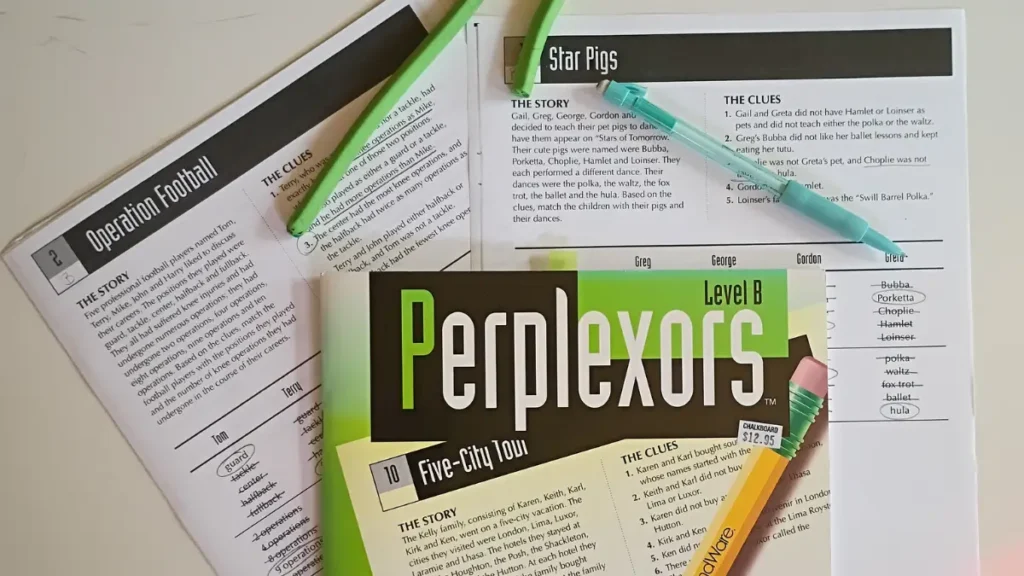
When I needed a quick activity for a couple of students who finished early, Perplexors became my go-to resource. They gave students something engaging and challenging to do…without requiring me to step in and help every step of the way.
Remember those logic puzzle grids? Whether you love them or loathe them, you’ll probably agree when I say that they’re pretty challenging, right?
Perplexors use the same skills (deductive reasoning, process of elimination, logic), but in a much more kid-friendly format.
The Perplexors line has a bunch of books, including some that are directly related to math!
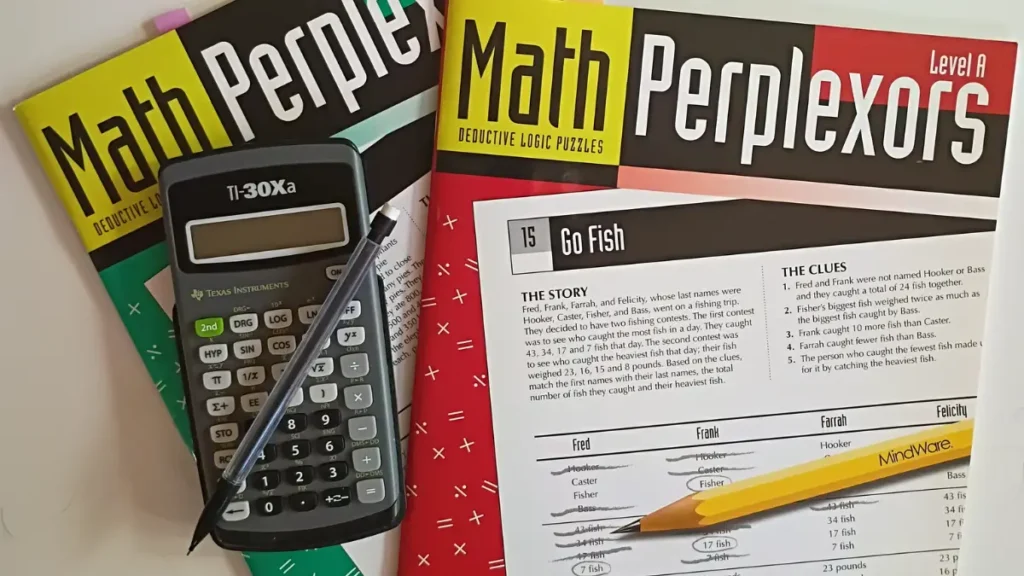
I’d suggest starting with Level B, unless your students are much younger. Technically Level B is suggested for ages 10-12, but I started my 8th graders with them because they needed to build up their critical thinking skills before they could tackle the books aimed at their age level.
Pro Tips
- Start by doing the first few together. Project one using a document camera and have every student follow along.
- Talk through your thinking and how you get each answer. Students need to hear how you think through the clues.
- Do one yourself before leading students through it. You need to know which clues are likely to stump them.
- Once students understand the process, let them work in groups. Talking through the process helps cement the thinking.
Best for: substitutes and whole-class time-fillers (if you let a few students work ahead, you’ll have a hard time keeping up with individually making copies for everyone)
Why I recommend it: Once students learned the process, I could pull these out anytime I needed an engaging, no-prep activity. Anecdotally, I also saw a boost in test scores and argumentation skills, but I don’t have any hard evidence to confirm this.
Encourage Creative Problem Solving with Lateral Thinking Puzzlers
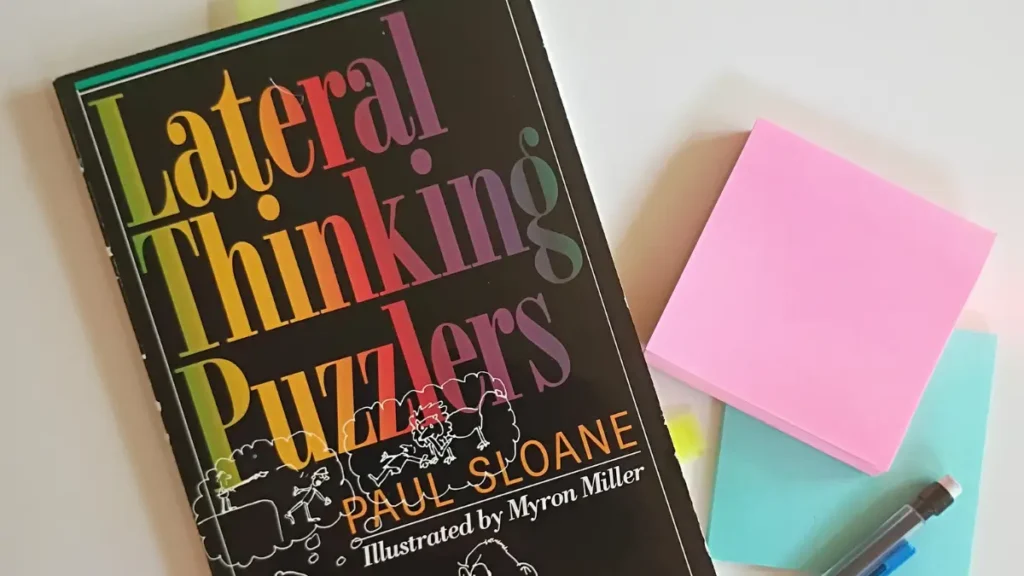
When I had a small group of students that consistently finished before everyone else, taking the time to teach them how to do lateral thinking puzzles saved me from having to redirect a lot of misbehavior.
Paul Sloane has written many lateral thinking puzzle books, and they’re all excellent! This particular one is what I usually start with.
(It’s also pretty old, so you might not be able to find this exact book. That’s ok – I recommend any lateral thinking books by Paul Sloane.)
If you’ve never done lateral thinking puzzles, here’s how it works:
- You read a short scenario from the book. The scenario seems straightforward, but there’s always a twist.
- Students ask yes or no questions to narrow down the answer.
- When students (inevitably) get stuck, the book provides hints you can give them.
As students get comfortable thinking this way, you can challenge them to get to the answer in as few questions as possible.
Pro Tips
- Students will want to shout out solutions at first, and inevitably the solution will be wrong. This can quickly lead to frustration and giving up.
- Coach them through asking questions to eliminate possibilities. For example: Was it raining? Does he always do this? Did this take place inside?
- These books were written a while ago, so there’s some impolite language and outdated terms inside. Preview each puzzle (and its solution) before presenting them to students!
- Once students become comfortable with the process, you can delegate a student leader to take over with a small group. Students love being the one with hint access and the solution!
Best for: grades 7-8, fun Fridays, state testing breaks, and promoting collaboration
Why I recommend it: This teaches students not to jump to conclusions. They think they know the answer, but it turns out to be totally wrong! They have to collect evidence first, then find the solution. I like that it slows them down.
Solve Kid-Friendly Mysteries with One-Minute Mysteries & Brain Teasers
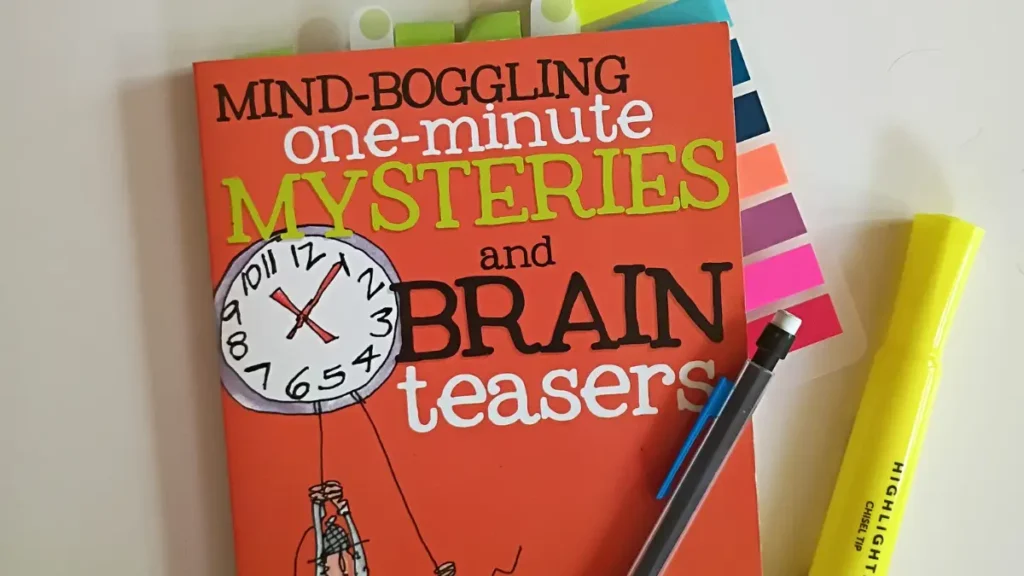
For students who struggled with the original lateral thinking puzzles, and for younger students, One Minute Mysteries still let them build their critical thinking skills in a more ability-appropriate (and age-appropriate) way.
These are similar to the lateral thinking puzzles above, but they’re presented differently, and they have fun illustrations (that don’t help at all with the solution).
They’re also a bit more kid-friendly than Paul Sloane’s books, whose audience leans toward older students.
Since they’re a bit more accessible, you can also set limits to how many questions students can ask. They don’t lose anything if they fail (other than their dignity), but having a limit makes them more cautious in choosing which questions to ask. (And if they asked a question that had already been answered? It still counted!)
Best for: grades 4-8, fun Fridays, awkward time gaps, and indoor recess, collaboration
Why I recommend it: Done whole-class or in small groups, it forces students to work together. They have to listen to each other’s questions and talk among themselves to plan the best questions to ask, especially if you limit it to a set number of questions.
Extend Learning with Quick Formative Assessment Activities
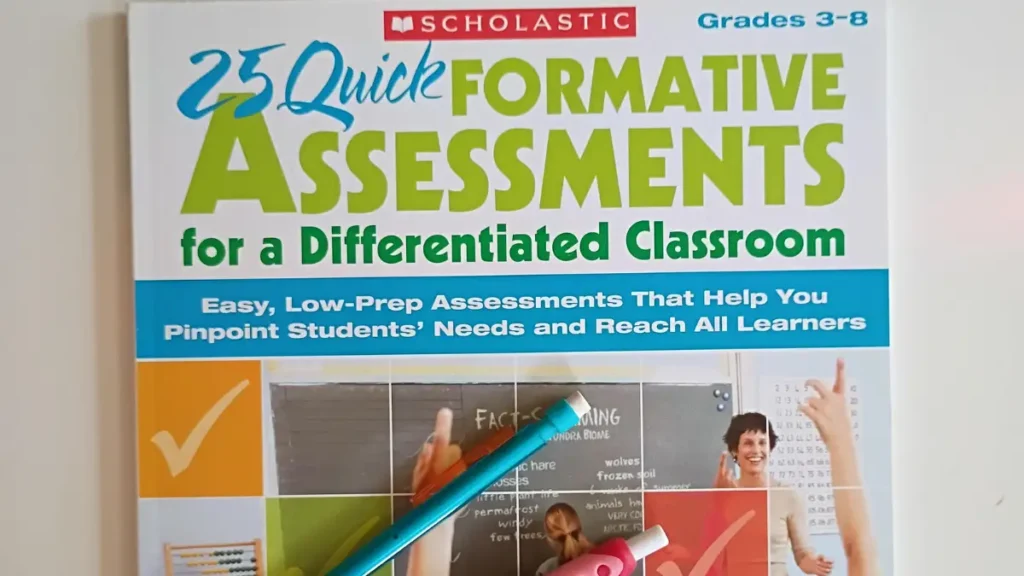
These activities were perfect for students who could do the work quickly and accurately…but struggled to go beyond that. They couldn’t explain it, connect it, or go beyond it. They were just really good at following directions and getting it done.
While the title might not seem exciting, some of the activities inside are perfect for helping fast finishers build critical thinking skills.
(I’m working off of the original edition of the book – the updated version might have slightly different activities.)
These activities all help students think beyond recitation of the material and learn to apply it in some way.
One particular page was especially effective as a fast finisher activity: My Textbook Page. The book has templates for “My Social Studies Textbook Page” and “My Math Textbook Page,” though you could adapt them to science, ELA, music, or any other subject area.
These pages ask students to describe what they’re learning in words and in steps or examples. Students have to identify the most important things to remember as well as hints and tips to keep in mind.
Finally, students connect the concept to others they’ve studied.
It’s great for getting fast finishers to slow down and think not only about what they can do but also how to teach it.
Pro Tips
- These activities can also be done whole-class; you don’t have to let your early finishers have all the fun!
- Just because the book is called “Formative Assessments” doesn’t mean the activities need to be assessments…or even for a grade. I used many of them as supplemental activities in the classroom, and students enjoyed them.
- Plan on these activities taking longer than you anticipate. If you’re using them for early finisher activities, students might need several days to complete one activity.
- Many finished products make great display pieces for hallway bulletin boards or student portfolios.
Best for: grades 4-8, meaningful extension, sub plans, independent or partner work
Why I recommend it: These activities help students look beyond what they are learning. Plenty of students can regurgitate facts and answer questions quickly and accurately. What these activities do is bridge what they know to other concepts. Students have to make decisions, judgements, determinations…just like in the “real world”!
Spark Creative Thinking with The Mysteries of Harris Burdick
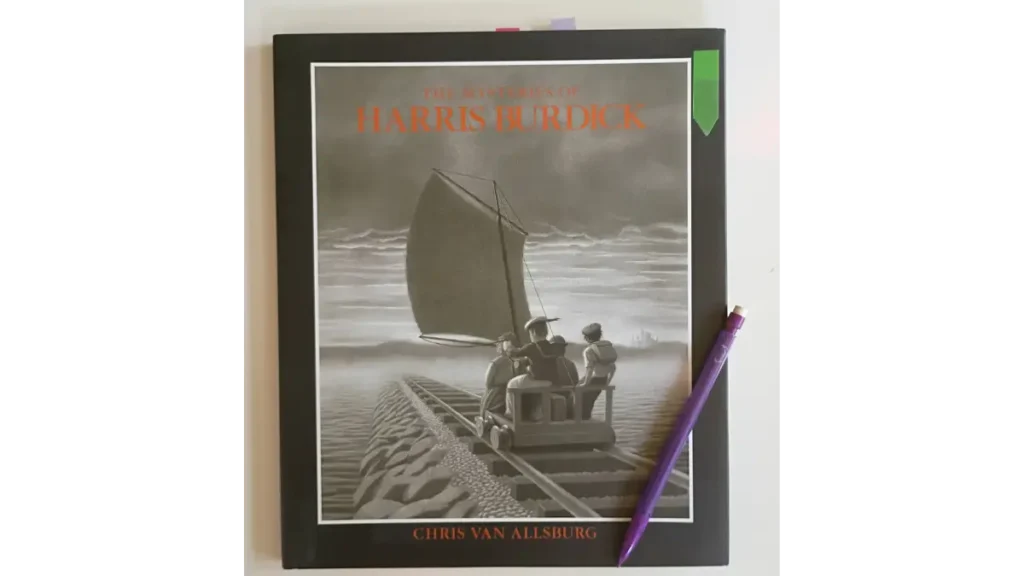
For creative students who couldn’t stop writing or drawing during every spare moment of the day, this book became a lifesaver (for them and for me!).
This gorgeously-illustrated book is less “listen to story time” and more “what is the story?”
The book contains 14 different pictures, each with a title and caption.
The pictures are intriguing, like the one of a man holding a chair over his head, poised to strike a mysterious lump in the carpet. Or the one of a girl asleep in bed with an open book resting on her arm…and vines growing out of the book!
Something about these illustrations simply begs for a story to be written, and your early finishers will be happy to oblige.
The best part is that because students are creating, rather than consuming, their critical thinking skills will be forced to work to incorporate the illustration, title, and caption in their story.
Pro Tips
- Make a photocopy of the picture for every student who wants one. That way they don’t fight over your book!
- Show the original before handing out the photocopy. Since the illustrations are in black and white, they don’t always copy cleanly.
- Try giving every early finisher the same picture, then let them share their stories. You’ll be surprised at how many different tales you’ll get.
- Consider requiring students to use the title and/or caption in their story. They might use it as the opening line, the closing line (for a cliffhanger), or somewhere in the middle.
Best for: grades 3-6, indoor recess, independent work, creative students
Why I recommend it: Often creative students are overlooked in schools today. And I get it: creativity is subjective and often not included in the curriculum guide. This book gives students possibilities and lets their imaginations explore. Even better? Each student’s story is different, which means I could reuse the book year after year without getting tired of it!
Do you have a favorite early-finisher activity? What would you add to this list? Share it in the comments!
Before you comment: Please take a moment to read our community guidelines. We’re building a space that’s welcoming, respectful, and helpful to all!
F.A.Q.
The best early finisher activities challenge students without creating extra work for the teacher. Look for activities that encourage critical thinking, creativity, or problem-solving and that students can complete independently after they’ve learned the routine. Logic puzzles, lateral thinking challenges, mystery-solving activities, and creative writing prompts are all excellent options because students stay engaged while continuing to build important thinking skills.
Instead of assigning extra worksheets or asking students to “add more details,” give them meaningful tasks that require them to think in new ways. Activities like deductive reasoning puzzles, mystery books, and creative problem-solving challenges help students extend their learning while allowing the rest of the class to finish at their own pace. Once students understand the expectations, many of these activities require little or no additional teacher preparation.
Yes! Many gifted students finish their work quickly because they master new concepts faster than their classmates. Critical thinking activities give them opportunities to analyze, infer, create, and solve problems instead of simply completing more of the same work. They’re also a great way to provide enrichment without requiring a completely separate curriculum.
Many of them can. Once students are familiar with the format, resources like Perplexors, lateral thinking puzzles, and One-Minute Mysteries work well as substitute activities because they require very little teacher direction. I recommend introducing each activity yourself first so students understand the expectations before a substitute uses them.
Most of the resources in this list work well for upper elementary and middle school students, although many can be adapted for younger or older learners. Rather than focusing only on the recommended age printed on the cover, consider your students’ experience with logic and problem-solving.