
If you’re looking for quick, effective brain breaks for students in grades 4–8, you’re not alone. Teachers everywhere are searching for simple ways to refocus their classes without losing instructional time. The good news? You don’t need elaborate systems or prep work. You just need a few reliable strategies that actually work in real classrooms.
That’s where this list comes in. It’s a collection of the most effective brain breaks I’ve found and used over the years.
In this post, you’ll find:
- 7 no-prep brain breaks for grades 4-8
- Why brain breaks are important for students
- Tips for using brain breaks effectively in the classroom
- The Purpose of Brain Breaks for Students
- Brain Break #1: Ear & Nose Switch (A Quick Focus Brain Break for Students)
- Brain Break #2: Thumb & Pinkie (A No-Prep Brain Break)
- Brain Break #3: Pencil Flipping (A Movement Brain Break for Older Students)
- Brain Break #4: Opposite Direction Circles (A Quick Brain Break)
- Brain Break #5: Say 21 (A Partner Brain Break for Older Students)
- Brain Break #6: Slap Count (A Partner Brain Break)
- Brain Break #7: Dance Party (A Short Physical Activity Break for Students)
- Tips for the Best Classroom Brain Break Experience
- F.A.Q.

The Purpose of Brain Breaks for Students
Many new teachers think brain breaks are intended to give students a break from hard work. A break for their brains, if you will.
And this makes sense! It’s right there in the name, after all.
But that’s only part of the importance of brain breaks.
When brain breaks are used appropriately, they become energy correctors.
Students too sleepy? Give them a brain break to get their eyes open again.
Dealing with period-10-on-a-Friday-afternoon energy? Pull out a brain break to get students refocused.
Brain breaks can even be used as a no-prep reward for students after finishing a difficult task or staying focused for a long period of time.
They’re versatile, adaptable, and a necessary addition to any teacher’s “bag of tricks.”
(Related Reading: 5 Signs Your Class Needs a Brain Break)
Brain Break #1: Ear & Nose Switch (A Quick Focus Brain Break for Students)

Ear and Nose Switch is my favorite brain break because it’s quick, supply-free, and no-prep. (And because I like seeing middle schoolers struggle to touch their noses. It’s high comedy.)
You’ll want to practice this one before you introduce it to your students.
First, take your right hand and reach across to touch your left ear.
Keeping that hand there, use your left hand to touch your nose. (Your arms will be crossed. This is good.)
Now uncross your arms and slide your left hand over to touch your right ear.
Use your right hand to touch your nose. (Your arms will be crossed again, but your right arm should be on top this time.)
Swap back and forth. See how fast you can go without smacking yourself in the face.
Why This Brain Break Works
Ear & Nose Switch crosses the midline of the body – an invisible line from the top of your head, down your forehead and face, and continuing to the floor. Exercises that cross the midline engage both sides of the brain, forcing it to shift from being bored or focusing on something else back to the task at hand.
Brain Break #2: Thumb & Pinkie (A No-Prep Brain Break)

Thumb and Pinkie is another simple brain break that requires no setup. Like Ear and Nose Switch, you’ll want to practice ahead of time first.
For this brain break, make two fists with your fingers facing you.
On your right hand, extend your pinkie finger. On your left hand, extend your thumb.
Now switch: On your right hand, extend your thumb; on your left hand, extend your pinkie finger.
Switch again. And again. And again.
Keep switching until your fingers get tired or until you end up with two pinkies (or two thumbs) extended.
Why This Brain Break Works
Although Thumb & Pinkie doesn’t cross the midline, it does require your hands to do opposite motions. It’s easy to put two thumbs out, or two pinkie fingers out. But one pinkie finger and one thumb requires concentration, jolting the brain out of whatever it was (or wasn’t) thinking about and bringing it back to the present.
Brain Break #3: Pencil Flipping (A Movement Brain Break for Older Students)
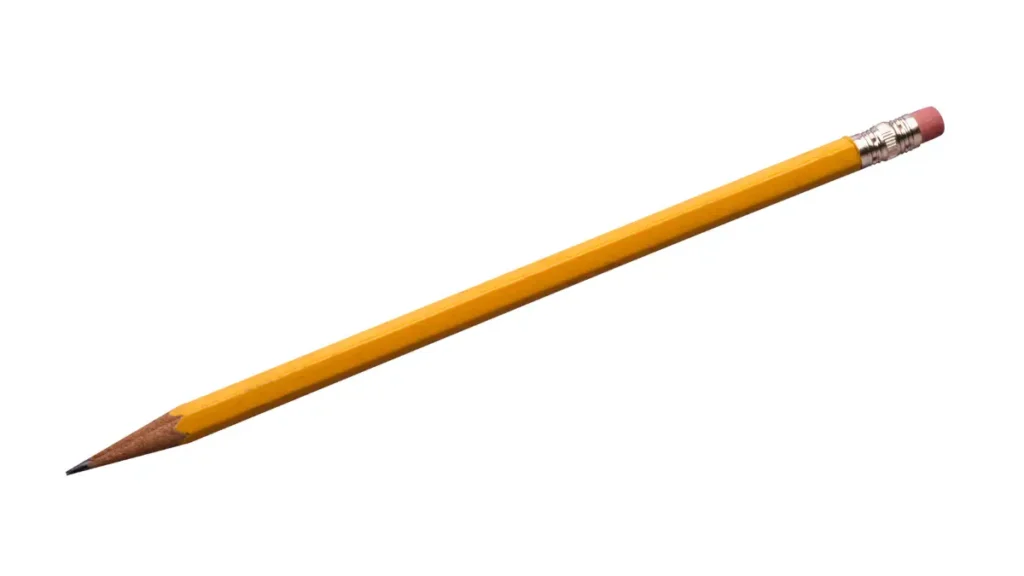
Pencil Flipping is the only brain break that requires any supplies…but all you need is a pencil.
Hold the pencil in one hand (either hand is fine) with the eraser pointing towards you.
Toss the pencil into the air so that it spins one time only before you catch it. (The eraser should be back to pointing towards you.)
This counts as one flip.
See how many times you can flip the pencil until it either…
- Drops to the ground
- Spins more than once
- Spins only halfway around
(You don’t actually need a pencil. A pen, marker, or even a stick would work as well.)
Ways to Adapt This Brain Break
Once your students have mastered the Pencil Flip, you may find that it doesn’t have the resetting power that it did before. In that case, change things up by requiring students to use their non-dominant hand or by making the pencil flip multiple times instead of just once.
Brain Break #4: Opposite Direction Circles (A Quick Brain Break)
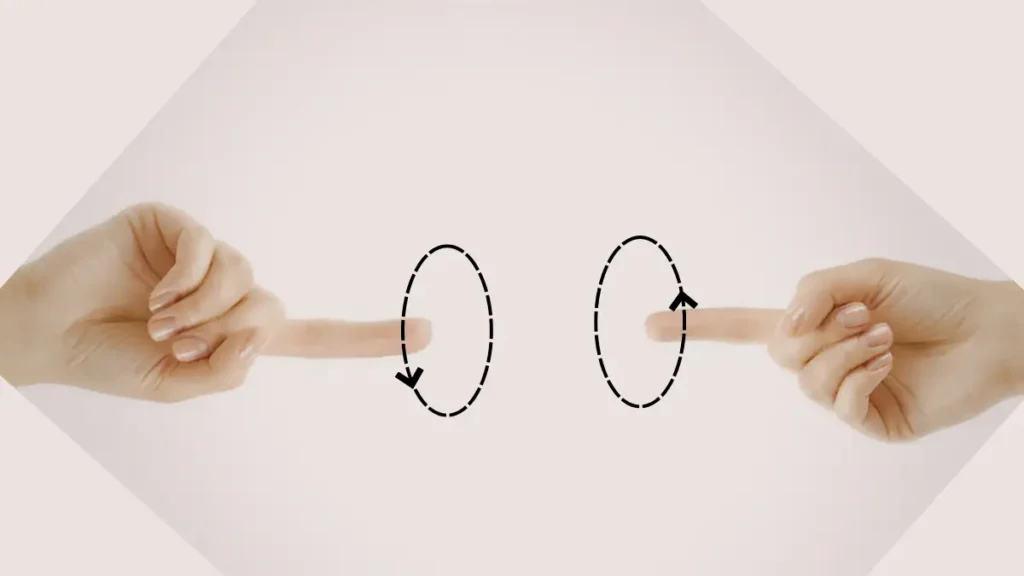
Opposite Direction Circles seems simple, but it is anything but.
To start, point your index fingers at each other in front of you.
Slowly move one finger in a circle away from your body while the other finger makes a circle towards your body. (For example, if the right hand makes a circle by moving away, down, towards, and up, then the left hand would move towards, down, away, and up.) Check out this YouTube video for a demonstration.
Pro Tip: If students say, “This is so easy!” and spin their fingers super fast, they probably aren’t actually moving their hands in opposite directions. It’s easy to go fast when your hands are moving in the same direction, like the “wheels on the bus” motion. It’s a lot harder to make them go in opposite directions.
Brain Break #5: Say 21 (A Partner Brain Break for Older Students)
The “Say 21” brain break is done with a partner, but it also works with groups of three.
First, pick one partner to start. The goal is simply to count to 21. The catch is that each person can say one or two numbers, and whoever says “twenty-one” is the winner.
Example:
Partner A: One
Partner B: Two
Partner A: Three, four
Partner B: Five
Partner A: Six, seven
Partner B: Eight, nine
Partner A: Ten
And so on.
If there’s a group of three, students can either swap one person in after each round, or they can go around in a circle.
(There is a trick to this one. If you – or your students – figure it out, email me at tori@nextdayteaching.com, and I’ll give you a prize.)
Pro Tip: This brain break goes fast, especially once students get the hang of it. Have them play at least two rounds, switching off which partner starts.
Brain Break #6: Slap Count (A Partner Brain Break)
Even though this brain break is called “Slap Count,” you may want to change its name if your students can’t handle it.
Slap Count is also done with a partner.
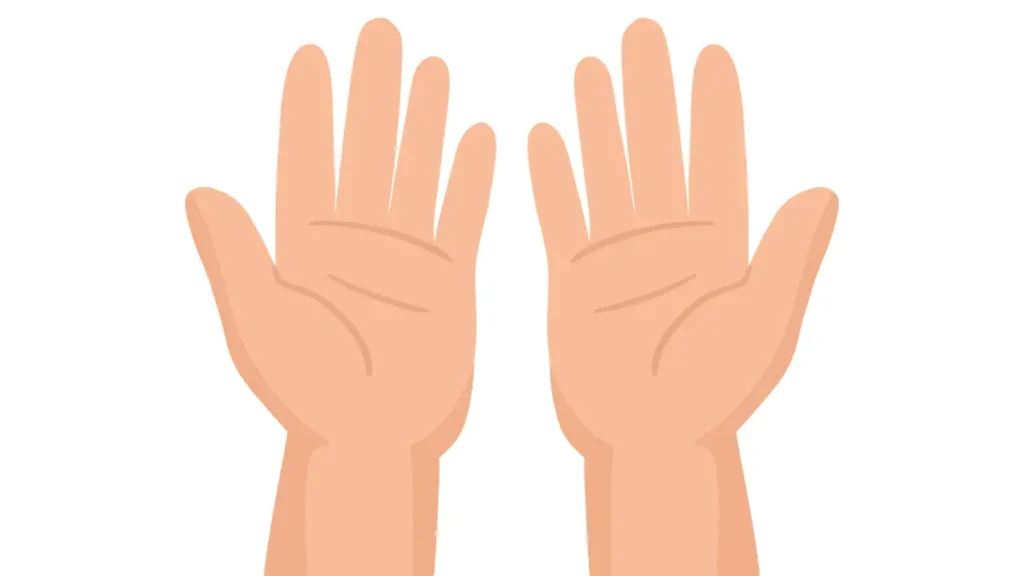
Both students face each other with their hands palm up. One person reaches across – their right hand to their partner’s right hand – and gently slaps their partner’s palm while saying, “One.”
The same partner reaches across with their left hand to gently slap their partner’s left hand as they say, “Two.”
Then their partner reaches across, right hand to right hand, and says, “Three.” The partner reaches their left hand across and says, “Four.”
Unlike Say 21, this brain break can go as long as you want.
You can also switch it up by having students count backwards, skip count, or say letters instead of numbers.
Pro Tip: It’s tempting to make a brain break like this into a review game. “Say a noun every time you slap your partner’s hand.” “Name one of the articles of the Constitution each time.” However, remember that brain breaks are meant to help students refocus and reset. You can certainly adapt this into a review activity, but you should call it something different so students don’t get confused.
Brain Break #7: Dance Party (A Short Physical Activity Break for Students)

The Dance Party brain break gets an honorable mention because it’s one that I never would have come up with on my own.
It took an amazing co-teacher and a class of very sleepy eighth graders to bring this one into being.
One particularly muggy day, our last class of the day could not keep their eyes open. Unfortunately, it was also the day of a major class discussion.
As my co-teacher and I struggled to wake the students up, we started coming up with increasingly unlikely consequences – having to dangle out the window by their toenails; standing on their heads in the middle of the room – but nothing worked.
Then I jokingly suggested making them do the Chicken Dance, and the next thing I knew, my co-teacher was over at my laptop pulling it up on YouTube.
We got over-the-top into it, dancing around the room like we had lost all sense, and we encouraged the students to join in.
A few brave souls joined us, and slowly the rest of the class woke up.
For the rest of the year, all we had to do was threaten to play the Chicken Dance…and we instantly had volunteers to share answers during discussions.
(Related Reading: Why Your Brain Breaks Aren’t Working With Older Students)
Pro Tip: This brain break doesn’t work for everyone. The next year, we had a similar situation, only the students refused to join in. We had to scrap that brain break and do something else. But after all, good teaching means adapting to students.
Tips for the Best Classroom Brain Break Experience
The best brain breaks involve movement of some sort. Even if the brain break can be done seated, you’ll get your best results if you have students stand up. Even better, have students walk across the room.
When brain breaks can be done with a partner; let students pick their friends! (You weren’t holding their attention anyway, and now, you’re the “cool teacher” who let them play a “game” with their friend during class.)
Demonstrate the brain break for students first before asking your class to do it…and don’t assume they remember the brain break by name until you’ve done it consistently for at least a week or more. Demonstrate early…and often.
Don’t let brain breaks last more than five minutes. Even three minutes is long for a brain break. The most effective brain breaks happen quickly, the moment they’re needed, before students transition back to their work.
(Related Reading: Get students to transition quickly with 5 Classroom Transition Strategies That Actually Work)
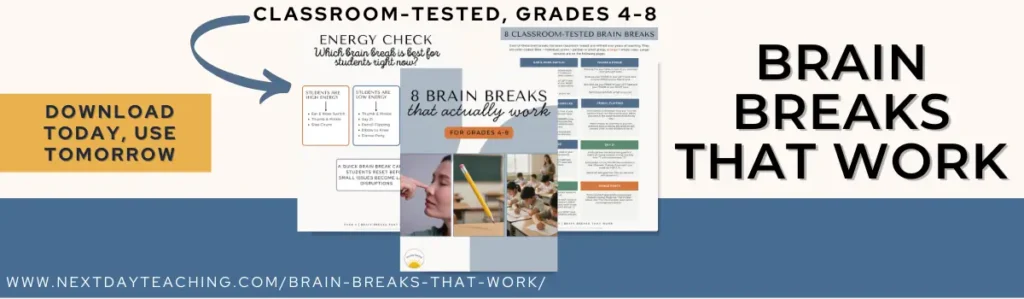
Want these brain breaks in a printable, grab-and-go format? Get these 7 strategies (plus a bonus) in this free set of Brain Breaks That Actually Work.
F.A.Q.
Brain breaks are short, structured activities that give students a mental reset. They typically involve movement or quick challenges that help students refocus and return to learning more effectively.
Brain breaks help improve focus, reduce fatigue, and regulate energy levels. They also increase engagement and can prevent disruptive behavior by giving students a quick reset.
Most brain breaks should last between 1–5 minutes. Shorter breaks are often more effective because they refresh students without taking too much time away from instruction.
Brain breaks are most effective when students seem tired, unfocused, or overly energetic. They can also be used after long periods of concentration or before transitions.
Yes! Brain breaks are especially helpful for upper elementary and middle school students, who often struggle with long attention spans and benefit from quick resets.
Quick brain breaks include activities like hand coordination challenges, partner counting games, movement exercises, and short dance breaks, all of which can be done in under five minutes.
Before you comment: Please take a moment to read our community guidelines. We’re building a space that’s welcoming, respectful, and helpful to all!