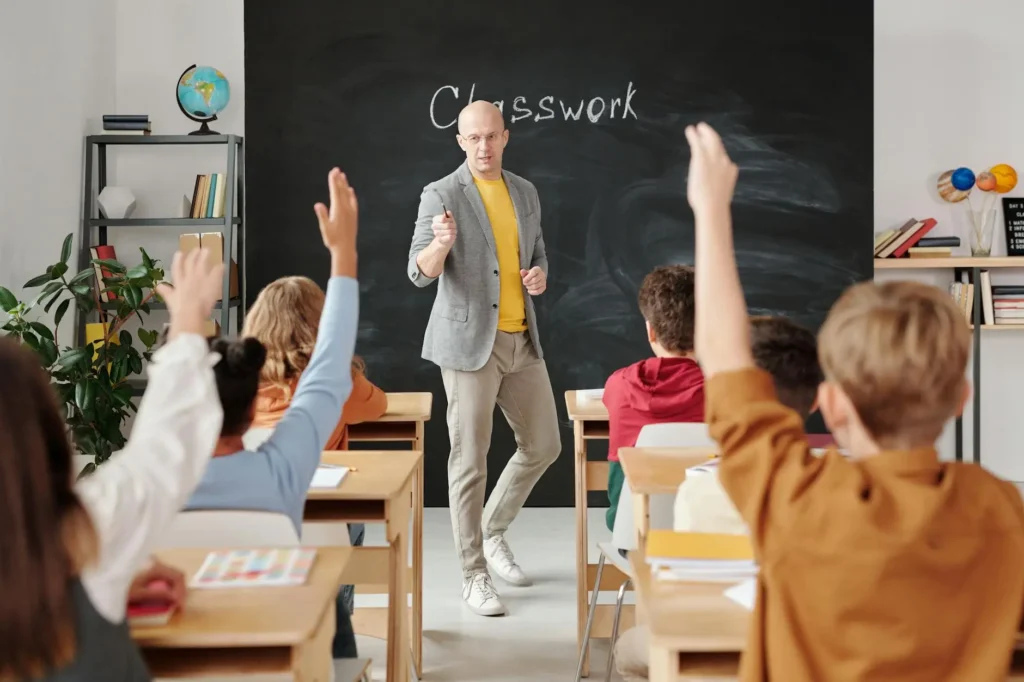
If you’ve found yourself shouting at your class (either out loud or in your head) to quiet down and get to work, you’re not alone.
One of the most common struggles in upper elementary and middle school classrooms is managing a noisy class…especially when students just won’t stop talking.
After all, there’s only one of you…and 24, 27, or 31 of them.
So you end up stuck in the same cycle: you get the class quiet, offer a whole-class reward, notice the noise creeping back up as students get excited, threaten to take the reward away…then start all over again.
It’s not that you don’t have good classroom management skills.
The problem is that many whole-class rewards accidentally hype students up instead of helping noisy classes settle down.
What Makes a Reward Work in a Noisy Class
Whole-class rewards can work for noisy classes, but only if they reduce stimulation instead of adding to it.
Rewards Shouldn’t Require You To Shout
If you have to shout to announce the reward, or if the reward itself involves students shouting over each other…it’s probably not the best for your noisy class.
Rewards Shouldn’t Spark Side Conversations
Have you heard the phrase “Give them an inch and they’ll take a mile”? It’s especially true for noisy classes. If your reward encourages them to make more noise, they’ll have a harder time quieting down when the reward is over.
Rewards Should Work Even When Students Are Dysregulated
Your students might be making noise because their friends are noisy, because they’re excited, or because they just want to be. The reward you pick to use with your noisy class should be effective no matter why students are making noise in the first place.
Rewards Should Be Earned Collectively – Without Chaos
Students should feel ownership of the reward they earned. The reward should feel fair and motivating without creating more chaos than it prevents.

15 Whole-Class Rewards That Help Noisy Classes Settle
The following rewards can be given to whole classes or adapted to individual students.
Low-Stimulation Rewards – best for classes that escalate quickly or struggle after transitions
- Work with music (use trance, instrumental, or classical music to keep the energy levels low)
- Choose seats for the period (teacher reserves the right to deny a seat choice)
- Lights off (make things even more atmospheric with lamps or twinkle lights)
- Work with headphones (headphones may connect to the student’s own music choice or may be noise-muffling)
Structure-Based Rewards – these reduce noise by limiting unstructured time
- Outside work time (weather permitting, of course)
- Walk and talk (partners or small groups walk in the classroom, hallway, or outside to discuss a class concept)
- Standing work time
- Alternative classroom (conduct class somewhere else like the library or gym)
Recognition-Based Rewards – encourage good behavior by praising the positives and calling out what you want to see more of
- Positive note home (teacher sends a positive note or message home to each student’s family)
- Classroom recognition (class is recognized for good behavior choices to peers in the grade, team, or school)
Quiet Activities – best for filling time or settling down after a high-energy assembly or field trip
- Line designs (draw a black squiggle or geometric shape on a piece of paper and have students finish the drawing)
- Appreciation cards (have students make a card showing their appreciation for someone who doesn’t often get noticed, like a bus driver, custodian, cafeteria worker, or school nurse)
- Silent reading (let students choose their own books – yes, graphic novels count – and give them time to read silently; bonus points if this also counts as part of a homework assignment)
- Teacher read-aloud (even older students like being read to…if you pick the right book)
- Drawing/doodle time
Why Some “Fun” Rewards Make Noisy Classes Worse
Many teachers try to motivate students to quiet down by offering incentives for good behavior.
But let’s name what this setup often becomes: a short-term bribe.
And unless all 24, 27, or 31 of your students are motivated by the same reward, their behavior is unlikely to change, at least in the long term.
So teachers are left constantly adjusting rewards and swapping prizes while the noise level in the classroom steadily rises.
Students themselves need to care about the reward. If you’re the only one managing things, the system is likely to fall apart as soon as you burn out.
If Rewards Work for a Week, Then Stop
It’s very common for a new reward system to work for a week or two. But once the shine starts to wear off, things fall apart.
Many reward systems are built to put everything on the teacher: tracking, arbitrating, adjusting, monitoring, contacting, following up, rewarding, deciding.
When you start a new reward system – without removing anything else from your plate – that’s usually a sign your class needs a stronger structure around the reward…not just a better reward.
If you want a simple system that takes responsibility off your plate and puts it on your students’ shoulders, you can learn more in this free 30-minute webinar.
F.A.Q.
Whole-class rewards can work for noisy classes when they reduce stimulation instead of increasing it. Rewards that add excitement or unstructured time often make noise worse, while calm, structured rewards help students regulate and stay focused.
Rewards that help students stop talking include low-stimulation options like quiet music, silent reading time, alternative seating, or structured movement. These rewards work because they lower energy levels instead of raising them.
Classroom rewards often stop working when the system relies entirely on the teacher to track, manage, and enforce it. Without clear structure and shared responsibility, students lose motivation once the novelty wears off.
Yes, rewards can be effective for older students when they respect students’ need for autonomy and dignity. Rewards that feel calm, flexible, and purposeful tend to work better than flashy or childish incentives.
Before you comment: Please take a moment to read our community guidelines. We’re building a space that’s welcoming, respectful, and helpful to all!