
When your students come to class without a pencil, what do you do? After all, if they don’t have something to write with, they often can’t complete the work you’ve planned, right?
I’ve tried a number of different classroom pencil policies over the years, and the one that worked the best was also the simplest: JUST GIVE THEM THE DANG PENCIL!
This post contains affiliate links, but I only recommend resources I’ve personally used or genuinely believe will help teachers. As an Amazon Associate I earn from qualifying purchases.
- Classroom Pencil Policies I Tried That Didn’t Work
- The Classroom Pencil Policy That Actually Worked
- How Giving Students Pencils Builds Classroom Buy-In
- A Simple Pencil Policy Improves Work Completion
- This Classroom Pencil Policy Gave Me LESS to Keep Track Of
- Won’t Students Take Advantage of Such Generosity?
- Pencil Policy Pro Tips
- Ultimately, A Simpler Classroom Pencil Policy Means One Less Thing to Manage
- Frequently Asked Questions About Classroom Pencil Policies
Classroom Pencil Policies I Tried That Didn’t Work
Over the years, I tried numerous pencil policies in my classroom.
I tried having students sign out pencils and return them to me at the end of class.
The problem was that I had to remember to stop class early, go down the list of student names, (hope I could actually read their names), and collect the pencils back. There was no consequence for students who shredded their pencil during class (middle schoolers, am I right?) or who refused to give the pencil back.
I also tried having students trade something to get a pencil. This might be an ID card, a shoe, a book, or something else.
This policy also had a lot for me to keep track of: who traded what, which pencils have already been returned, where to put the stuff…
Plus, if there was a fire drill, I had to make sure students actually went outside with both shoes on.
When I put out a set number of pencils and told students, “When they’re gone, they’re gone,” it was consistently the same students who didn’t take the initiative to get a pencil. (And they were the ones who most needed to get their work done!)
Golf pencils worked fairly well, but they got pretty expensive.
I needed a pencil policy that didn’t rely so much on me keeping track of everything, and that wouldn’t drain my bank account every month.
The Classroom Pencil Policy That Actually Worked
One year I got a giant box of pencils from Amazon and just started putting them out for students to take.
I started with a basket.
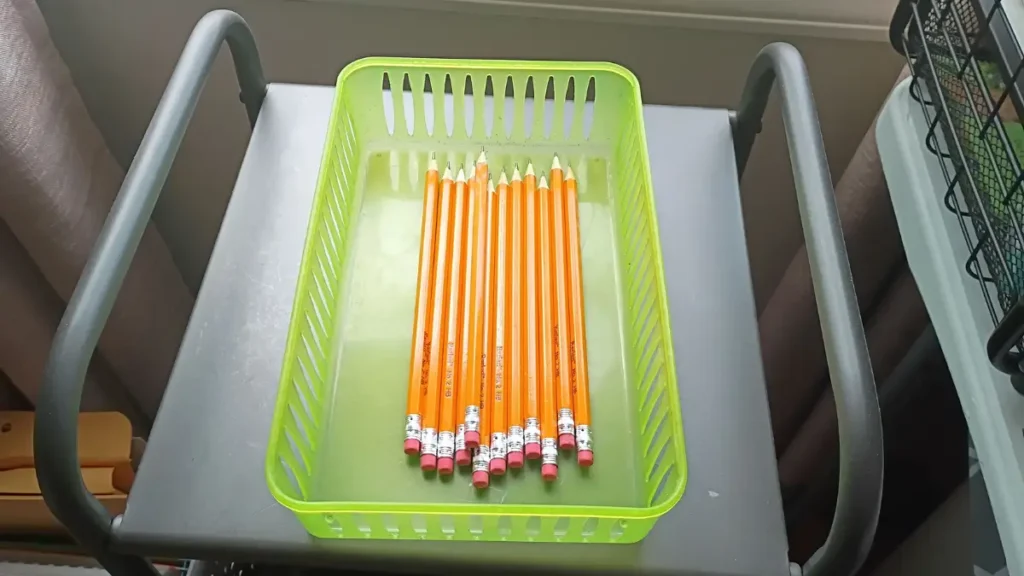
Then I had an amazing co-teacher who found a fairy planter at a yard sale. She prettied it up and put a bucket in the back, and we had ourselves a Pencil Fairy. (It went with our theme of “enchanted forest” that year.)

So when students came to class without a pencil, they received the same line: “Go see the pencil fairy.”
And out of all the classroom pencil policies I tried over the years, this one worked the best.
How Giving Students Pencils Builds Classroom Buy-In
Middle schoolers and upper elementary students tend to be incredibly sensitive to inequality and unfairness – perceived or real.
When you give students a pencil (or make pencils easily available) without asking them to do anything in return, you interrupt the “all adults are unfair” pattern that’s running in their brains. You’re demonstrating that you’re on their side.
I told my students, “If you don’t have a pencil for my class, you probably don’t have one for your next class. So keep the pencil. Take it to your next class, take it home and use it for homework! I don’t want you to be unsuccessful at getting your work done simply because you don’t have a pencil.”
As a result, students stopped fighting me on other things, like working lunches and work completion.
I even had fewer behavior disruptions than my colleagues. Whether that all came down to my radical pencil generosity or not, I can’t tell. But it didn’t hurt!
A Simple Pencil Policy Improves Work Completion
Before I implemented this classroom pencil policy, I had a lot more students with missing assignments.
When questioned, these students would give some variation of the excuse “I didn’t have a pencil.”
As a teacher, I wanted my students to become independent and learn to take the initiative in solving their problems.
But their actions showed me that my previous pencil policies (signing out pencils, trading something for a pencil, limiting pencil supplies) weren’t working.
Parents and admin would question me or get upset with me for students having missing assignments or grades of 0, all because of a pencil!
Once I stopped fighting and just started making pencils readily available, students no longer had that excuse, and the conversation shifted to the student’s choices when work (still) wasn’t done.
This Classroom Pencil Policy Gave Me LESS to Keep Track Of
Our teacher-plates are always full, aren’t they? Things are never taken off the plate…there’s only more added.
Trying to keep track of which students had signed out pencils, or who had traded what, or how many pencils belonged to me was a lot for me to manage!
With this new classroom pencil policy, all I had to do was check the bucket every day or so and refill it when it got low.
Won’t Students Take Advantage of Such Generosity?
Sure, some students took a pencil nearly every day.
But when I stacked this behavior up against everything else, I realized:
- These students often had other difficulties stacked against them. Did I really want to be known as the teacher who also made them jump through hoops for a pencil? I decided that I did not.
- Plenty of other students were responsible and brought pencils to class every day. I wasn’t supplying the entire grade level with a pencil a day.
- I have other battles to fight. I’d rather work with a student on getting their work done on time, or building the content skills they need to master, than whether they can remember to bring a pencil to class.
In fact, when I did start to run out of pencils (or told students I was running out *wink*) towards the end of the year, some of the students who “needed” pencils every day were able to find them on their own.
Yet talking with my coworkers, some of them were still fighting the same pencil battles that had started at the beginning of the year, with students consistently not bringing pencils to class.
Pencil Policy Pro Tips
Don’t put out more pencils than you’re willing to give away.
As soon as you put them out, students will take them. Especially if they’re used to teachers hoarding pencils (no judgment – I did the same for years!), they’ll be in a scarcity mindset. If they don’t grab the pencil now, it might be gone later!
It might take them a few days to realize that the pencils really will be refilled. Then you might be able to go days or even weeks before you need to refill the bucket or basket you’re using.
Be more stingy towards the end of the year.
In the spirit of promoting independence, start to wean students off of depending on you for a pencil all the time.
If you’ve been keeping your stash tucked away (which I do recommend), you can tell students that you’re “running out.” (Even if you still have plenty.)
Try to get them to go a week or two between refills. This will encourage them to get their own pencils, whether from home, borrowed from a friend, or found on the floor.
And speaking of the floor…
Celebrate floor pencils
I became notorious at my school for celebrating pencils I found on the floor. I’d spot one from down the hall, sprint towards it, and hold it up in triumph, proclaiming, “Floor pencil! Best day ever!”
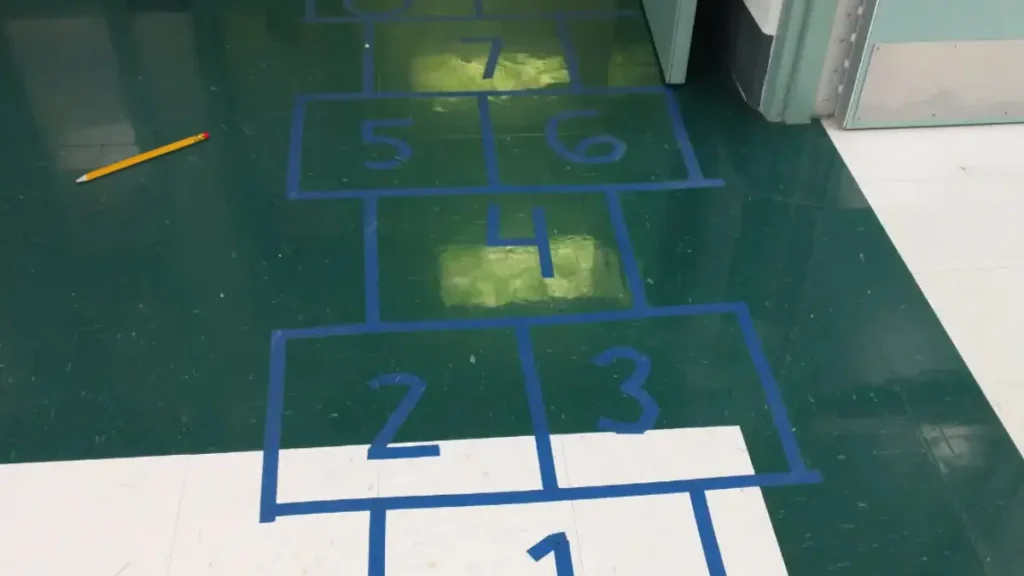
Not only did this give me a little joy in my day, it also helped me refill the Pencil Fairy’s bucket.
Get a big box if you can
This section contains affiliate links, but I only recommend resources I’ve personally used. As an Amazon Associate I earn from qualifying purchases.
The box of pencils I started with was smaller, but it lasted about a year before I ran out of pencils. It was a good starting point, though, because it was cheaper. It allowed me to test my new classroom pencil policy without committing a lot of my own money to it.
When that ran out, I got a much bigger box with 1200 pencils. That box lasted two and a half years, and I still didn’t feel worried about running out anytime soon.
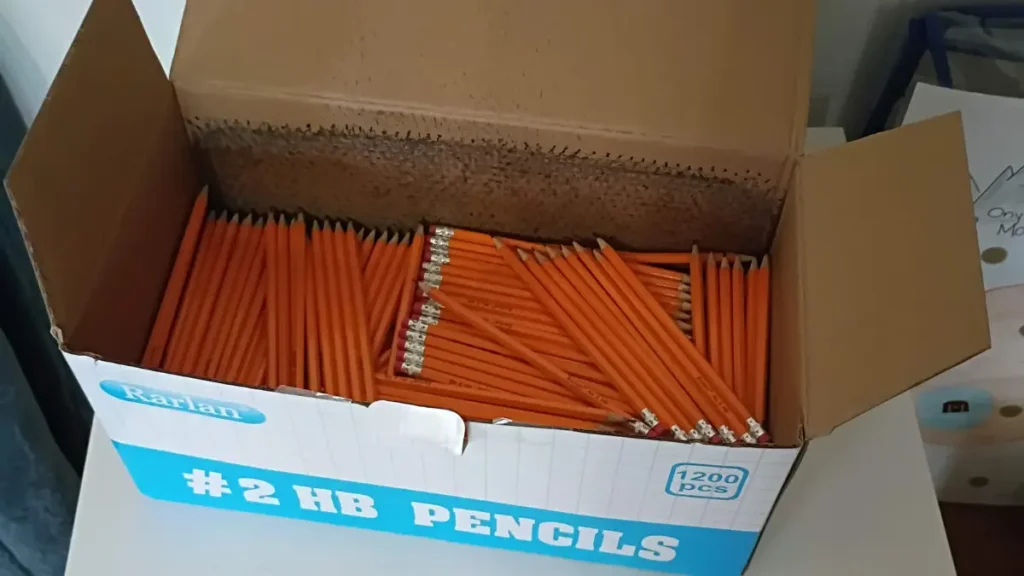
If you can afford it, or if your school will help pay for part (or all) of your pencil supply, I suggest getting the biggest box you can. Not only will it last you longer, but it’s more cost effective.
Ultimately, A Simpler Classroom Pencil Policy Means One Less Thing to Manage
After 16 years in the classroom, I’ve learned that not every classroom problem needs an elaborate system, a sign-out sheet, or a consequence.
Sometimes, the simplest solution is the one that works best.
My Pencil Fairy wasn’t fancy, and my pencil policy certainly wasn’t complicated. But it gave students what they needed.
It encouraged them to take responsibility for their own learning, and it saved me from spending countless hours (and stress) managing something that really didn’t need managing.
Because at the end of the day? I had enough other things to worry about.
Sometimes, you really can just give them the dang pencil!
Frequently Asked Questions About Classroom Pencil Policies
Providing pencils is a simple way to remove an unnecessary barrier to learning. When students have access to pencils in the classroom, they can get started on their work without having to wait for a teacher to find one, borrow one from a classmate, or sit without completing the assignment.
You don’t necessarily need to keep track of every pencil. (In fact, please don’t. That’s a lot of work for you!) Put out a manageable supply rather than making your entire stash available at once. Some students may take pencils frequently, but you may find that your overall supply lasts much longer than you expect. I used the same box of 1,200 pencils for approximately two and a half years and didn’t even come close to emptying the box.
That’s up to you, but I found that requiring students to return pencils created more work than it was worth. I eventually allowed students to keep the pencils they took, including taking them to their next class or home for homework. This encouraged students to take responsibility for having what they needed without requiring me to manage a pencil checkout system.
Keep it simple! Set up a designated location where students can easily access pencils when they need one. A basket, pencil cup, or even a fun container like my classroom’s Pencil Fairy works well. The goal is to make getting a pencil easy and independent, without creating another classroom procedure for you to monitor.
Start with an amount you’re comfortable giving away. You don’t need to put out your entire supply at once, and you may be surprised by how long a large box of pencils lasts. I started with a smaller box to test my classroom pencil policy before purchasing a larger supply of 1,200 pencils.