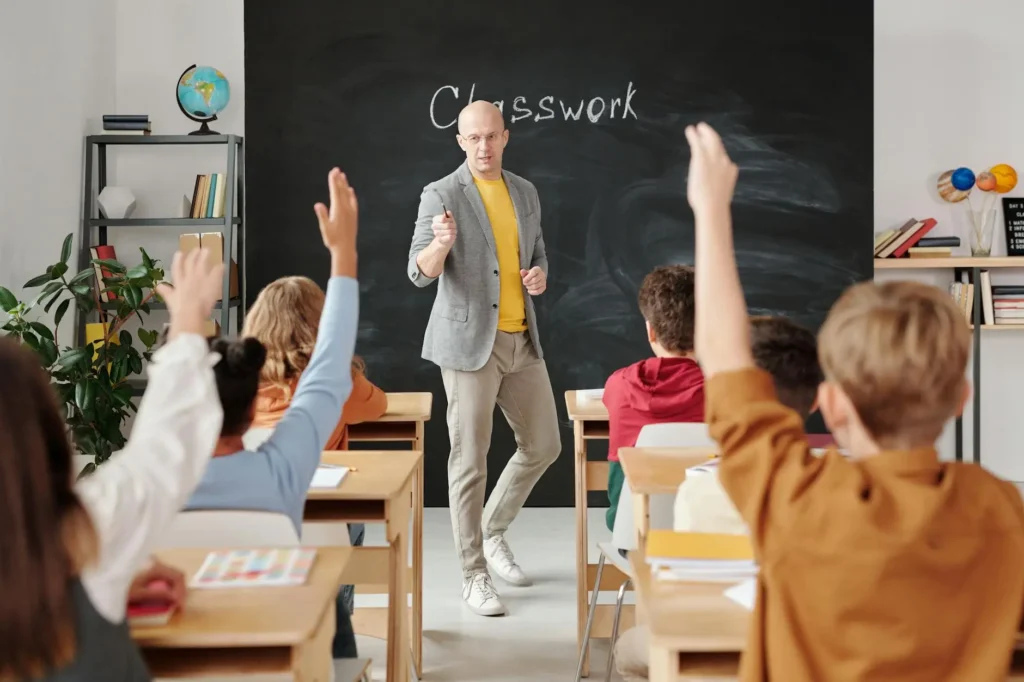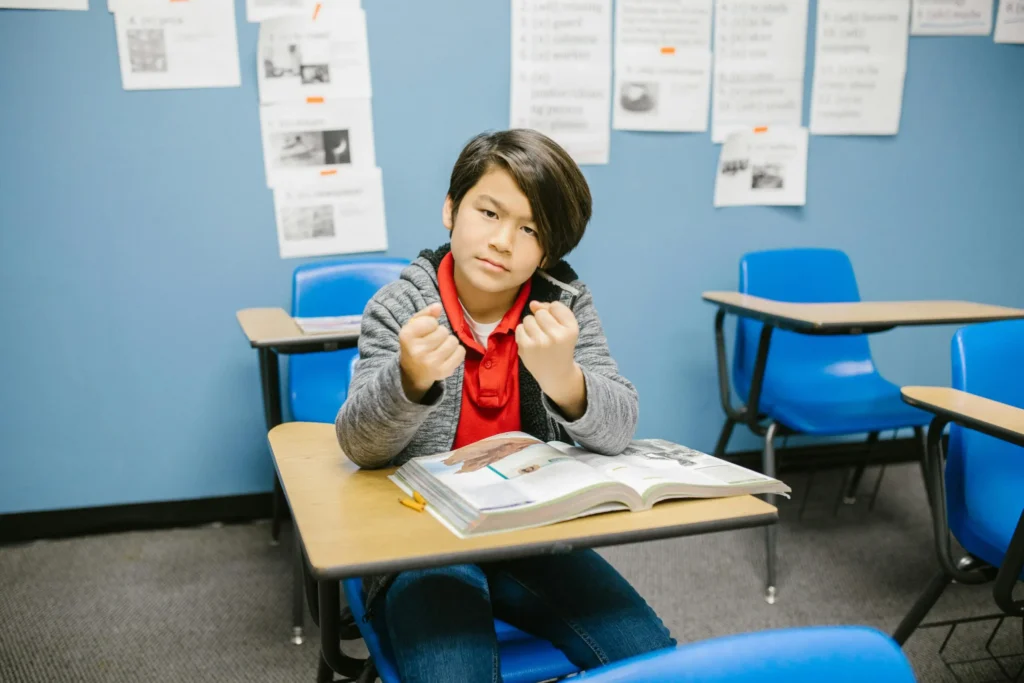

If you’re searching for ways to help students who don’t follow instructions, these practical strategies can get your class back on track without apps or complicated programs.
Because even if you know why and how to set up a classroom management plan, and even if you set up the best one ever, some students just don’t follow the rules.
They talk over others, they don’t do their work, and they don’t seem to care.
Before you throw away your entire classroom management plan, let’s have a quick problem-solving session to get your class back on track.
Why Resistance Happens
It’s awful when students don’t follow the rules. Not only are students shortchanging their own education by refusing to listen, but sometimes their disruptive behavior makes it so others can’t learn either.
For what it’s worth, usually resistance has nothing to do with the rule itself. Students misbehave for a number of reasons.
Don’t take it personally.

Quick Fixes for In-The-Moment Resistance
You don’t need an app to tell you how to manage your class. There are plenty of ways to address student misbehavior in the moment.
One of the quickest fixes is to adjust student seating.
If Alex and Sam can’t stop talking to each other, then have Sam switch seats with Jordan across the class.
This could be for 5 minutes, the rest of the day, or permanently, depending on how many times you’ve had to redirect Alex and Sam.
You can also use proximity to help students stay focused. Remember that time you were doing grading during a staff meeting?
(Just kidding – you would never do that…right? 😉)
When the principal walked by, you hid that student work under your laptop and pretended your red pen was for taking notes.
Students are the same. They know what they’re supposed to be doing – and not doing.
Walk close to them, and the misbehavior will stop. (Feel free to stay awhile if you worry they’ll be right back at it as soon as you walk away.)
In a pinch, you can take away minor privileges from students who consistently ignore class rules.
I’m not talking about taking away recess or giving after-school detentions. Sometimes those end up being just as much a punishment for you as for the students.
Instead, think about all the privileges your students have during the day:
- Can they sharpen a pencil whenever they want?
- Can they get out of their seat to throw away trash without asking permission?
- Can they ask to use the bathroom with just a hand signal?
All of those privileges can be taken away. Now you have a student (or group of students) who must:
- Ask to sharpen a pencil. If you don’t give permission and they don’t get their work done, they have to finish it for homework.
- Ask to get out of their seat to throw something away. They still have to throw away garbage before leaving – and if they’re late to their next class, that’s a natural consequence that might happen.
- Wait for you to stop teaching before asking to use the bathroom – with words. In the meantime, they see all their friends and classmates going “before” them, while they have to wait.
My all-time favorite way to deal with a class that won’t listen is to conduct a quick behavior reset.
Troubleshooting Your Plan – How to Tweak Without Starting from Scratch
I’d love to tell you that these quick fixes are the secret sauce to a well-behaved class full of students who follow instructions.
The truth is, you’ll probably have to try a few fixes – and stick with them for a few weeks – before you start to notice a difference.
During this time, revisit your classroom management plan.
Are there any consequences that worked particularly well? Add them to your list so you remember to keep using them next week!
Did you get a positive response after a parent contact? Note that so you can follow up with a positive behavior – or an escalation – in the next couple of days.
Avoid Power Struggles
Getting into a power struggle is a common mistake teachers make when adjusting their classroom management plans and trying to get students to follow the classroom rules.
A power struggle starts when a student outright refuses to do something, or when they do something they have been told not to.
- A student who has been told to ask permission before getting out of their seat gets up anyway.
- A student who knows they must wait for a bathroom escort leaves the room without permission.
- A student refuses to complete their work and hands in a blank paper at the end of class.
These behaviors by themselves do not cause a power struggle. The power struggle happens when the teacher steps in and tries to make the student obey anyway.
- The teacher stops the lesson and yells for the student to return to their seat.
- The teacher tries to block the student from leaving the classroom.
- The teacher holds the student back from leaving, or assigns a detention, and refuses to let the student submit the blank assignment.
Power struggles not only damage the relationship between teacher and class, they also harm the teacher’s reputation.
Think of a power struggle like playing tug of war with a gorilla. Of course the gorilla is stronger than you – just like the student, in this moment, is likely more stubborn.
While you might be able to force the student to comply, doing so would lead to resentment. And for what? A single moment of victory.
Instead, drop the rope. The gorilla can’t pull you over if you’re not holding on.
Similarly, the student can’t fight you if you refuse to engage.
Let the student have their moment. Then enforce the next level of consequence on your classroom management plan.
This might be a conference or phone call with the student’s parents – with the student present.
It might be a lunch detention – pulling the student away from their friend group to complete missing work.
After the situation has calmed down, and when you have the student away from peer influences, you can have a restorative conversation to get to the root of why they’re not following instructions during class.
Build Your Classroom Management Plan
If you haven’t built your classroom management plan yet, it’s not too late to start.
Using this template, you can build your classroom management plan in 10 minutes or less.
That gives you enough time to make your classroom management plan and run those copies you’ve been putting off.
For more strategies on building a plan that works, check out the full guide on creating a classroom management plan, including templates and key components.
F.A.Q.
Students rarely resist because of the rule itself. They may be testing limits, seeking attention, or struggling academically. Understanding their “why” helps you respond calmly and keep your classroom running smoothly.
Try quick fixes first: adjust seating, use proximity, or limit small privileges. Then tweak your plan over time and include restorative conversations if needed. Consistency is key.
Don’t engage in tug-of-war. Let the student have their moment, then calmly enforce the next consequence. Staying calm preserves both authority and relationships.
Nope. While apps are shiny and fun, nothing beats walking the room, adjusting seats, or having a quiet restorative conversation. Tech can’t replace your teacher senses.
Give strategies a few weeks and track what works. Small, consistent adjustments often lead to lasting results.
Before you comment: Please take a moment to read our community guidelines. We’re building a space that’s welcoming, respectful, and helpful to all!