
Tori

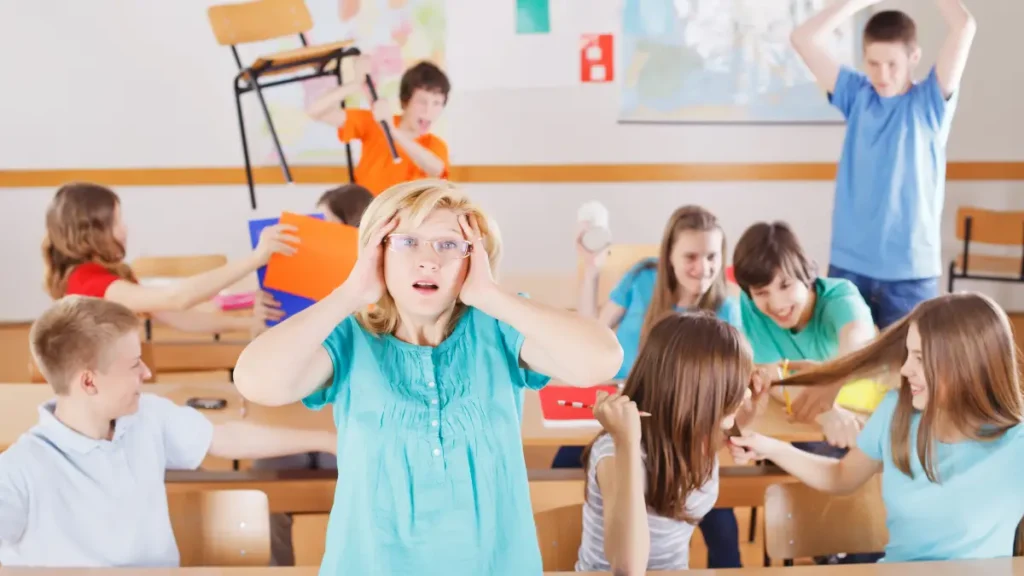
A blonde teacher wearing a teal shirt puts her hands to the sides of her heads and widens her eyes in dismay at the chaos behind her. Students are raising chairs above their heads, throwing paper, and pulling each other's hair, showing a classroom transition strategy that is not working.

5 Classroom Transition Strategies That Actually Work (Grades 4-8)

If classroom transitions in your upper elementary or middle school class feel chaotic, you’re not imagining it. Many teachers assume students already know how to move quickly between activities, put supplies away, and start the next task without reminders. In reality, many students have never been explicitly taught these skills. The result? Transitions that take […]

5 Classroom Transition Strategies That Actually Work (Grades 4-8) Read More »

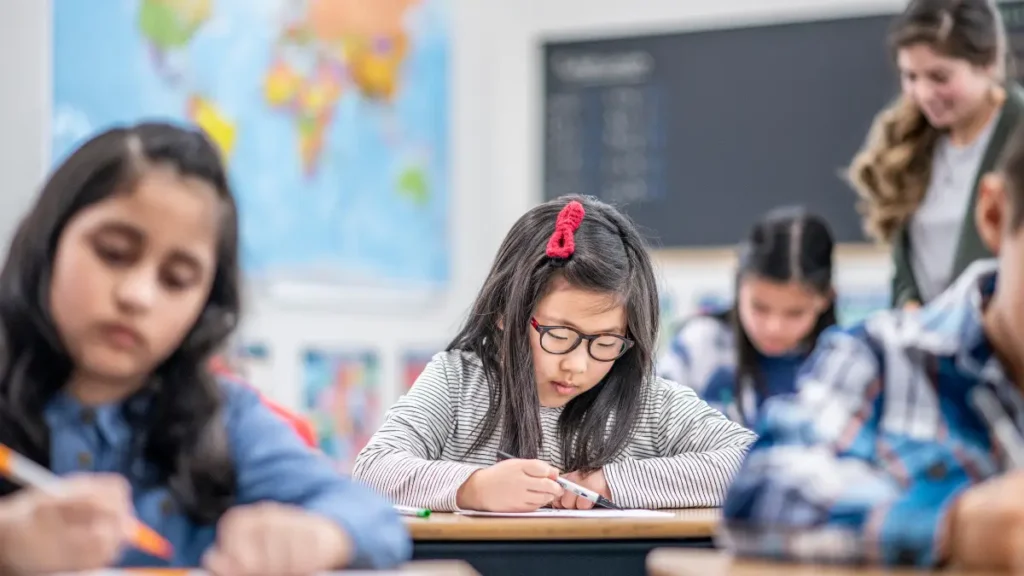
A fourth grade student works at her desk while the teacher hovers in the background, standing by a student who won't do their work.

What to Do When Students Won’t Do Their Work in Class (Grades 4–8)

As a teacher, you spend countless hours planning lessons and preparing work that will guide students along the path to understanding. This makes it especially frustrating when students won’t do their work. You can see the clear connection between this worksheet or that assignment and the larger understanding that your students will achieve. When students

What to Do When Students Won’t Do Their Work in Class (Grades 4–8) Read More »

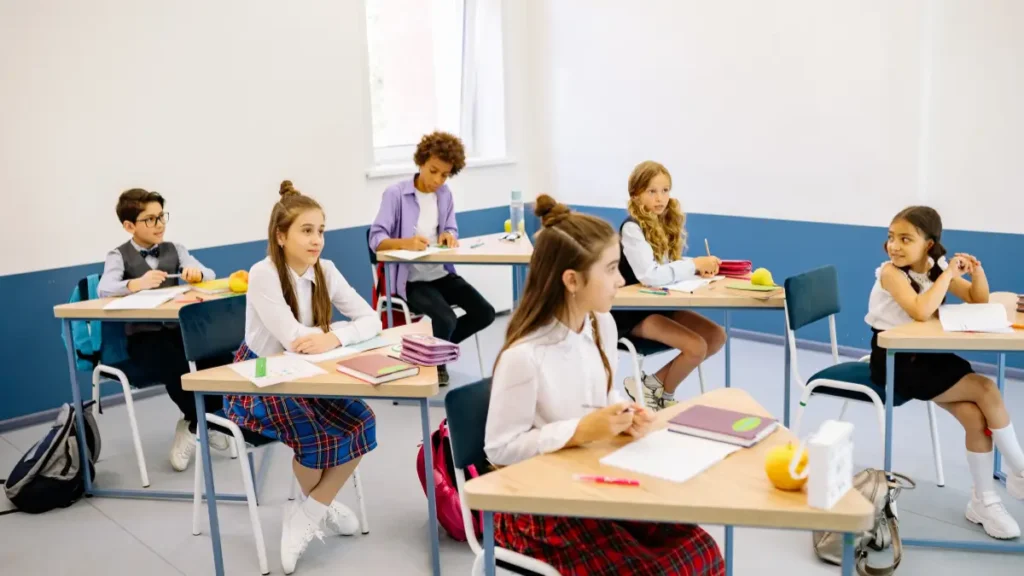
Six students sit at their desks enjoying a quiet reward. The class is neat and not noisy.

Whole-Class Rewards for Noisy Classes (That Don’t Make Things Worse)

If you’ve found yourself shouting at your class (either out loud or in your head) to quiet down and get to work, you’re not alone.  One of the most common struggles in upper elementary and middle school classrooms is managing a noisy class…especially when students just won’t stop talking. After all, there’s only one of

Whole-Class Rewards for Noisy Classes (That Don’t Make Things Worse) Read More »

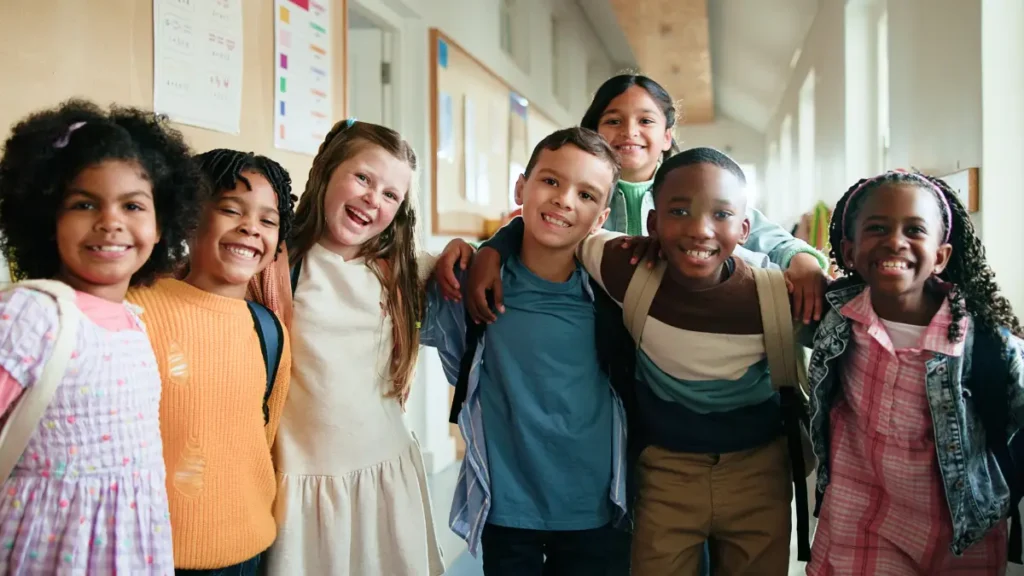
Eight upper elementary students of mixed races stand in a hallway together and smile, showing responsibility and self-regulation in the classroom

How to Teach Responsibility in the Upper Elementary Classroom (Without Behavior Charts That Fizzle Out)

Here’s a truth bomb for your Tuesday (or whenever you read this): You can’t teach responsibility in a day. In upper elementary classrooms, responsibility usually shows up as students following directions, managing their behavior, and getting their work done without constant reminders. You can create the world’s best-designed mini-lesson. You can introduce it and teach

How to Teach Responsibility in the Upper Elementary Classroom (Without Behavior Charts That Fizzle Out) Read More »

Students in older grades lean over a notebook and work and write cooperatively, showing an effective learning environment with strong classroom management

7 Classroom Management Strategies for Grades 4–8 (That Don’t Fall Apart by October)

Finding effective classroom management strategies for older grades – specifically upper elementary and middle school – can be tricky. Most classroom management strategy advice is written with younger students in mind.  This isn’t because students in grades 4-8 magically learn how to behave over the summer; it’s because behavior in older grades becomes more complex,

7 Classroom Management Strategies for Grades 4–8 (That Don’t Fall Apart by October) Read More »

A blue paper ripped in a curl to reveal the word Reward, indicating a prize or award for student good behavior

Do Rewards Facilitate Learning…or Just Temporary Compliance?

If rewards really worked the way we’re told they do, classroom behavior would get easier every year. Instead, many teachers find themselves stuck in a cycle of bribing, begging, and burnout, especially in upper elementary and middle school classrooms. That’s not because rewards are useless. It’s because most reward systems are built to enforce compliance,

Do Rewards Facilitate Learning…or Just Temporary Compliance? Read More »

A chart with student names and stars representing an individual behavior chart in a classroom

Why Individual Behavior Charts Don’t Teach Students What We Think They Do

When faced with the burnout that creeps in with whole-class reward systems, many teachers shift to using individual behavior charts. These could be clip charts, behavior cards, color systems, names on the board, etc. I’ve used some of these systems myself. I’ve seen many teachers use others.  Here’s what I’ve noticed over time: Whole-class systems

Why Individual Behavior Charts Don’t Teach Students What We Think They Do Read More »

Kids and teachers having fun with bubbles and balloons in a lively classroom setting.

The Real Purpose of Whole-Class Reward Systems (It’s Not Motivation)

The purpose of whole-class reward systems is often framed as motivation. The thinking goes: If students want the reward badly enough, they’ll behave. But that assumption is exactly where many systems start to fall apart. Last week we talked about why many whole-class reward systems fail: Most whole-class reward systems fail because they put all

The Real Purpose of Whole-Class Reward Systems (It’s Not Motivation) Read More »

A teacher guides students during a classroom activity, fostering engaging learning.

Why Most Whole-Class Reward Systems Fail (And What Successful Teachers Do Differently)

Whole-class reward systems are often recommended as the ultimate classroom management solution, but they often solve the wrong problem. If your whole-class reward system works one week and falls apart the next, you’re not imagining things. Most teachers love the idea of whole-class reward systems. After all, they’re fairly simple to set up. (And they

Why Most Whole-Class Reward Systems Fail (And What Successful Teachers Do Differently) Read More »