
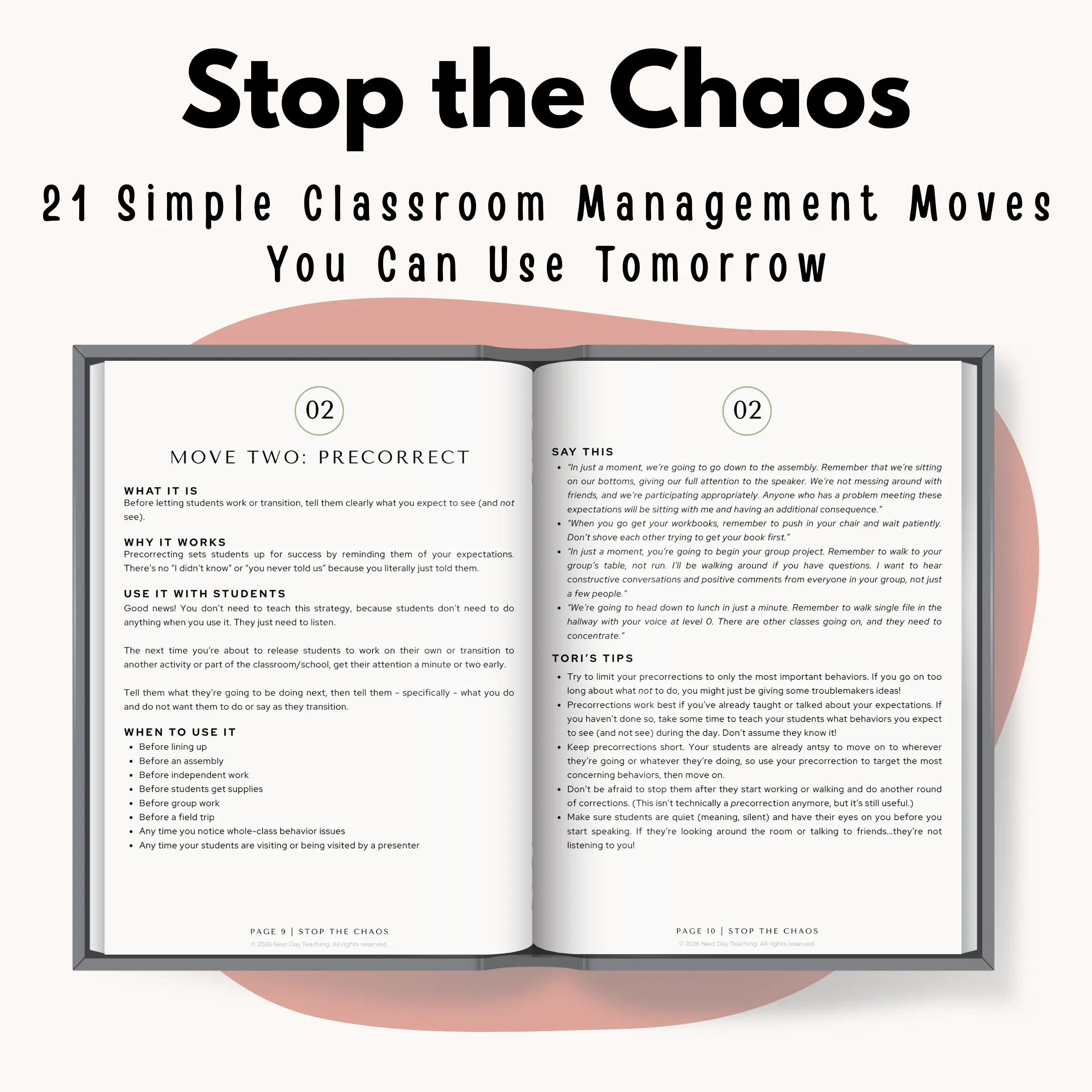
Stop the Chaos: 21 Simple Classroom Management Strategies You Can Use Tomorrow
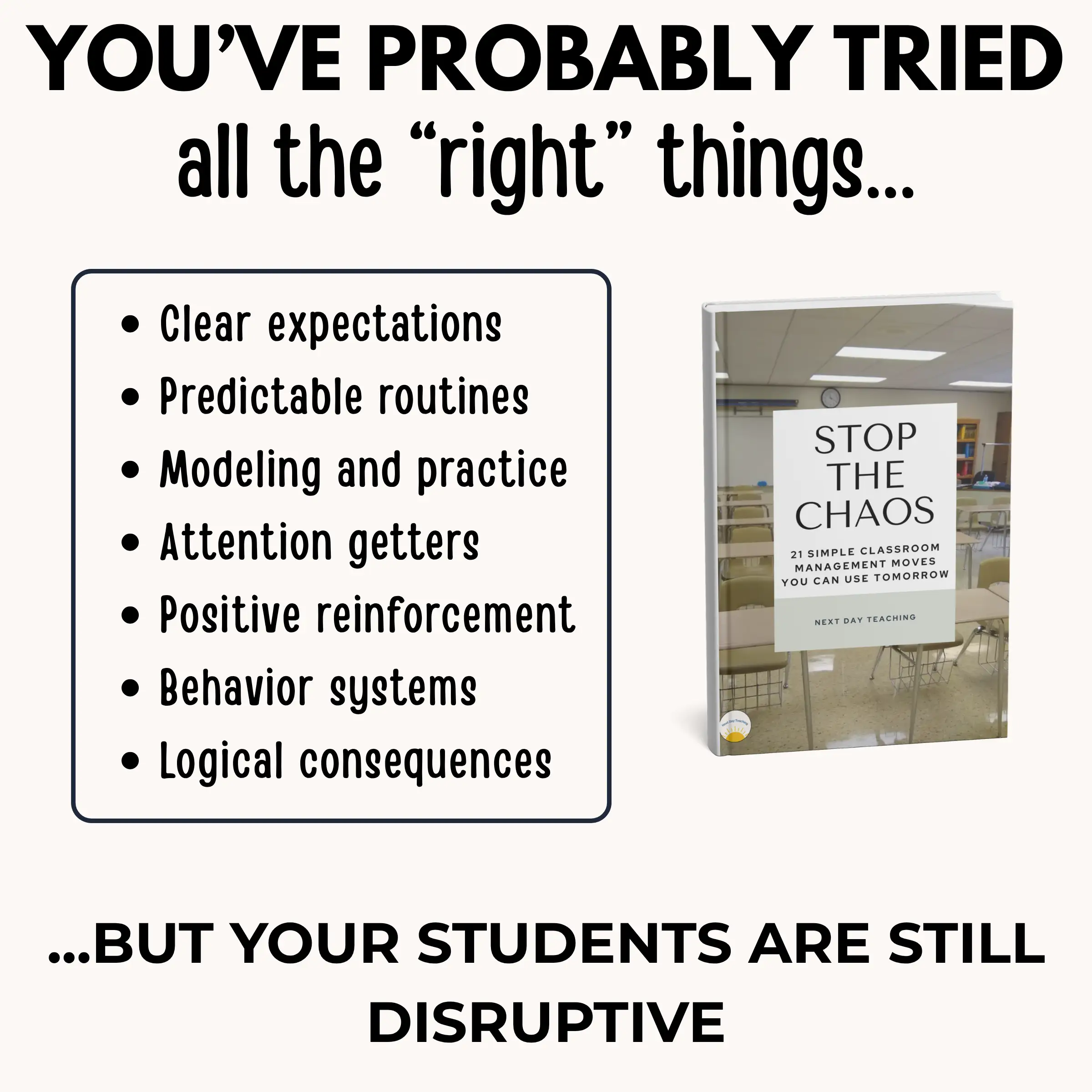
Good classroom management isn’t about having one perfect system that works every time. Even when you’ve established clear expectations, practiced routines, and built relationships with your students, different classes and different moments call for different approaches.
And sometimes you just need another move to pull out of your toolbox.
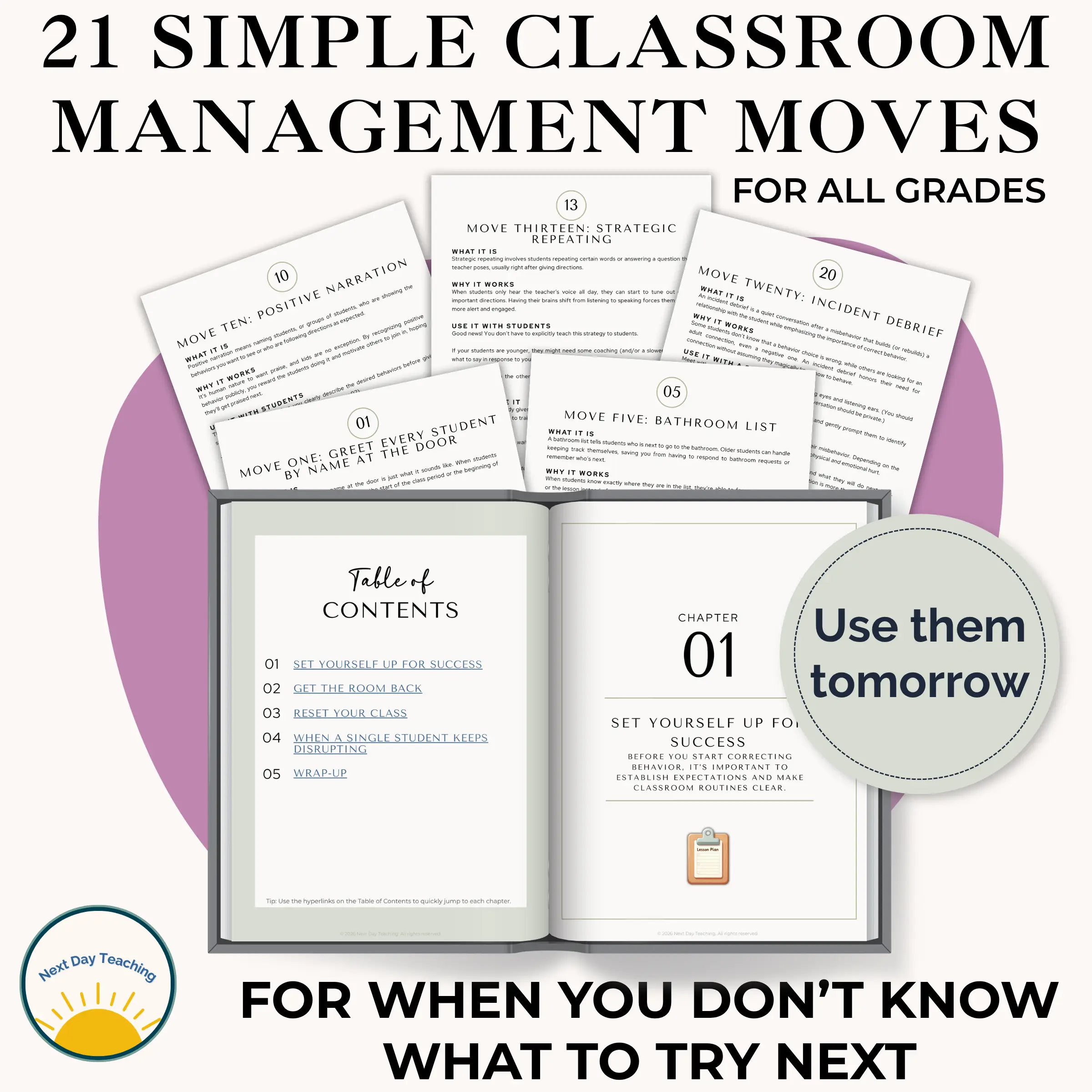
That’s what you’ll find in Stop the Chaos: 21 simple classroom management strategies I’ve actually used in my own classrooms across 16 years of teaching. These are practical moves you can use to redirect a student, settle the room, reset the class, or handle a persistent behavior problem – without adding a complicated system to your plate.
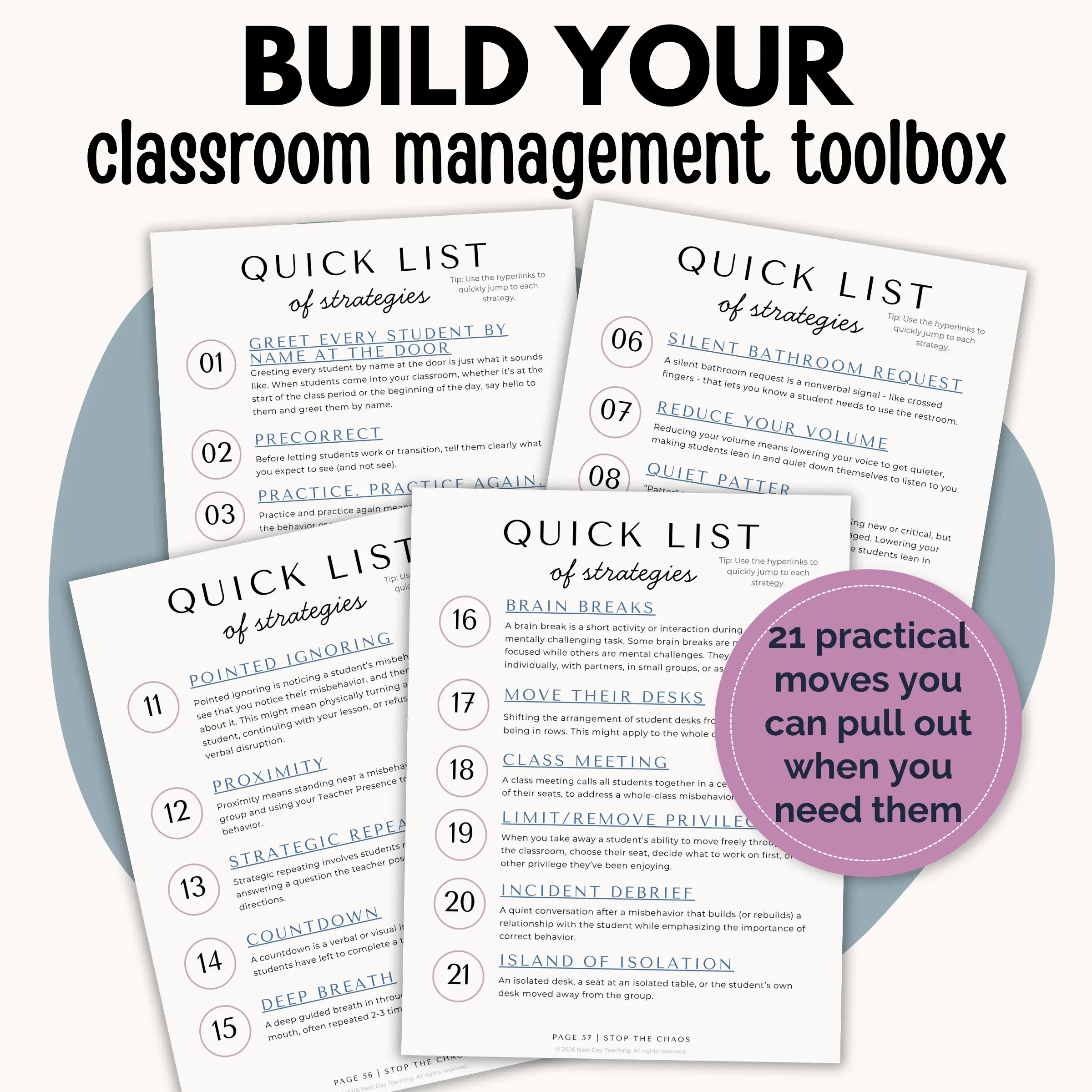
Inside, you’ll find strategies for:
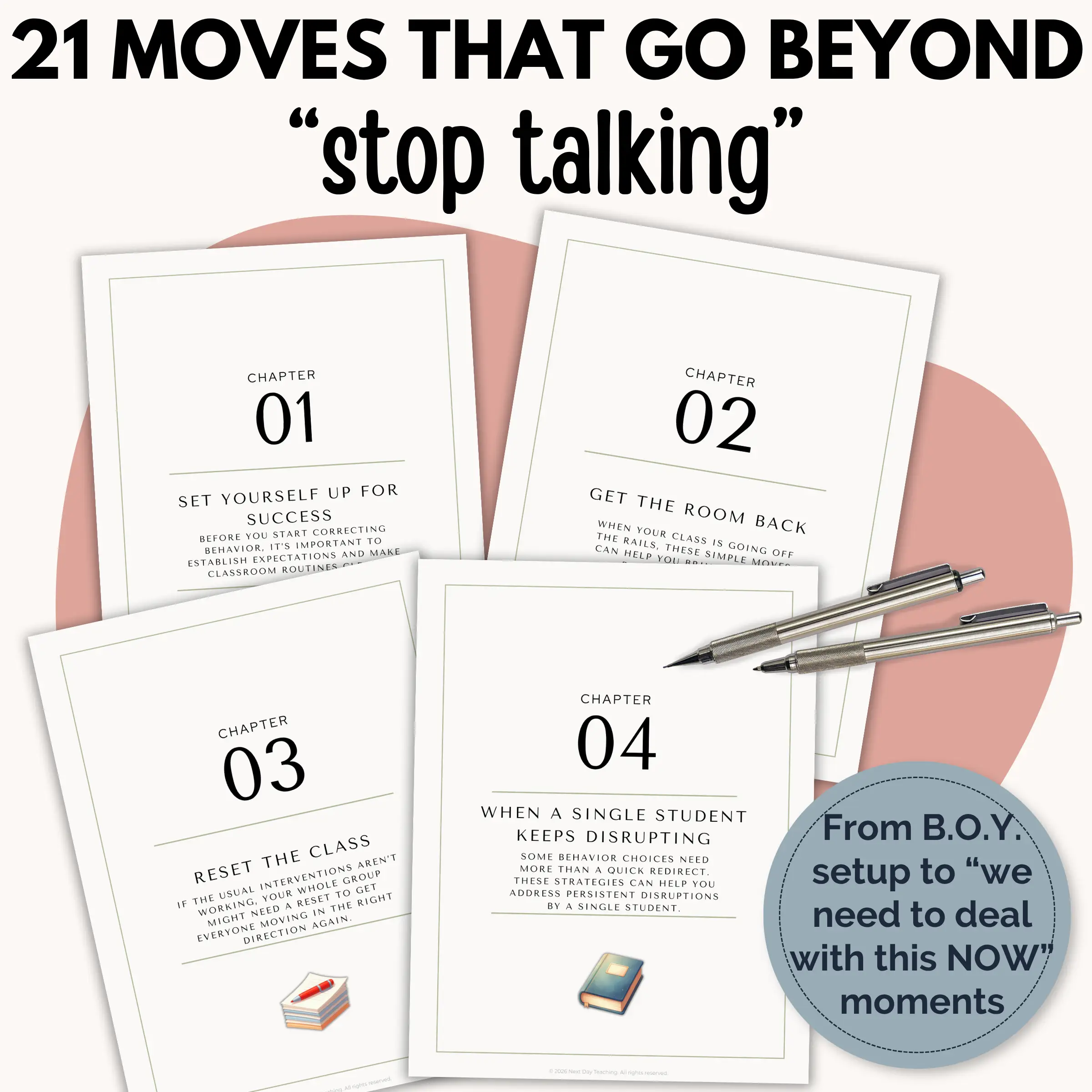
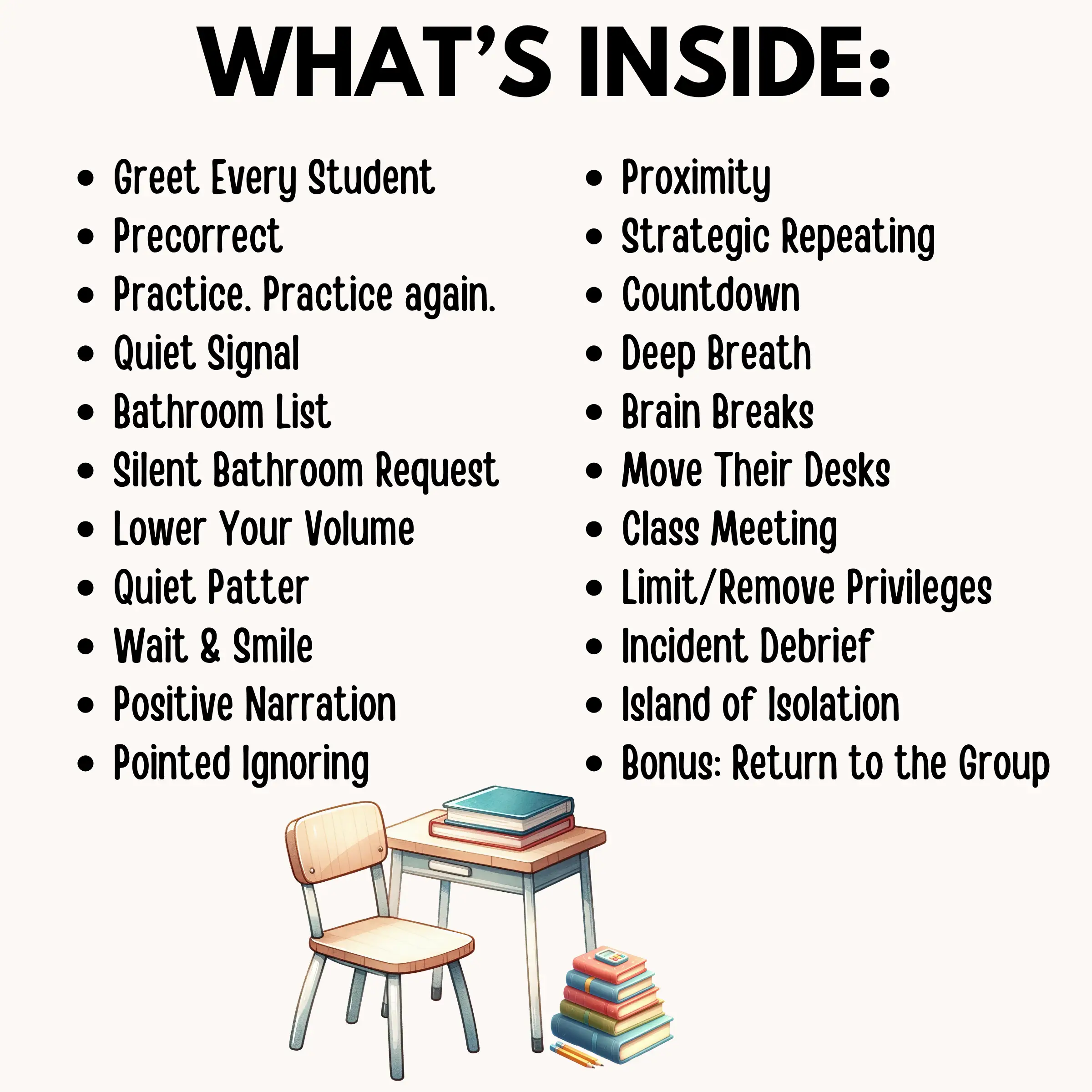
Setting Yourself Up for Success
- Greet Every Student by Name at the Door
- Precorrect
- Practice. Practice Again.
- Quiet Signal
- Bathroom List
- Silent Bathroom Request
Getting the Room Back
- Reduce Your Volume
- Quiet Patter
- Wait & Smile
- Positive Narration
- Pointed Ignoring
- Proximity
- Strategic Repeating
- Countdown
Resetting the Class
- Deep Breath
- Brain Breaks
- Move Their Desks
- Class Meeting
When a Student Keeps Disrupting
- Limit/Remove Privileges
- Incident Debrief
- Island of Isolation
- Plus a bonus continuation: Return to the Group
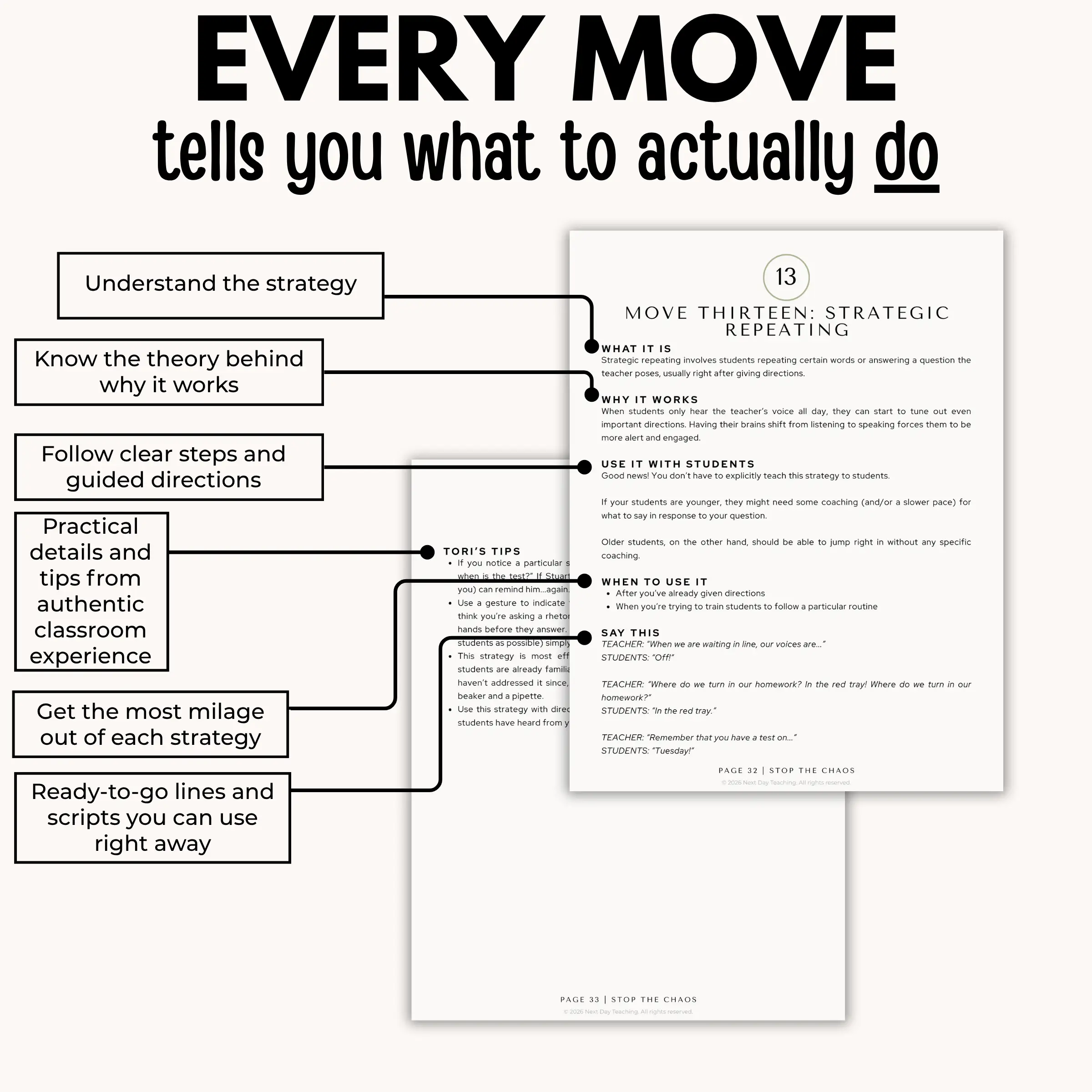
Every strategy includes:
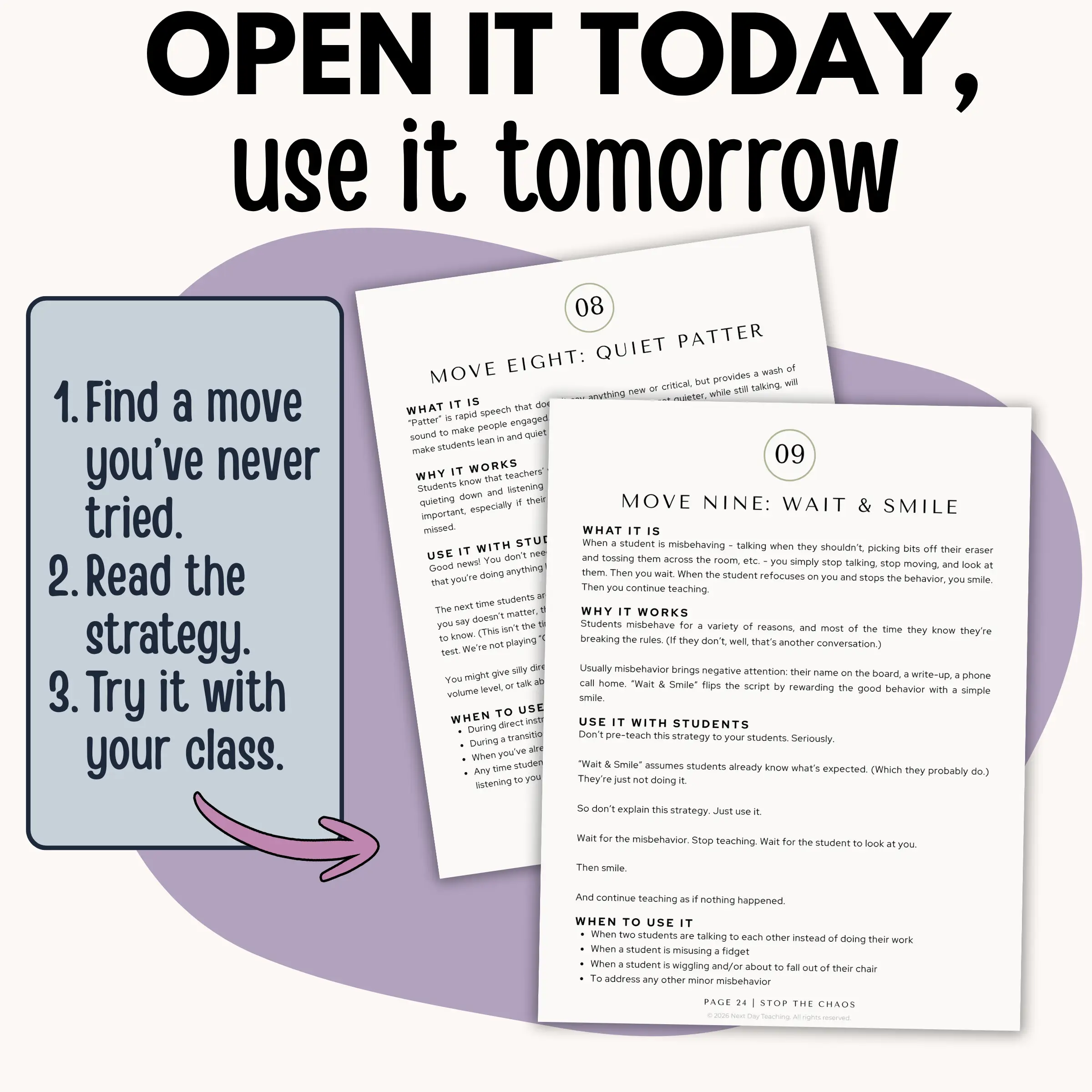
What It Is — a clear explanation of the move
Why It Works — the classroom-management thinking behind it
Use It With Students — practical directions for putting it into action
When it Works — time, preparation, or age/maturity considerations to help you get the most out of each strategy
Say This — a script or specific line you can use with your class
Tori’s Tips — the practical details that can make the strategy work better
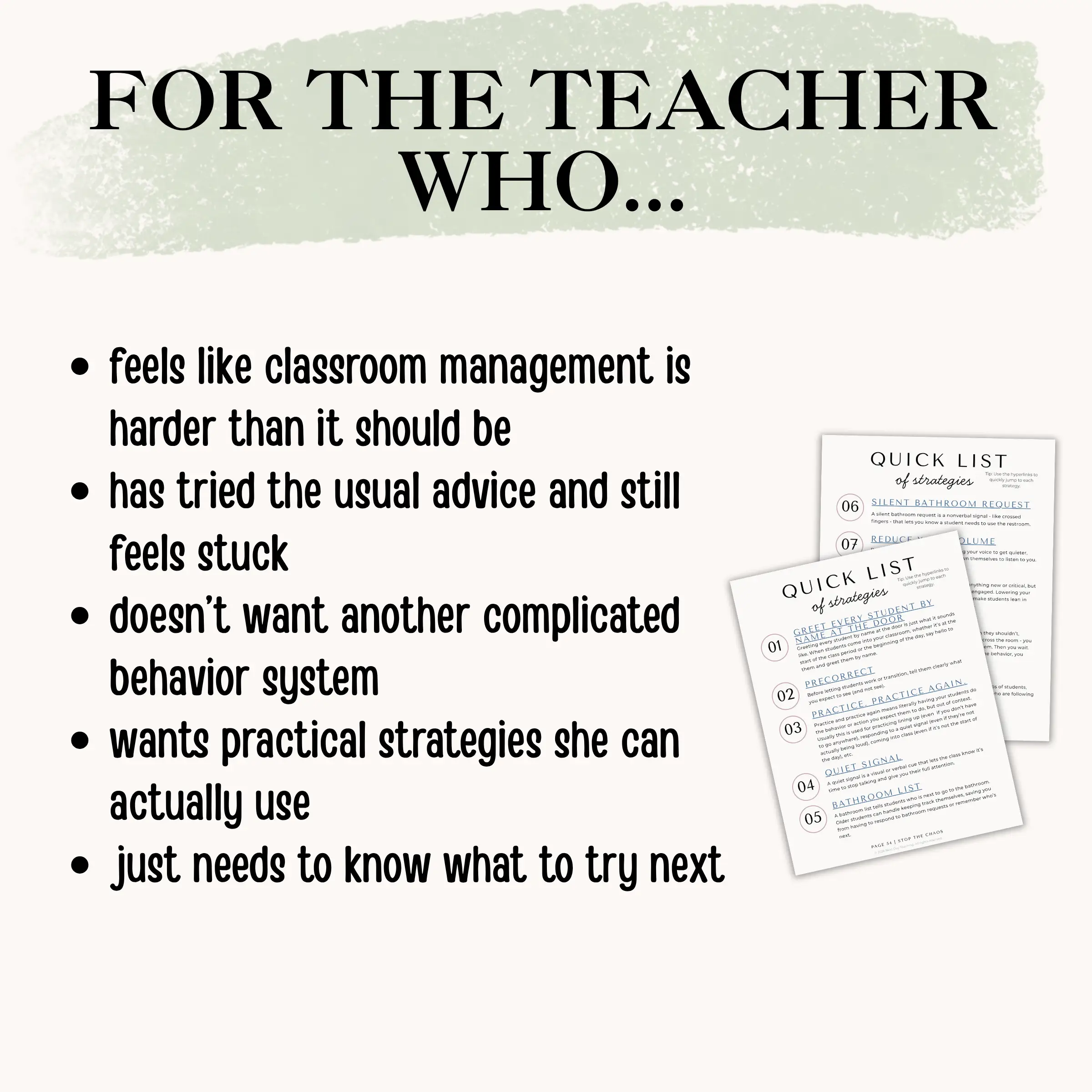
There’s also a hyperlinked quick-reference section at the end, so you can quickly scan the full list of strategies and jump straight to the one you want.
Made for real classrooms
These strategies are based on what I’ve actually used as a teacher, not a list of generic classroom management tips pulled together from the internet.
I’ve used them with students in grades 3–8, but many can be adapted for younger or older students, too. The goal isn’t to give you one “correct” way to manage your classroom. It’s to give you more practical options when the thing you’re currently doing isn’t quite enough.
Because sometimes classroom management isn’t about finding the perfect strategy.
Sometimes you just need to know what to try next.


Reviews
There are no reviews yet.