
- Why Individual Behavior Charts Feel Like the Right Answer
- The Problem of Isolation in Individual Behavior Charts
- The Continuity Gap in Individual Behavior Charts
- The False Choice Teachers Are Given in Classroom Management
- A System Lens for Classroom Behavior
- Bringing Classroom Behavior Systems All Together
- F.A.Q.
When faced with the burnout that creeps in with whole-class reward systems, many teachers shift to using individual behavior charts.
These could be clip charts, behavior cards, color systems, names on the board, etc.
I’ve used some of these systems myself. I’ve seen many teachers use others.
Here’s what I’ve noticed over time:
Whole-class systems tend to fall apart unless the teacher keeps propping them up with time, money, and energy.
Individual systems, on the other hand, usually do exactly what they’re supposed to do.
The problem isn’t whether they work.
It’s what students actually learn from them.
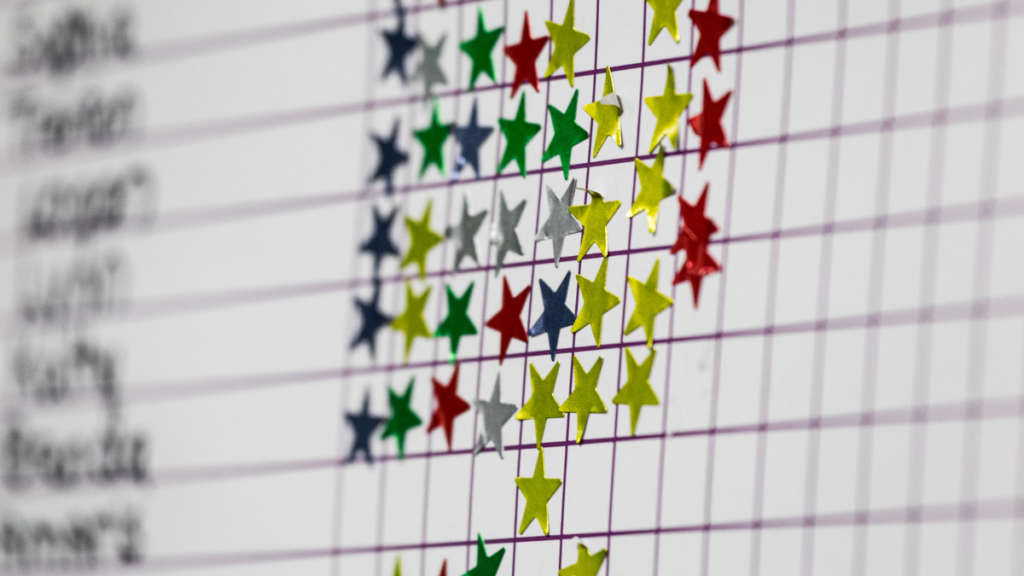
Why Individual Behavior Charts Feel Like the Right Answer
Many teachers love using individual behavior charts in the classroom because they offer simple, visible feedback to students.
Student blurts out instead of raising their hand? Go move your clip down.
Student puts their head down and refuses to work? Hand me a behavior card.
Inappropriate language? Write your name on the board and call your parent at lunchtime.
The truth is, these systems solve adult problems. They help teachers feel vindicated, validated, and proven “right.”
On the surface, it seems like each student is responsible for their own choices.
But ultimately, students aren’t making meaningful connections between their behavior and the consequences.
The Problem of Isolation in Individual Behavior Charts
Individual behavior charts track behavior in isolation.
This means that students are getting good insight into how their behavior is shaping up right now, but they’re not seeing how their behavior affects the group.
These charts also don’t help students connect classroom expectations with their own success.
They teach compliance…but classrooms don’t run on compliance alone. They run on contribution, cooperation, and shared responsibility.
As a result, individual behavior charts keep students too isolated to understand why their behavior is unhelpful.

The Continuity Gap in Individual Behavior Charts
Individual behavior charts tend to reset frequently. They have to, otherwise students don’t get the opportunity to try, try again.
This means there’s no continuity between behavior on day 1 and behavior on day 51.
A student might misbehave on Monday and have a consequence (clip down, hole punch, name on board, etc.).
But unless there’s a privilege or short-term event that they miss out on because of that behavior choice, they won’t make a change.
That’s not to say that they’ll make the same mistakes, because I believe that for the most part, kids *want* to behave well.
Students forget because there’s nothing to remind them.
Take the clip chart, for example. The clip chart hangs on the wall and is the entire focus of a first grader’s attention…for about 2 weeks.
Then it becomes a decoration, part of the furniture, just another poster – until they misbehave.
They shuffle over, move their clip, and go right back to whatever they were working on.
The clip chart doesn’t follow them to their desk. It’s not there reminding them, “Hey, don’t make the same mistake again!”
Students aren’t prompted to recall past choices, anticipate future outcomes, or adjust their behavior proactively.
So what happens is the students who are already well-behaved continue to behave well; their clips move up, and they get the reputation of being the “good” kids.
The students who – for whatever reason – struggle with appropriate behaviors have their clips constantly moved down, not because they’re bad kids, but because no one taught them how to monitor their own behavior and what to do (or not do) as appropriate in a classroom setting.
Without short-term continuity, behavior lessons aren’t reinforced. They’re forgotten, not learned.
The False Choice Teachers Are Given in Classroom Management
Many teachers believe they have to choose:
- Whole-class reward system or
- Individual behavior charts
And to be fair, this choice makes sense: Both systems are easy to explain. Both are visible. Both appear “fair.”
Whole-class systems focus on “working together,” the thinking goes, while individual charts encourage students to “take responsibility.”
But neither system teaches students how to self-monitor.
Neither system connects individual behavior to group outcomes.
And neither system builds continuity over time.

A System Lens for Classroom Behavior
An effective behavior system blends both whole-class cohesion with individual responsibility, but it’s more than plucking one system from column A and one from column B.
(That’s a fast track to teacher burnout; imagine juggling both a reward jar and a clip chart at the same time! Yikes!)
An effective behavior system will:
- Explicitly teach students how to be responsible. It won’t assume they’ll just “get it” by midyear or through repeated correction.
- Provide frequent, low-stakes feedback. The stakes will matter…but they’ll also reset often enough to give students another chance.
- Create continuity across days and weeks. Resets won’t happen daily. But they will be more frequent than once a month…or once a trimester.
- Balance individual accountability with shared impact.
Individual student behavior still matters, and misbehavior should absolutely be addressed.
But when students make the mental shift from “I should behave so my clip doesn’t move down” to “I should behave so my class can earn a reward”? That’s powerful.
Effective behavior systems are not about tracking more; they’re about teaching better.

Bringing Classroom Behavior Systems All Together
Individual behavior charts aren’t a failure of effort or intention.
They’re a reminder that behavior doesn’t change just because it’s tracked. It changes when students are taught how to notice their choices, understand their impact, and carry those lessons forward.
If we want students to truly improve their behavior over time, our systems have to do more than record mistakes. They have to teach awareness, responsibility, and follow-through in ways students can actually use.
In future posts, I’ll share what that kind of system looks like in practice and how to build accountability that supports both the individual student and the classroom as a whole.
F.A.Q.
Individual behavior charts usually work in the moment. They provide clear feedback and visible consequences, which can reduce misbehavior short-term. However, they often don’t lead to lasting behavior change because they don’t teach students how to self-monitor, reflect on past choices, or connect behavior to future outcomes.
Most individual behavior charts reset frequently and don’t create continuity over time. As a result, students experience consequences without being prompted to remember past behavior, anticipate future outcomes, or adjust their actions proactively. Without that continuity, behavior lessons are forgotten rather than learned.
The biggest issues with individual behavior charts are isolation and lack of continuity. These systems track behavior in isolation, so students don’t see how their actions affect the classroom community. They also reset often, which prevents students from building long-term awareness and responsibility for their behavior.
Individual behavior charts appear fair because each student is held accountable for their own actions. However, they often benefit students who already have strong self-regulation skills while offering little instruction to students who struggle. Over time, this can lead to reinforcing labels rather than teaching missing skills.
Whole-class reward systems emphasize shared outcomes, while individual behavior charts focus on personal consequences. Both systems have limitations. Whole-class systems can break down without heavy teacher effort, while individual systems often fail to teach students how their behavior fits into a larger classroom system.
An effective classroom behavior system should teach students how to notice their behavior, understand its impact, and carry lessons forward over time. It should balance individual accountability with shared responsibility, provide frequent low-stakes feedback, and build continuity across days and weeks.
Before you comment: Please take a moment to read our community guidelines. We’re building a space that’s welcoming, respectful, and helpful to all!