
Many teachers are not explicitly taught how to lead a class discussion. It’s one of those skills that comes naturally to some, while others struggle to get students engaged without things spiraling into chaos.
Common problems with leading class discussions include:
- Students blurting out without raising their hands – or being called on
- Students disengaging completely…until they’re called on (which they hate)
- The teacher asking a question, then waiting through a long, awkward silence
If that sounds familiar, you’re not alone.
One of the simplest strategies I’ve ever used to fix this came from my own Box o’ Junk. (You have one too, right? It’s the box that stays with you from childhood to adulthood, somehow surviving multiple moves without ever being unpacked?)
One day, I dug in the box and pulled out a toy from my childhood: a ball with wiggly strings sticking out in all directions. You might know these as Koosh™ balls, string balls, noodle balls, soft toss balls, or something else.
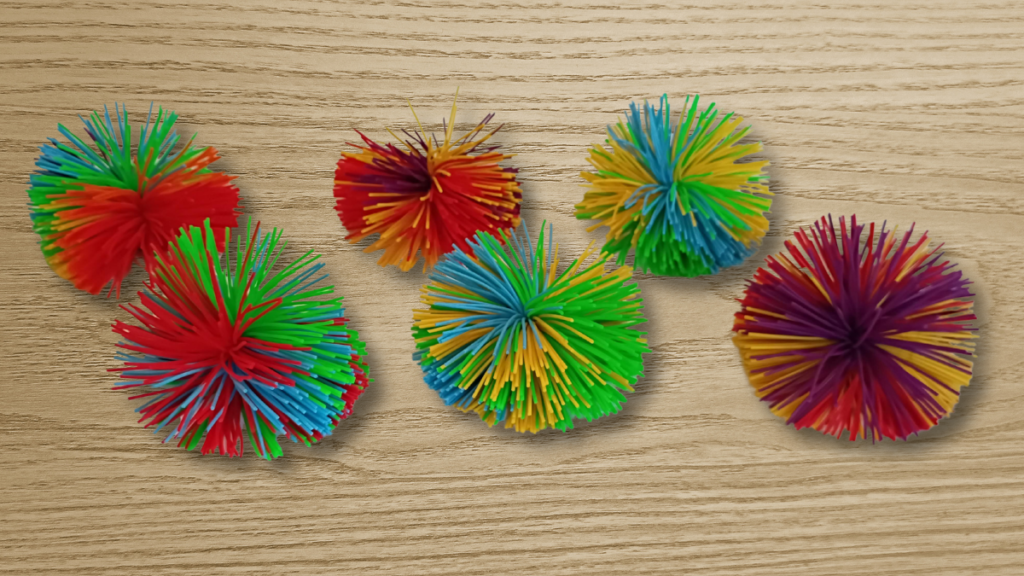
As I tossed it from hand to hand, I had a thought: This could work in a class discussion.
The next time I led a class discussion, instead of calling on a student, I tossed them the ball.
Their eyes got wide as they caught it…and answered. They tossed it back, and suddenly more hands shot up into the air, begging to participate. Students who normally stayed quiet wanted in.
How This Strategy Works
- Toss the ball to a student instead of calling on them.
- The student answers while holding the ball.
- They toss it back to you…or to another student, once routines are established.
That’s it! No prep required.
5 Reasons This Strategy Improves Class Discussions
1. It Gets Students’ Attention
The human brain is designed to notice movement. From an evolutionary perspective, this makes sense – it’s better to notice the tiger about to eat you than it is to observe the bright red of flower petals.
When you toss a soft ball across the room, students naturally look up and track it.
If it’s aimed at them, they will either sit up and catch it…or they’ll get lightly bopped on the head. (See point 2.)
Either way, they’re paying attention.
If you only use this strategy once in a while, the novelty will stay fresh for students. (The brain likes novelty, too!)
2. It’s Safe for Students (and Your Classroom)
Let’s be honest: Students (and teachers) don’t always have the most accurate aim.
The good news is that if these soft, stringy balls veer off target, they’re soft enough that it won’t do much damage to Smart Boards, document cameras, or open laptops.
And if a student has their head down or is making faces at a friend across the room? You can accidentally toss a noodle ball at them without worrying about whether it will hurt.
3. It Clearly Shows Who’s Speaking
One of the biggest challenges in leading class discussions is managing blurting out and other interruptions.
This strategy solves that visually:
- The person holding the ball is the speaker
- Everyone else listens.
If someone else starts to interrupt, you don’t even need to say anything. Just gesture to the ball.
4. It Gives Students a Built-In Fidget
Some students have an answer for a class discussion…until they’re called on.
Holding the ball gives them something to do while they think.
String balls make great fidgets because the strings are stretchy and wiggly. Students can hold the noodle ball while they think without making it obvious that they’re using a fidget. (Very important for upper elementary and middle school students!)
5. It Makes Participation Feel Fun
It’s easy for class discussions to feel high-pressure or overly formal, but sometimes injecting a little fun into your lessons is a great way to get students engaged and show them that you’re human, too.
String balls, with their fun colors and wiggly tendrils, are an easy way to do that.
Students are more willing to participate, take risks, and stay engaged.
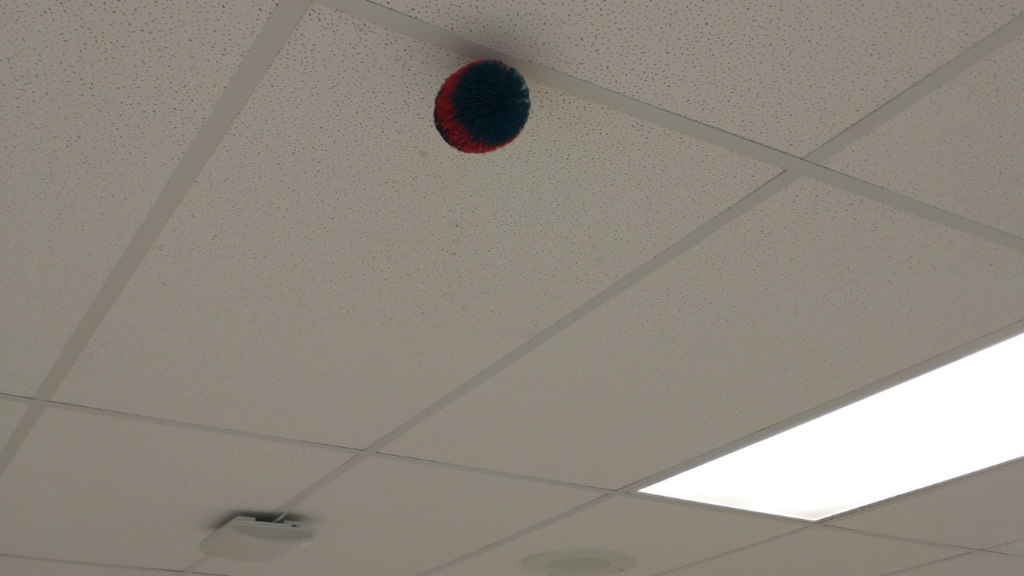
And you never know – one might get stuck in the ceiling tiles, leading to a class bonding moment they will remember for years to come!
Try it Tomorrow
If your class discussions feel a little flat – or a little chaotic – this is an easy strategy to try right away.
No prep, and no materials beyond a simple soft toss ball. All for a surprisingly big impact on engagement.
And if you’re looking for more low-prep, high-impact classroom management strategies, you can subscribe to The Reset Button, my weekly newsletter with easy classroom management ideas you can use right away.
F.A.Q.
To lead a class discussion without chaos, use clear participation structures. One simple method is assigning a speaking object (like a soft toss ball) so only the student holding it speaks. This reduces interruptions, keeps students focused, and creates a predictable routine.
A highly effective strategy is using a physical participation tool, like a soft toss ball. Toss it to a student to indicate it’s their turn to speak. This adds movement, increases engagement, and helps students stay attentive and involved.
To increase participation, lower the pressure and add structure. Strategies like using a speaking object, think time, or turn-and-talks can help. Adding a small element of novelty, like tossing a soft stringy ball, can also make students more willing to join in.
If students hesitate to answer, give them support and time to think. Providing a fidget (like a soft ball), using wait time, or allowing peer support can help students feel more comfortable responding during discussions.
Before you comment: Please take a moment to read our community guidelines. We’re building a space that’s welcoming, respectful, and helpful to all!