

Parent-teacher conference season is stressful, no matter how many years you’ve been teaching. Knowing how to run a parent-teacher conference can make a huge difference in building relationships with families and ultimately helping students succeed.
How you prepare for and run a conference isn’t just about the meeting itself; it reflects the systems you’ve built in your classroom, from routines to progress tracking, that help students succeed.
If you’re new to this, you might be wondering: How do I start the conference? What do I do if a parent gets upset? How do I stay on schedule?
That’s exactly why I’m writing a three-part series on parent-teacher conferences:
- Part 1: How to prepare before the conference
- Part 2: What to say and do during the conference (this post)
- Part 3: How to follow up after the conference
Ready to dive in? Let’s talk about how to run a parent-teacher conference with confidence, even if your stomach is doing somersaults.
How do I calm my nerves?
First, it’s important to remember that every teacher feels nervous before parent-teacher conferences, whether it’s their first year or their fifteenth.
The good news? There are simple ways to calm those butterflies.
Here are some tips and strategies:
- Take a deep breath. Breathe in through your nose, breathe out through your mouth. Bonus points if you breathe with your belly, not your chest.
- Eat a mint. Icebreakers, Altoids, even a Tic Tac. Mint can calm your stomach, and chewing something gives you something to focus on besides your nerves.
- Prepare! Confidence comes from preparation; when you’re well-prepared, you’re less likely to be nervous. A conference template [link] can help you stay organized and on track.
How do I start the conversation?
Start by thanking the family for coming, then tell them something positive about their child. Even if the student in question has been struggling academically or constantly disruptive, find something good to say.
(Pro tip: It’s easier to say something positive if you make positive notes about each student during the first week of school. If you haven’t been doing this, start now!)
Before diving into heavier topics, ask the parents if they have any questions. They might not, but sometimes parents have a question or concern that you can answer right away. This simple step helps the conference feel more like a conversation and less like a monologue.
What if a parent asks a question I can’t answer?
Pause. Take a breath. Then admit that you’re not sure. Depending on the question and your relationship with the parent, you could offer a tentative answer, but make it clear that it’s just a guess.
Most importantly, write down the question and make a note to follow up as soon as possible. A conference template can help you keep track of these next steps and follow-ups so nothing slips through the cracks.
What if a parent gets upset?
Above all else, stay calm. Responding with frustration only escalates the situation. Remain calm and collected on the outside, even if you’re shaking on the inside.
It helps to have evidence and supporting documents ready. If a parent questions a decision or a grade, you can show that you’ve followed school or classroom protocols.
For example, if a student received a failing grade, you might:
- List all the times you invited the student in for extra help.
- Show the student’s work and explain what is below grade-level standards.
- Explain the make-up opportunities you offered, and note the times the student has declined them.
When you have evidence to support your decisions, it becomes more likely that the parent will understand, and often agree with, your decisions.
(Pro tip: If you expect a parent might become upset, consider asking another teacher or an administrator to attend the conference with you. Most principals, deans, and colleagues are happy to sit in on a conference to be a set of listening ears and, if necessary, a witness.)

How do I make sure the conference doesn’t go long?

Use a timer to keep your conversation on track. (If you don’t already have a physical timer for your classroom, I suggest you get one. They’re surprisingly versatile!)
A little self-deprecating humor goes a long way. Say something like, “I better set a timer, or I’ll talk about how amazing Juan is all night!”
This sets parents at ease and explains why you’re setting a timer (even if you know it’s really to keep them from monopolizing your time.)
When that timer goes off, let it take the blame. Say something like, “To respect everyone’s time, we have to wrap up now. Do you want me to follow up with a phone call or email to continue the conversation?”
Some parents will take you up on that offer, whereas others will be content with the few minutes you had. Either way, they’ll appreciate your thoughtfulness and professionalism.
Can this conference tool help you?
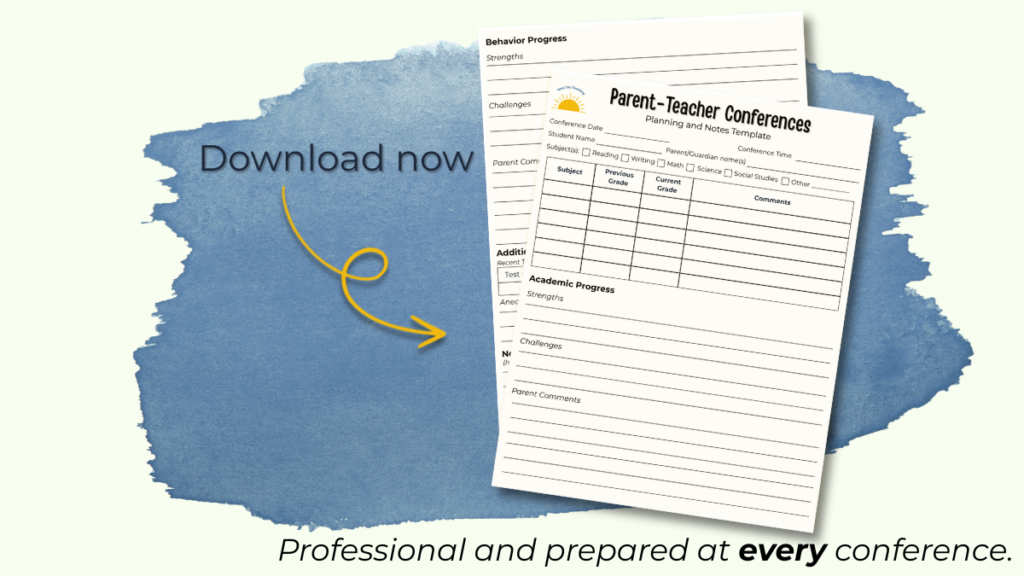
Absolutely! This one-page conference template helps you reference a student’s academic progress and behavior patterns during a parent-teacher conference.
I’ve used this exact template for years. It has space for parent notes and follow-up items so you don’t have to rely on memory (or cover your desk in sticky notes).
Building these habits and routines in your classroom will make future conferences even easier.
When you run a parent-teacher conference with this template, parents will notice that you’re prepared and have taken time to understand their child’s strengths and struggles.
And really, that’s what every parent wants: to know you care about their child as much as they do.
Download the free template here and be ready for your next conference by tomorrow!
(P.S. The template works no matter what grade you teach!)
Prepare notes on each student’s academic progress, behavior, and any questions parents might have. Using a conference template can help you stay organized, track follow-ups, and ensure nothing slips through the cracks.
Pause, take a deep breath, and respond calmly. Show evidence of your classroom routines, grades, or student work when needed, and consider having a colleague or administrator present if you anticipate a difficult conversation.
Use a timer and communicate politely. For example, say, “To respect everyone’s time, we have 10 minutes left. We can follow up by email if needed.” This helps you stay on track while maintaining professionalism and courtesy.
Before you comment: Please take a moment to read our community guidelines. We’re building a space that’s welcoming, respectful, and helpful to all!